
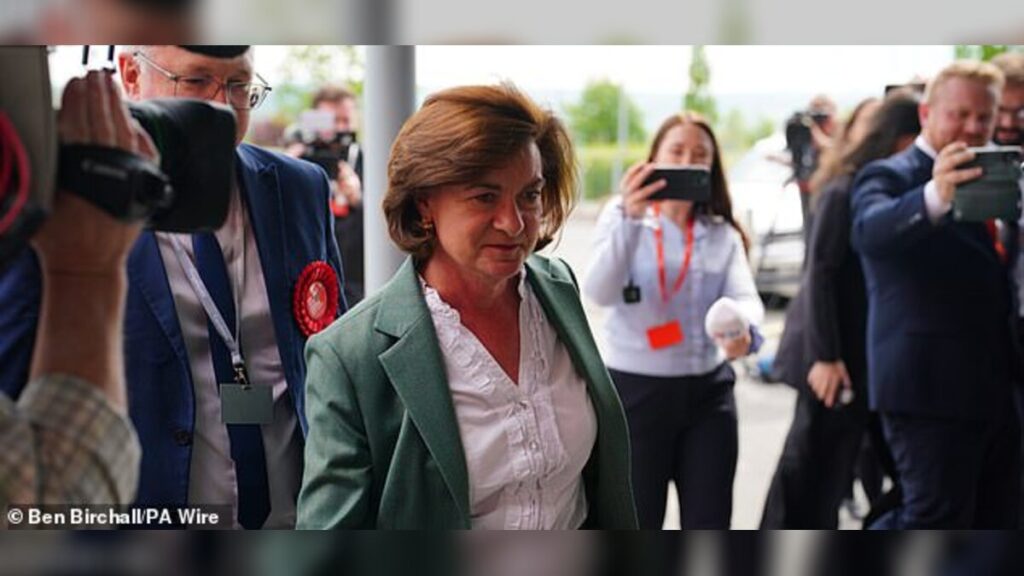
Baroness Eluned Morgan has lost her seat in Ceredigion Penfro, becoming the most prominent Labour figure to fall during a punishing round of local and devolved election results across England, Wales and Scotland.
The Welsh First Minister’s defeat marks a historic political moment for Wales, where Labour has dominated national politics for more than a century and has led the Welsh Parliament since the Senedd was first established as the National Assembly for Wales in 1999.
Her loss comes as Labour faces mounting pressure from multiple directions, with Reform UK, the Greens, the Liberal Democrats and even the Conservatives taking ground from Sir Keir Starmer’s party.
Welsh Labour Leader Announces Resignation After Defeat
Following the result, Baroness Morgan confirmed she would step down as leader of Welsh Labour, describing the outcome as catastrophic for the party.
She said Welsh Labour now needed to examine the scale of the challenge it faces after suffering a result that ended a long era of Labour electoral dominance in Wales.
Morgan said she accepted responsibility for Labour’s performance, adding that her own defeat in Ceredigion Penfro made it clear she could no longer continue as party leader.
Labour Faces Heavy Losses Across the UK
The setback in Wales formed part of a wider electoral crisis for Labour. Across the country, the party lost control of several councils and came under pressure from both left-wing and right-wing challengers.
Reform UK made major gains, taking control of councils including Suffolk County Council, Essex, Havering, Newcastle-under-Lyme, Sunderland, and Thurrock.
In Barnsley, Labour’s council leader Sir Stephen Houghton said it was clear the party was on course to lose its majority to Reform, blaming national politics and anger toward the Labour government for overwhelming local campaigning.
Reform UK Claims a Historic Political Shift
Nigel Farage celebrated Reform UK’s surge, claiming the results showed both Labour and the Conservatives were at risk of being “wiped out.”
Farage said his party had been speaking with former Labour MPs and even some sitting MPs, predicting what he called a coming “Red Wall” rebellion against Sir Keir Starmer’s leadership.
He argued that Reform’s campaign message, urging voters to back the party in order to remove Starmer, had proved effective even in local elections.
Greens Add to Labour’s Trouble in Urban Strongholds
Labour also suffered a significant blow from the Green Party, which won the Hackney mayoralty for the first time.
Zoë Garbett defeated Labour incumbent Caroline Woodley, taking 35,720 votes against Woodley’s 26,865. The result ended Labour’s control of the East London mayoralty, which it had held since the post was created in 2002.
The Greens also made gains in areas such as Manchester and won Norwich City Council, giving the party its first council victory of this election cycle.



Liberal Democrats Present Themselves as Anti-Populist Alternative
The Liberal Democrats also gained ground, taking control of Stockport and Portsmouth, both of which had previously been under no overall control.
Sir Ed Davey said the results showed the Liberal Democrats were the “only non-populist party left standing,” arguing that in areas such as Surrey, the Conservatives had collapsed and the contest was now between the Lib Dems and Reform.
The party recorded a net gain of 22 seats, while the Greens gained 51 seats overall.
Conservatives Still Pick Up Some Labour Losses
Although the Conservatives also suffered heavy defeats nationally, they still managed to take some ground from Labour.
One of the notable Conservative wins came in Westminster City Council, which the party took from Labour. Conservative figures argued the result showed signs of a comeback in parts of London, even as the party lost hundreds of seats elsewhere.
Starmer Refuses to Stand Down Despite Growing Pressure
Sir Keir Starmer said he accepted responsibility for what he called very tough election results, but insisted he would remain in place and lead Labour into the next general election.
The Prime Minister also paid tribute to Eluned Morgan after her resignation announcement, describing her as a formidable First Minister and a tireless advocate for Wales.
He praised her decades of public service and said her contribution to Wales and the Labour Party would endure.
Morgan Calls for Labour to Return to Working-Class Roots
In her resignation speech, Morgan said the results reflected deep frustration with Labour across the United Kingdom.
She argued that the national Labour government needed to change course and said the party had to return to being a movement rooted in the working class.
Morgan also called for wealth to be distributed more fairly across the UK, away from what she described as overconcentration in the South East.
However, she stressed that the election in Wales was ultimately about Wales, saying Starmer was not on the ballot and that she was taking responsibility for the Welsh result.
Impact and Consequences
The defeat of a sitting Welsh First Minister is a major political shock and a symbolic blow to Labour’s long-standing dominance in Wales.
Morgan’s loss and resignation deepen the crisis facing Labour at both Welsh and UK level, especially as the party is losing support to Reform on the right, the Greens on the left, and the Liberal Democrats in several local battlegrounds.
Reform’s gains suggest that voter frustration with Labour and the Conservatives is translating into real institutional power at council level. The party’s victories in places such as Sunderland, Thurrock, Suffolk and Essex could give it new local platforms ahead of future national contests.
For Starmer, the results create a leadership headache. Although he has vowed to continue, calls for change inside Labour may intensify if MPs believe the party is losing its traditional base and failing to hold off Reform in former Labour heartlands.
What’s next?
Labour now faces a period of internal reckoning, particularly in Wales, where the party must choose a new Welsh Labour leader after Morgan’s resignation.
Sir Keir Starmer is likely to come under renewed pressure from MPs, unions and local Labour figures who believe the government must shift direction after the scale of the losses.
Reform UK will seek to build on its new council victories and present itself as the main challenger to both Labour and the Conservatives. The Greens and Liberal Democrats are also expected to use their gains to argue that voters are looking beyond the two major parties.
The next major question is whether Labour can rebuild confidence before the next general election, or whether these results mark the beginning of a deeper political realignment.
Summary
Baroness Eluned Morgan has lost her seat in Ceredigion Penfro and announced she will resign as Welsh Labour leader after a devastating election result for Labour in Wales.
Her defeat came during a wider collapse for the party across England, Wales and Scotland, with Reform UK making major gains, the Greens winning the Hackney mayoralty, and the Liberal Democrats gaining ground.
Sir Keir Starmer has vowed to remain Labour leader despite growing pressure and criticism from within his own party.
Bulleted Takeaways
- Baroness Eluned Morgan lost her seat in Ceredigion Penfro.
- She announced she will step down as Welsh Labour leader.
- Her defeat marks the first time a sitting Welsh leader has lost a Senedd election.
- Labour suffered heavy losses across England, Wales and Scotland.
- Reform UK took control of several councils, including Suffolk, Essex, Sunderland, Thurrock, Havering, and Newcastle-under-Lyme.
- Nigel Farage claimed the results showed a historic shift in British politics.
- The Greens won the Hackney mayoralty and took Norwich City Council.
- The Liberal Democrats gained control of Stockport and Portsmouth.
- Sir Keir Starmer said he would stay on despite calls for him to resign.
- Morgan said Labour must return to being the party of the working class.
