
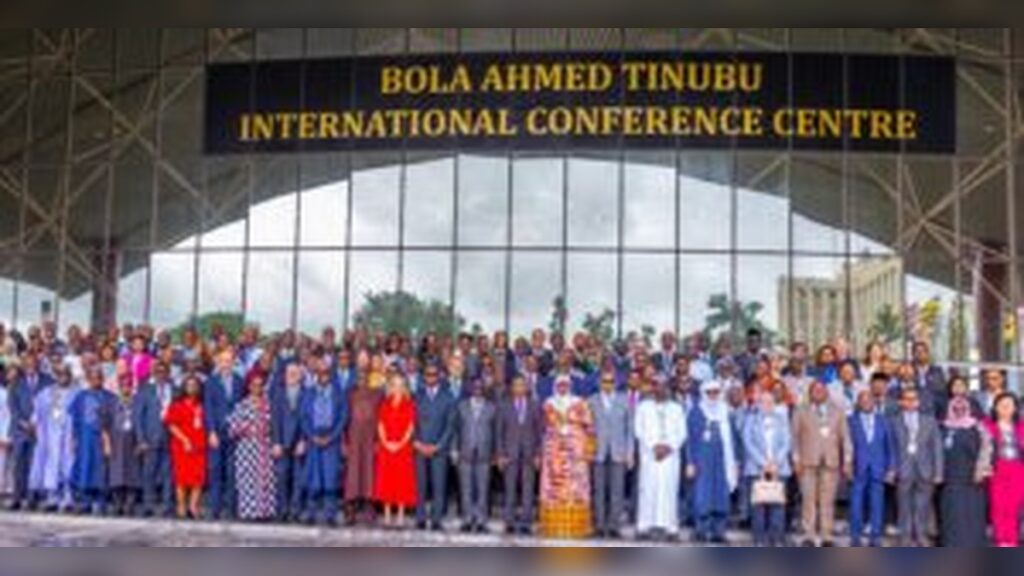
Africa’s push to play a more influential role in the global digital economy gained momentum in Abuja as Nigeria introduced a continent-wide artificial intelligence initiative during the African Telecommunications Union (ATU) Conference of Plenipotentiaries.
The two-day gathering combined major policy announcements with closely watched leadership elections that will shape the union’s direction over the next several years.
Nigeria Launches ATLAS Network for African AI Development
Nigeria used the conference to unveil the ATLAS Network, a collaborative platform designed to develop large language models trained on African languages, cultures and indigenous knowledge.
The initiative was announced by the Minister of Communications, Innovation and Digital Economy, Dr. Bosun Tijani, who described it as an expansion of Nigeria’s existing N-ATLAS project.
He encouraged other African countries to join the network, presenting it as a shared effort to ensure that artificial intelligence systems reflect the continent’s linguistic and cultural diversity rather than relying solely on technologies developed elsewhere.
The proposal reflects a broader ambition to give African nations greater influence over the future of AI and digital innovation.
Leaders Call for Africa to Shape Global Digital Policy
Opening the conference, Vice President Kashim Shettima, represented by Senator Ibrahim Hadejia, stressed that Africa must move beyond simply participating in global technology discussions and instead help determine the policies that govern emerging technologies.
He argued that international digital regulations have often been created without sufficient African representation, making it increasingly important for the continent to speak with a unified voice.
Dr. Tijani reinforced that message, urging African governments to approach global digital negotiations with shared priorities and stronger collaboration so the continent’s interests are reflected in future international technology frameworks.
Competitive Election Produces New ATU Secretary General
While the AI announcement dominated the opening day, the second day focused on electing new leadership for the African Telecommunications Union.




Delegates required four rounds of voting before selecting Zambia’s Kezias Kazuba Mwale as the union’s next Secretary General. Mwale, who has served as ATU’s Director of Radiocommunications since 2012, secured victory with 21 of the 34 votes cast in the final ballot.
His election highlighted differing perspectives among member states regarding the union’s future priorities, with the closely contested race reflecting a competitive rather than unanimous decision.
Mwale will officially assume office on January 1, 2027.
Incoming and Outgoing Leaders Emphasize Responsibility
Following his election, Mwale described his new position as a responsibility built on trust, promising to serve member states with accountability rather than viewing the office as a personal achievement.
Outgoing Secretary General John Omo echoed that sentiment, encouraging countries across the continent to remain united as they implement the decisions reached during the Abuja conference.
Nigeria Takes Chairmanship as Member States Approve Key Decisions
Beyond leadership changes, delegates approved several measures that will influence the union’s operations through 2031.
Nigeria officially assumed the chairmanship of the Conference of Plenipotentiaries from Algeria, placing the country in charge of overseeing implementation of the conference’s resolutions during the next institutional cycle.
The conference also elected 25 countries to serve on the ATU Administrative Council.
In addition, member states adopted the 2026 Abuja Declaration on Meaningful Connectivity, which promotes technology-neutral regulation, greater investment in spectrum management and fiber infrastructure, stronger cybersecurity protections and enhanced consumer rights.
The declaration also prioritizes making digital services more affordable while improving digital literacy, particularly for women, young people, people with disabilities and underserved communities across Africa.
AI Ambitions Now Meet the Challenge of Continental Cooperation
The conference concluded with both optimism and a recognition of the work ahead.
The launch of the ATLAS Network signals Africa’s determination to develop artificial intelligence technologies rooted in local realities before external AI models become the dominant representation of the continent’s languages and cultures.
At the same time, the closely fought leadership election demonstrated that member states hold differing views on how quickly and in what direction the union should move.
As the new chair of the Conference of Plenipotentiaries, Nigeria will now play a central role in balancing those perspectives while advancing the commitments outlined in the Abuja Declaration and promoting greater digital connectivity across Africa.

