
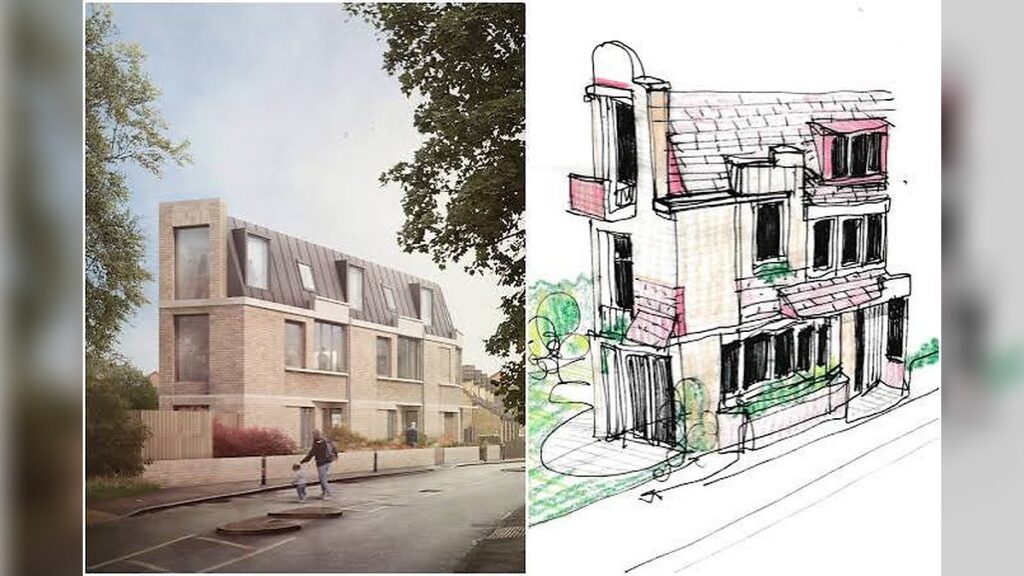
Lewisham Council has successfully used artificial intelligence to uncover more than 3,000 previously overlooked small sites that could support future housing development, demonstrating how digital technology can strengthen planning decisions and increase housing supply.
The initiative formed part of the 2024 PropTech Innovation Fund Round 4 programme, where the council tested an AI-powered mapping platform known as the Small Sites AI Finder.
Developed in partnership with RCKa, the tool was designed to modernise the traditionally time-consuming process of identifying small plots suitable for residential development.
Addressing the Limits of Traditional Planning
Before introducing the new system, Lewisham’s planning officers largely depended on local knowledge and manual site assessments to locate suitable development opportunities.
While effective in some cases, this approach made it difficult to identify potential sites consistently across the borough.
The council wanted a more efficient way to pinpoint small development opportunities, estimate how many homes these sites could accommodate, and better understand how existing planning guidance influenced housing delivery.
Officials also sought to ensure that smaller developments continued to contribute alongside major housing schemes.
AI Mapping Tool Scans the Borough
At the heart of the pilot was the Small Sites AI Finder, an interactive digital map that combines artificial intelligence with Geographic Information System (GIS) data to analyse land across Lewisham.
The technology examined land parcels throughout the borough, identifying various categories of small sites, including infill plots, backland locations and side-street opportunities.
It also estimated the potential housing capacity of each identified location.
To improve accuracy, the AI model was trained using examples of typical small-site layouts and property boundaries.
Ordnance Survey GIS mapping data was incorporated into the system, although processing this information extended the project’s timeline.
Planning officers and the technology supplier worked closely throughout development, holding regular review sessions to refine the tool’s outputs and ensure the information remained practical for decision-making.
Planning Data Provides Additional Insights
Alongside the mapping exercise, Lewisham carried out a detailed review of planning application data to evaluate the impact of its Small Sites Design Guide Supplementary Planning Document (SPD).




The assessment compared planning applications submitted before and after the guide was introduced, examining approval rates, refusals, withdrawals and the time taken to reach planning decisions.
This analysis provided a broader understanding of how planning policies were influencing development activity across the borough.
More Than 3,000 Sites Identified
The pilot produced significant results, identifying an estimated 3,017 small sites with development potential.
According to the council’s assessment, these sites could collectively accommodate around 9,747 new homes, offering valuable opportunities to increase housing supply without relying solely on large-scale developments.
The mapping exercise also revealed where development opportunities were concentrated and highlighted the most common types of small sites throughout Lewisham.
The council’s housing delivery team is now exploring how these findings could support future land disposal decisions and engagement with developers and landowners.
Design Guide Shows Mixed Results
The planning data review suggested modest changes following the introduction of the Small Sites Design Guide.
Approval rates increased slightly from 38.8% to 40.7%, while fewer planning applications were withdrawn.
However, refusal rates also rose, and applications generally took longer to process.
Lewisham noted that these trends may reflect more rigorous assessment of planning proposals after the guidance was adopted, alongside broader factors such as staffing pressures and economic conditions.
Human Expertise Still Essential
Although the AI system proved capable of identifying development opportunities on a large scale, the council emphasised that technology cannot replace professional planning judgement.
The accuracy of the tool varied depending on the type of site being assessed, with success rates ranging between 31% and 76%.
Planning officers were still required to review each suggested location and assess its suitability against the council’s planning guidance.
The project also showed that while incorporating Ordnance Survey GIS data improved accuracy, it required additional processing time.
Lessons for Future Planning
The pilot highlighted several important findings for future digital planning projects.
Officials concluded that AI can significantly improve the speed and scale of site identification, but the quality of training data remains critical to producing reliable results.
They also found that the diverse nature of small urban sites makes fully automated identification challenging.
Combining AI-generated mapping with planning application analysis helped create a more comprehensive picture of housing opportunities and encouraged stronger collaboration between planning, housing and regeneration teams.
Next Steps for the AI Finder
Following the pilot’s success, Lewisham Council plans to continue improving the Small Sites AI Finder by enhancing both its accuracy and functionality.
Future work will explore how the platform can support targeted discussions with landowners, inform updates to the borough’s Small Sites Design Guide and help unlock additional opportunities for housing delivery across smaller development sites.
The council believes the project demonstrates that while artificial intelligence can greatly enhance planning processes, it is most effective when used alongside the experience and judgement of planning professionals.

