
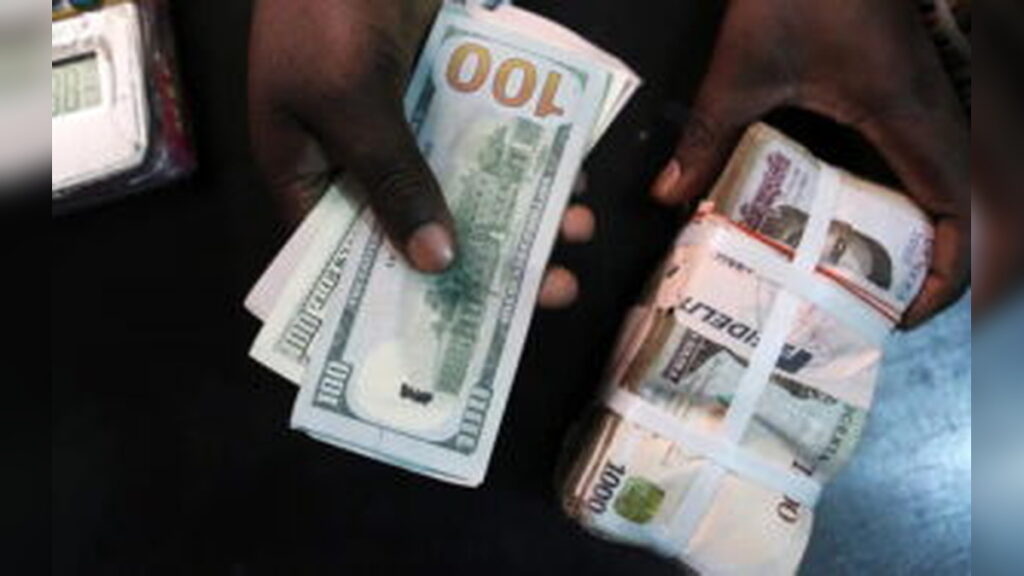
Nigeria’s foreign exchange market opened the new trading week with the naira showing little movement against the United States dollar, as both the official and parallel markets continued to trade within a relatively tight range.
Official Market Closes Around ₦1,362 Per Dollar
Figures released by the Central Bank of Nigeria (CBN) indicated that the Nigerian Foreign Exchange Market (NFEM) ended trading on Friday, July 24, with the official exchange rate at ₦1,362.09 per US dollar.
Trading activity during the session saw the dollar reach a high of ₦1,365.00, while the day’s lowest rate stood at ₦1,359.00.
The market eventually settled with a closing rate of ₦1,361.00/$1, highlighting another day of modest fluctuations.
Black Market Opens Within a Similar Trading Range
Activity in the parallel foreign exchange market also reflected relative stability on Monday morning, July 27.
Currency dealers quoted the US dollar at approximately ₦1,350 for buying and around ₦1,375 for selling, although actual prices continued to differ between traders and locations based on prevailing market conditions.




Gap Between Both Markets Continues to Narrow
The spread separating the official and parallel market exchange rates remained limited, continuing a trend that has become more noticeable in recent months.
The narrower difference marks a significant shift from previous years, when the disparity between both markets was considerably wider.
Analysts have linked the development to ongoing efforts aimed at improving transparency and efficiency within Nigeria’s foreign exchange system.
CBN Maintains Reform Agenda
The Central Bank has continued rolling out measures designed to strengthen the foreign exchange market by increasing liquidity, attracting investor confidence and supporting a more stable naira.
Those reforms have been complemented by recent monetary policy decisions intended to preserve broader economic stability amid an uncertain global environment.
Interest Rate Left Unchanged
At its most recent meeting, the CBN’s Monetary Policy Committee voted to retain the Monetary Policy Rate (MPR) at 26.5 percent.
The committee said maintaining the benchmark rate was necessary to help safeguard macroeconomic stability while monitoring the impact of global economic risks on the domestic economy.
Parallel Market Rates Still Vary Across Locations
Despite the overall stability, exchange rates in the parallel market are not fixed and may differ from one city to another or among Bureau De Change operators.
Factors such as local demand, available dollar supply and transaction volumes continue to influence the prices offered by individual currency dealers.

