
Visitors to Addo Elephant National Park can explore its wildlife in their own vehicles without booking an expensive guided safari.
According to SANParks, all tourist roads in the park are accessible to ordinary cars. The main game-viewing area has both tarred and gravel roads, although some gravel routes may close during particularly wet weather.
The maximum speed limit is 40km/h, but SANParks recommends travelling at approximately 20–30km/h to improve wildlife-viewing opportunities.
With several loops, waterholes, dams and lookout points across the park, visitors can plan their routes in advance to make the most of their self-drive experience.
Matyholweni to Main Camp Offers a Wildlife-Viewing Route
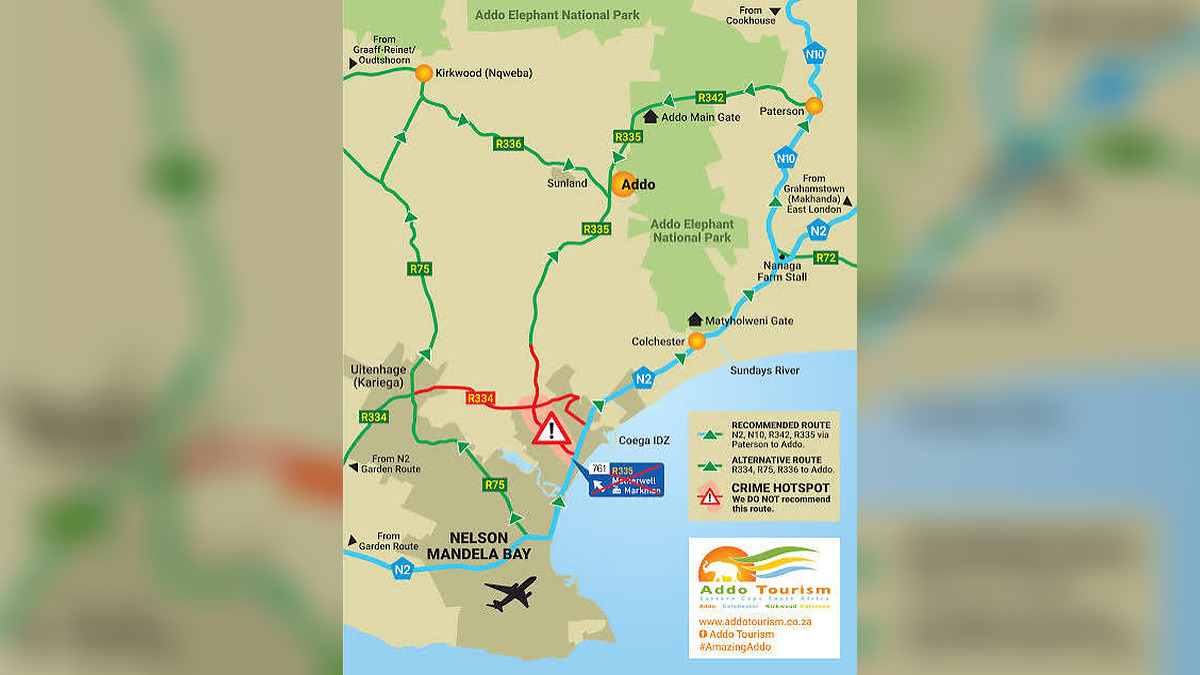
Visitors entering through Matyholweni Gate near Colchester can travel towards Main Camp using the southern access road through the park.
SANParks lists the distance between the two points at approximately 39km, with the journey taking around two hours depending on driving speed and stops for wildlife viewing.
The route allows visitors to begin looking for animals while travelling towards their accommodation. Species that may be seen along the way include elephants, buffalo, zebras, warthogs and antelope.
However, the route is not suitable for buses or vehicles towing caravans or trailers.
Hapoor Waterhole Is an Area to Explore for Elephants
The Hapoor waterhole area is one of the locations visitors can include when planning a self-drive safari.
SANParks recommends visiting waterholes for elephant viewing, particularly during hot weather. Hapoor Dam and the surrounding roads are also marked on the park’s tourist-road map.
Visitors are encouraged to spend time observing waterholes rather than immediately moving on when animals are not visible. Remaining in one area for 10 to 15 minutes may provide opportunities to spot wildlife arriving to drink.
Zuurkop and Ndlondo Offer Loops and a Lookout Point
The Zuurkop and Ndlondo section provides additional options for exploring the main game-viewing area.




SANParks’ tourist-road map identifies the Ndlondo Loop, Zuurkop Lookout and several surrounding routes and waterholes.
The lookout provides visitors with an opportunity to take in the landscape and stretch their legs safely. The area can be included in a longer game drive for those with several hours available to explore.
Gorah and Ngulube Loops Expand Game-Viewing Options
Visitors can also explore the Gorah Loop and Ngulube Loop, which form part of the network of roads in the park’s main game-viewing area.
The tourist map identifies both loops and Ngulube Waterhole, alongside connecting routes to other sections of the park.
Addo is home to the Big Five and supports other wildlife, including red hartebeest, eland, kudu, zebra, warthog and spotted hyena.
Marion Baree and Spekboom Provide Further Stops
The roads around Marion Baree Waterhole and Spekboom offer more options for visitors planning an extended self-drive.
The park map identifies Marion Baree Waterhole, Spekboom Hide and Spekboom Tented Camp in this area.
Visitors staying at Spekboom Tented Camp should be aware that they cannot join sunrise, sunset or night drives departing from Main Camp because the gates to the game-viewing area are closed during those periods.
Vukani and Mbotyi Loops Offer Alternative Routes
The Vukani and Mbotyi loops provide additional routes for visitors exploring the park’s main game-viewing area.
Both appear on SANParks’ tourist-road map, alongside other loops and waterholes. Visitors can use the network to vary their journeys rather than travelling along the same roads on every game drive.
Exploring different sections in the morning and returning through alternative routes later in the day can help visitors cover more of the area.
A Self-Drive Safari Can Take Half a Day
The time required to explore Addo depends on whether visitors are travelling between destinations or stopping frequently to watch wildlife.
The 39km journey from Matyholweni Gate to Main Camp takes approximately two hours. Visitors planning a more extensive self-drive safari are advised to allow at least half a day.
SANParks recommends driving at 20–30km/h for wildlife viewing, even though the maximum permitted speed is 40km/h.
Early Mornings and Late Afternoons Offer Wildlife-Viewing Opportunities
Early morning and late afternoon are useful periods for exploring the park.
SANParks notes that lions and spotted hyenas are most often seen in the early morning or during the evening and night, while hot weather can provide opportunities to see elephants gathering around waterholes.
Visitors must also plan their journeys around the park’s gate hours. SANParks lists access to the game-viewing area from 05:30 to 18:30 during summer and generally from 06:00 to 18:00 during winter.
Driving around the game-viewing area outside the designated access hours is not permitted. Visitors planning a late-afternoon safari should therefore check the applicable closing time before setting off.
