
U.S. forces say they have now directed 51 vessels to turn around or return to port as part of a naval blockade aimed at stopping commercial ships from entering or leaving Iran.
The latest updates from U.S. Central Command describe a large American air and naval presence across the Arabian Sea, Gulf of Oman, and near the Strait of Hormuz, where U.S. forces are enforcing the blockade while also supporting Project Freedom, a mission described as protecting commercial shipping and keeping maritime trade moving.
USS George H.W. Bush Joins the Show of Force
The aircraft carrier USS George H.W. Bush is operating in the Arabian Sea as part of the U.S. posture against Iran. The carrier is described as carrying more than 60 aircraft, giving commanders a major platform for surveillance, deterrence, and rapid response.
Its presence adds weight to the blockade and signals that Washington is using high-end naval power to back up the operation.
USS Tripoli Supports Flight Operations in the Arabian Sea
CENTCOM also highlighted activity aboard the USS Tripoli, an amphibious assault ship sailing in the Arabian Sea.
A naval officer was shown overseeing flight operations from the ship’s control tower, reflecting the constant aviation activity involved in the mission.
Amphibious assault ships like Tripoli can support helicopters, aircraft operations, command functions, and expeditionary missions, making them useful during sustained maritime enforcement campaigns.
Project Freedom Focuses on Commercial Shipping
While the blockade is aimed at restricting Iranian port access, Project Freedom is being presented as a defensive operation to support the free flow of commerce through the Strait of Hormuz.
That distinction matters. The U.S. is saying it is blocking vessels linked to Iran while simultaneously protecting broader commercial shipping through one of the world’s most important waterways.
More Than 100 Aircraft Supporting the Mission
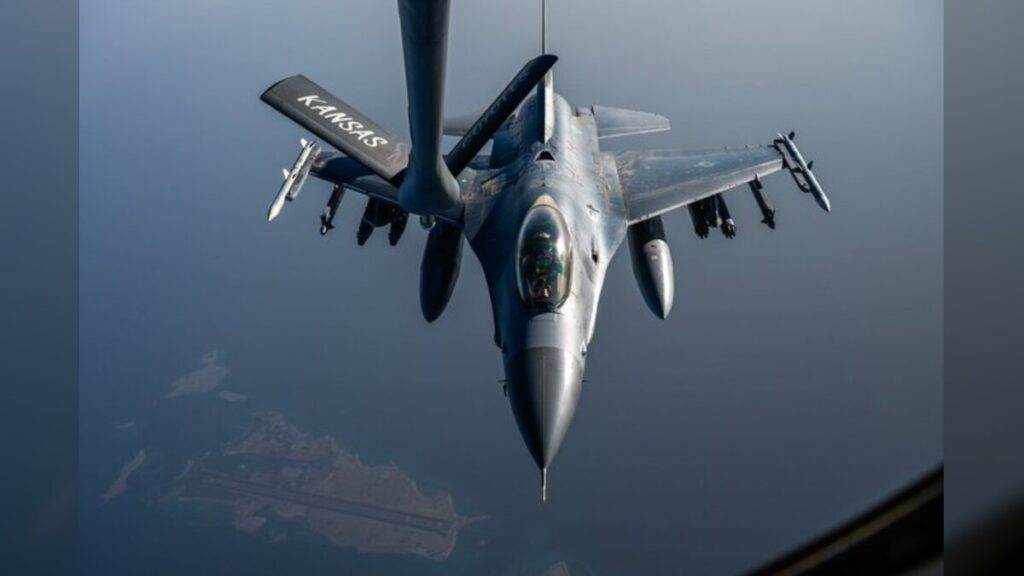
CENTCOM said U.S. Air Force F-16 fighter aircraft are among more than 100 land- and sea-based aircraft supporting Project Freedom.
These aircraft are being used to protect U.S. forces and defend commercial vessels. Their role likely includes patrols, overwatch, deterrence, and response to threats against shipping lanes.
USS Abraham Lincoln Launches Super Hornets
The aircraft carrier USS Abraham Lincoln is also part of the operation. CENTCOM said U.S. Navy F/A-18 Super Hornets launched from the carrier as it helps enforce the blockade on Iranian ports and support Project Freedom.

The Lincoln is described as one of two aircraft carriers involved in enforcing the blockade, showing that the U.S. has placed major strike and aviation assets into the region.
Helicopters Used Against Iranian Small Boats
U.S. Navy MH-60 Sea Hawk helicopters are supporting Project Freedom in and near the Strait of Hormuz.
CENTCOM also said Sea Hawk helicopters and U.S. Army AH-64 Apache helicopters were used earlier in the day to eliminate Iranian small boats that were threatening commercial shipping.
That claim suggests the operation has moved beyond deterrence and patrols into direct action against perceived threats at sea.
USS Pinckney Patrols and Monitors Merchant Traffic
The guided-missile destroyer USS Pinckney was also identified as part of the blockade force. CENTCOM said the destroyer observed a merchant vessel while on patrol enforcing the U.S. blockade against Iran.
At the time of that update, 50 commercial vessels had reportedly been redirected by U.S. forces to ensure compliance. The newer figure now stands at 51 vessels, showing the number continues to rise.
Impact and Consequences
The immediate impact is on shipping connected to Iranian ports. With 51 vessels redirected, commercial operators face growing uncertainty if their routes involve Iran. Ships may be delayed, turned back, or forced to reassess routes, insurance risks, cargo plans, and port schedules.
For Iran, the blockade could restrict maritime commerce and increase economic pressure. For the wider region, the consequences are more complicated.
A large U.S. military presence may reassure some commercial operators, but it also raises the risk of confrontation if Iranian forces or vessels challenge the blockade.
The reported use of helicopters to eliminate Iranian small boats adds a sharper military edge to the operation. It suggests U.S. forces are prepared to use force when they believe commercial shipping or American forces are under threat.
What’s next?
The next phase will likely depend on how Iran and commercial shipping operators respond. If more vessels attempt to enter or leave Iranian ports, the number of redirected ships may continue to climb.
U.S. forces are expected to keep patrols active around the Arabian Sea, Gulf of Oman, and Strait of Hormuz.
More aircraft carrier sorties, helicopter patrols, destroyer operations, and merchant-vessel monitoring are likely if the blockade remains in force.
The key question is whether the operation stays controlled or triggers a wider escalation involving Iranian naval assets, small boats, drones, missiles, or regional proxies.
Summary
U.S. Central Command says American forces have now redirected 51 vessels as part of a naval blockade designed to stop commercial ships from entering or leaving Iran.
The operation is being backed by major U.S. naval and air assets, including the USS George H.W. Bush, USS Abraham Lincoln, USS Tripoli, USS Pinckney, F-16s, F/A-18 Super Hornets, MH-60 Sea Hawks, and AH-64 Apache helicopters.
At the same time, Project Freedom is being used to protect commercial shipping through the Strait of Hormuz, even as the blockade increases pressure on Iran.
Bulleted Takeaways:
- U.S. forces say 51 vessels have been directed to turn around or return to port.
- The blockade is aimed at stopping commercial ships from entering or leaving Iran.
- USS George H.W. Bush is operating in the Arabian Sea.
- The carrier has more than 60 aircraft on board.
- USS Tripoli is supporting flight operations while sailing in the Arabian Sea.
- U.S. warships and aircraft are enforcing the blockade and supporting Project Freedom.
- Project Freedom is described as supporting commercial shipping through the Strait of Hormuz.
- More than 100 land- and sea-based aircraft are supporting the operation.
- U.S. Air Force F-16s are among the aircraft involved.
- F/A-18 Super Hornets launched from USS Abraham Lincoln.
- Lincoln is one of two carriers enforcing the blockade on Iranian ports.
- MH-60 Sea Hawk helicopters are supporting operations near the Strait of Hormuz.
- CENTCOM said Sea Hawk and AH-64 Apache helicopters eliminated Iranian small boats threatening commercial shipping.
- USS Pinckney is patrolling as part of the blockade force.
- The operation increases pressure on Iran while raising the risk of confrontation at sea.
