
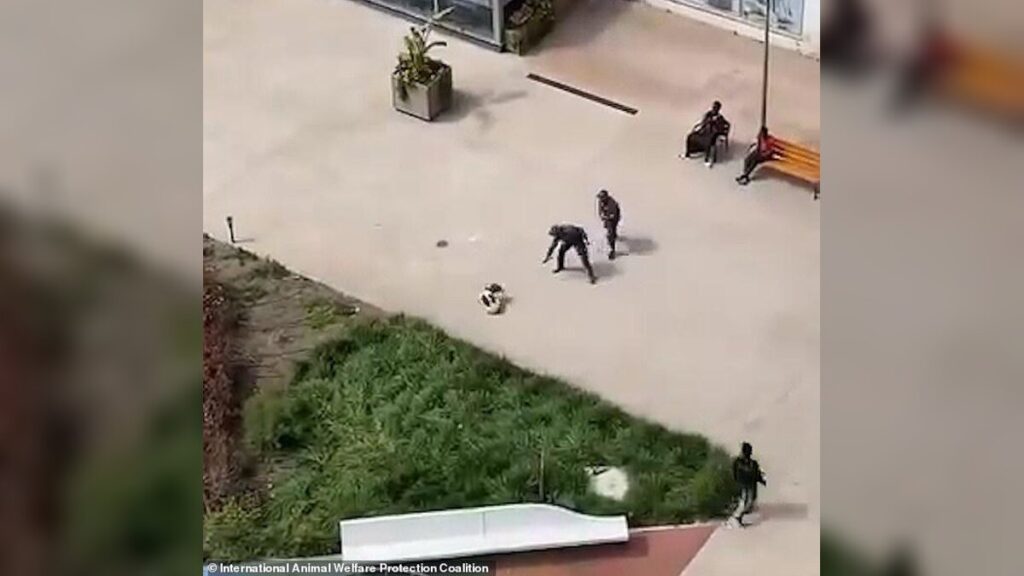
A wave of anger has spread across animal welfare groups and football fans after disturbing footage surfaced showing dogs being forcibly rounded up and removed in parts of Morocco.
The timing has intensified the backlash, coming as the country ramps up preparations for the 2030 FIFA World Cup, which it will co-host with Spain and Portugal.
The videos, reportedly filmed during a municipal “clean-up” operation in Marrakesh in March 2026, show street dogs being restrained with clamp-like devices and dragged into vans while visibly distressed.
In other clips, workers are seen using poles to capture dogs by the neck before loading them into vehicles and driving away.
Campaigners Claim a Surge in Killings Ahead of Global Tournament
Animal rights groups say the footage is not an isolated incident but part of a wider pattern that has worsened since Morocco was officially confirmed as a World Cup host in December 2024.
According to campaigners, as many as 500,000 dogs may be killed annually, with fears that the total could rise dramatically as the tournament approaches.
Some estimates from activist networks suggest that up to three million street and even owned dogs could be shot, poisoned, or captured in the lead-up to 2030.
They argue that the intensity of these operations increases whenever international inspections or FIFA-related visits take place, suggesting an attempt to present cleaner-looking cities for global audiences.
Government Response and Official Position
Moroccan authorities strongly reject claims of mass killings.
Officials maintain that the country is following a humane approach focused on sterilisation, vaccination, and controlled release of stray dogs.
They point to a Trap, Neuter, Vaccinate, Release (TNVR) programme launched in 2019, along with investments in veterinary services and public health infrastructure.
The government insists there is no planned cull and denies allegations of systematic killing ahead of the World Cup.
Morocco’s Embassy in London has also dismissed the accusations, calling them “entirely untrue” and stressing that the country is committed to sustainable animal management.
FIFA Faces Growing Scrutiny Over Host Commitments
Pressure is mounting on FIFA as the controversy unfolds during a sensitive period for global football governance.




The issue is expected to be raised at the 76th FIFA Congress in Vancouver, where top officials are gathering to discuss preparations for upcoming tournaments.
Critics argue that assurances made during Morocco’s bid process—including claims that dog culling had been prohibited since 2024—are now being called into question.
Campaigners say this raises serious concerns about whether hosting commitments are being properly enforced.
FIFA, however, has stated it is engaging with local authorities and reviewing animal welfare commitments made during the bidding process.
It also confirmed collaboration with international animal welfare experts who have submitted recommendations to Moroccan officials.
Activists and Celebrities Join the Backlash
The International Animal Welfare Protection Coalition (IAWPC), which represents more than 80 organisations, has described official assurances as misleading and claims that footage from alleged “killing facilities” contradicts government statements.
Its chairman, Les Ward MBE, has accused FIFA of ignoring warnings raised years earlier, arguing that the current situation represents exactly what campaigners feared when Morocco was awarded hosting rights.
Public figures have also added their voices.
Actor Mark Ruffalo has previously condemned the alleged killings, saying that building a global event on animal suffering reflects a “moral failure.”
Meanwhile, animal welfare organisations such as PETA have called for FIFA to take stronger action, including funding large-scale sterilisation programmes instead of relying on lethal control methods.
Impact and Consequences
The controversy is damaging Morocco’s global image at a time when it is preparing to welcome millions of international visitors.
It has also placed FIFA under renewed scrutiny over how host nations are evaluated and monitored after bidding approval.
For activists, the emotional impact is central—claiming the footage reflects widespread suffering not only among animals but also among communities exposed to violent scenes in public spaces.
If allegations continue to spread internationally, they could also affect public perception of the 2030 World Cup, potentially shifting focus away from sport and toward ethical concerns about event preparation practices.
What’s next?
The issue is expected to escalate at upcoming FIFA meetings, where pressure may grow for stronger enforcement of animal welfare commitments in host countries.
Campaign groups are likely to continue releasing documentation and lobbying international bodies, while FIFA is expected to further engage with Moroccan authorities to verify compliance with agreed standards.
At the same time, calls for independent investigations and increased transparency are becoming louder, particularly as the tournament draws closer and international attention intensifies.
Summary
Disturbing footage allegedly showing the mass capture of stray dogs in Morocco has triggered global outrage ahead of the 2030 World Cup.
While campaigners claim the situation reflects widespread and increasing killings linked to tournament preparations, Moroccan authorities insist they are carrying out humane population control measures.
FIFA now finds itself under growing pressure to address the allegations and ensure compliance with its animal welfare commitments.
Bulleted Takeaways
- Shocking videos allegedly show dogs being rounded up and removed during municipal operations in Morocco
- Campaigners claim killings of stray dogs have increased since Morocco was confirmed as a 2030 World Cup host
- Estimates suggest up to 500,000 dogs may be killed annually, with fears of much higher figures ahead of the tournament
- Moroccan authorities deny a cull, saying they use sterilisation and vaccination programmes instead
- FIFA is facing pressure to verify animal welfare commitments tied to its World Cup hosting agreements
- Activist groups accuse officials of worsening conditions during international inspection periods
- Celebrities and animal welfare organisations have joined calls for stronger action and accountability
- The controversy is now expected to be raised at major FIFA governance meetings in Vancouver
