
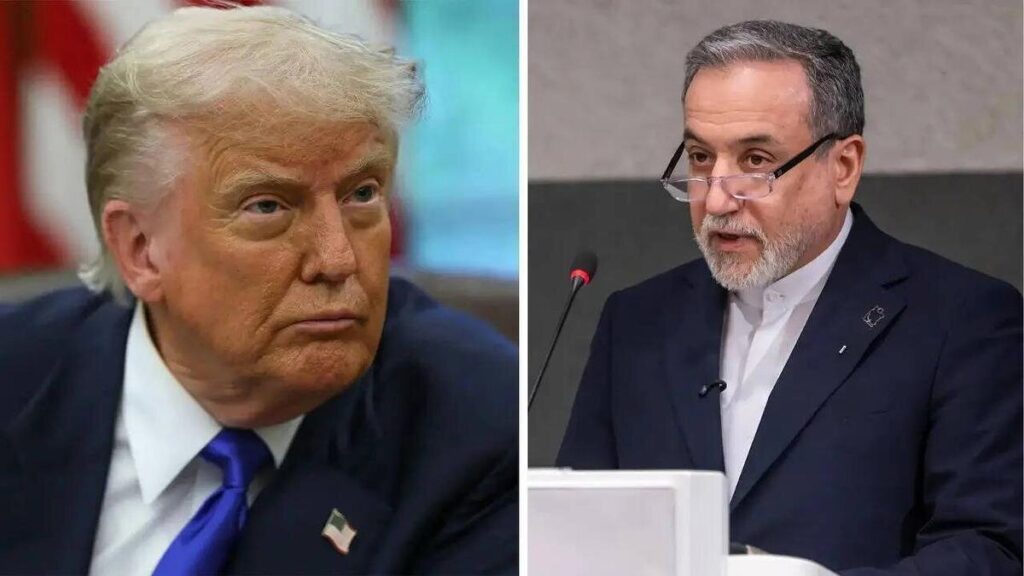
Tensions between Washington and Tehran sharpened again this week as Iran’s foreign minister, Abbas Araghchi, used a high-profile visit to Moscow to dismiss remarks made by U.S. President Donald Trump about American strength in the Middle East.
Speaking to Russian media during talks in the Kremlin with Russian President Vladimir Putin, Araghchi challenged Trump’s narrative head-on, questioning why Washington would even seek negotiations if it was truly “winning” the regional conflict.
His comments added fresh fuel to already strained relations, coming at a time when diplomacy, military posturing, and energy markets are all moving in tense alignment.
“Why Ask for Talks?” — Iran Questions U.S. Strategy
Araghchi didn’t hold back when addressing Trump’s recent statements about American dominance in the Middle East conflict.
He argued that Iran’s resistance has frustrated Washington’s objectives and said the push for renewed negotiations contradicts claims of victory.
According to him, Iran remains firm despite pressure from what he described as the world’s most powerful nation, insisting that U.S. demands previously caused diplomatic progress to collapse.
He also hinted that Moscow could play a role in easing tensions, noting that Putin has expressed readiness to support efforts aimed at de-escalation.
Oil Markets React as Global Tensions Escalate
Energy markets responded quickly to the rising geopolitical temperature.
Brent crude oil surged to around $110 per barrel, marking a 2.4% increase after another strong gain the day before.
The U.S. benchmark also climbed, with West Texas Intermediate rising to roughly $98 per barrel.
The rally reflects growing investor concern that instability in the Middle East could disrupt supply routes, particularly as maritime tensions persist around key shipping corridors.
Russia Weighs In on Hormuz Control Debate
Adding another layer to the diplomatic friction, Russia’s ambassador to the United Nations, Vassily Nebenzia, suggested that Iran has the right to control access through the Strait of Hormuz during wartime conditions.
The remarks were framed as a defence of national sovereignty, though they also sharply criticized Western policy.
Nebenzia accused Western governments of masking what he called coercive actions under legal language, even comparing their behaviour to piracy.
The statement is likely to further complicate already fragile international discussions around maritime security.
Mossad Praises Operations Amid Ongoing Regional Strikes
Israel’s intelligence agency Mossad has publicly highlighted what it described as “groundbreaking” operations carried out against Iran and Hezbollah during the ongoing conflict.




Its director, David Barnea, said intelligence gathered from deep within enemy networks has significantly strengthened Israel’s military positioning alongside the Israel Defense Forces.
The Israeli military, known as the IDF, continues to operate across multiple fronts, particularly in Lebanon, where cross-border exchanges remain active despite ceasefire arrangements.
Oil Giants Feel the Pressure of Conflict Economics
The economic ripple effect of the conflict is also being felt in the corporate sector.
Energy major BP reported a sharp rise in profits, more than doubling its expected earnings for the quarter.
The company linked part of the surge to elevated global oil prices driven by Middle East instability.
Analysts say energy firms are benefiting in the short term, even as long-term uncertainty grows over supply stability and shipping security.
Military and Maritime Tensions Spread Across the Region
Security developments continue across multiple flashpoints.
Israeli forces reported intercepting a “suspicious aerial target” over southern Lebanon, where military operations remain active.
Local reports also described ongoing strikes and heavy weapons fire in several border towns.
Meanwhile, shipping data revealed that the superyacht Nord (superyacht), linked to Russian billionaire Alexey Mordashov, recently passed through the Strait of Hormuz — one of the world’s most sensitive maritime chokepoints.
The movement stands out given heightened restrictions and tensions in the area.
Wider Diplomatic Signals from Tehran
Iran has also continued to expand its diplomatic messaging.
Officials suggested the country is open to sharing defensive capabilities with allies, including members of the Shanghai Cooperation Organisation, which brings together several major Eurasian powers.
Separately, Iran’s embassy in London sparked controversy after urging Iranian expatriates to consider returning and participating in national defence efforts, a message critics say escalates wartime rhetoric abroad.
Impact and Consequences
The latest exchange between Iran, the United States, and Russia signals a widening diplomatic divide at a time when military activity and economic pressure are already elevated.
Rising oil prices are likely to intensify inflation concerns globally, especially for energy-importing nations.
Meanwhile, increased rhetoric around maritime control raises the risk of disruptions in key shipping routes, particularly through the Strait of Hormuz.
At the same time, intelligence and military operations from Israel and its allies suggest the conflict remains highly active behind the scenes, even where ceasefire agreements exist.
What’s Next?
Attention now shifts to whether backchannel negotiations involving Russia can create any real diplomatic opening between Washington and Tehran.
Energy traders will continue watching price movements closely, especially if shipping risks escalate further.
On the security front, analysts expect continued limited strikes and intelligence operations rather than a full-scale escalation — though the situation remains unpredictable.
Summary
Iran’s foreign minister has openly dismissed Donald Trump’s claims of U.S. dominance during talks in Moscow, while global oil prices surge on fears of supply disruption.
Russia has taken a more vocal stance on maritime rights, Israel has highlighted ongoing covert operations, and energy markets are reacting sharply to rising geopolitical tension.
Bulleted Takeaways
- Iran’s Abbas Araghchi challenged Trump’s claims during Kremlin talks
- Oil prices climbed to around $110 per barrel amid escalating tensions
- Russia’s UN envoy defended Iran’s control rights over strategic waters
- Israel’s Mossad and IDF report continued operations against regional threats
- BP profits surged due to higher global oil prices
- Shipping through the Strait of Hormuz remains highly sensitive
- Iran signals possible military cooperation with SCO member states
- Diplomatic tensions between Iran and the U.S. remain unresolved
