
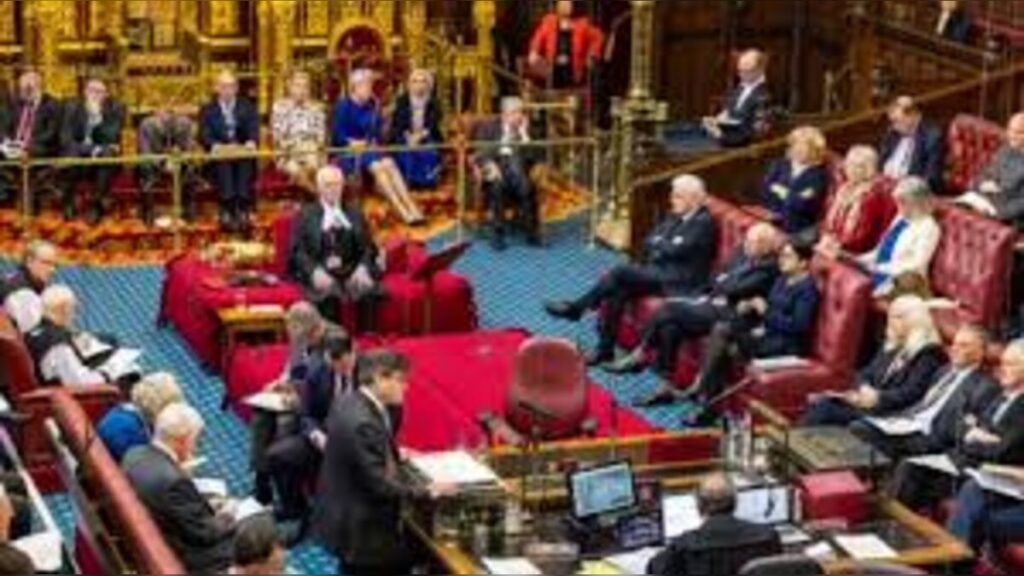
Something significant but surprisingly understated happened in the UK Parliament this week.
After centuries of tradition, the role of hereditary peers in the UK’s upper chamber has effectively come to an end.
The change arrived quietly, wrapped inside the formal closing of a parliamentary session, but its implications are anything but small.
The decision affects the House of Lords, where members have historically included not only appointed experts and bishops, but also individuals who inherited their seats through family titles.
That long-standing arrangement has now been brought to a formal end under new legislation introduced by the Labour government.
The Final Exit of Hereditary Peers
For the last time, several hereditary peers walked out of the chamber on Wednesday, April 29, marking the end of an era that dates back centuries.
Since reforms in 1999, only 92 hereditary peers were allowed to remain and vote in the Lords—but even that limited presence has now been removed entirely.
The change comes through the House of Lords (Hereditary Peers) Bill, which effectively reduces their number to zero.
While a few individuals may continue in the chamber as life peers, the hereditary principle itself has now been fully phased out.
It’s a quiet constitutional shift, but a historic one all the same.
Ceremony, Tradition, and the King’s Formal Role
The end of the session was marked in the traditional way, with the announcement of prorogation read in the presence of members of both Houses.
The message, delivered on behalf of King Charles III, signaled the formal closure of parliamentary business for the session.
Inside the chamber, Baroness Smith of Basildon read out the royal address, listing laws passed and confirming the legislative progress of the government.
At the same time, MPs—led by Speaker Sir Lindsay Hoyle—were summoned to the Lords by Black Rod as part of the long-established ceremonial tradition.
Even as the procedures felt familiar, the underlying shift in membership marked something entirely new.
Laws Passed Before the Curtain Came Down
As part of the final acts of the session, nine new laws received royal assent.




This formal approval was symbolically confirmed with the traditional Norman French phrase “Le Roy le veult,” meaning “The King wills it.”
The legislation covered a wide range of issues, from pensions and crime to education and devolution.
Among them were acts focused on victims’ rights, policing reforms, school systems, and environmental concerns like tobacco and vape regulation.
It was a packed legislative finish, reflecting a government keen to push through its agenda before the parliamentary reset.
Why This Change Matters
The removal of hereditary peers is more than a procedural adjustment.
It represents a broader shift in how the UK sees political legitimacy.
For centuries, birthright played a role in shaping the upper chamber. Now, that link has been fully broken.
This also aligns with decades of gradual reform, starting with the major changes in the House of Lords Act 1999, which first reduced hereditary influence.
The latest move completes what earlier reforms only partially achieved.
Supporters see it as a step toward a more merit-based chamber.
Critics, however, worry it concentrates too much power in appointed positions without sufficient democratic accountability.
Impact and Consequences
The immediate impact is symbolic but powerful: an end to hereditary membership in one of the world’s oldest parliamentary chambers.
It modernises the institution, but it also raises long-term questions about balance, diversity, and legitimacy.
There is also a political dimension. The reform strengthens the role of appointed life peers, increasing the influence of government and independent appointments over inherited privilege.
That shift may shape how legislation is reviewed and amended in future sessions.
For some peers leaving the chamber, it is the end of lifelong family tradition.
For Parliament, it is a step into a more uniform—but also more controlled—system of governance.
What’s Next?
Attention now moves to May 13, when MPs and peers return for the King’s Speech, which will outline the government’s next legislative priorities.
That event traditionally resets the political tone for the coming year and signals where major reforms will focus next.
There is also growing expectation that further constitutional reforms could follow, particularly around the powers and structure of the upper chamber itself.
While this change closes one chapter, it may not be the last major adjustment to the House of Lords.
Summary
The UK Parliament has officially ended the centuries-old presence of hereditary peers in the House of Lords.
Marked during the prorogation ceremony attended by King Charles III and senior political figures, the reform completes a long process of modernisation that began decades ago.
While largely symbolic in immediate effect, it represents a major constitutional shift in how Britain’s upper chamber is structured and legitimised.
Bulleted Takeaways
- Hereditary peers have been formally removed from the House of Lords
- The change was enacted through the House of Lords (Hereditary Peers) Bill
- Only 92 hereditary peers had remained since 1999, now reduced to zero
- The prorogation ceremony was held in the presence of King Charles III
- Baroness Smith of Basildon read out the royal legislative summary
- Sir Lindsay Hoyle led MPs during the formal ceremonial proceedings
- Nine new laws were granted royal assent before the session ended
- The reform shifts the Lords further toward appointed membership
- MPs and peers return on May 13 for the King’s Speech
- The change marks a major step in modernising the UK’s constitutional structure

