
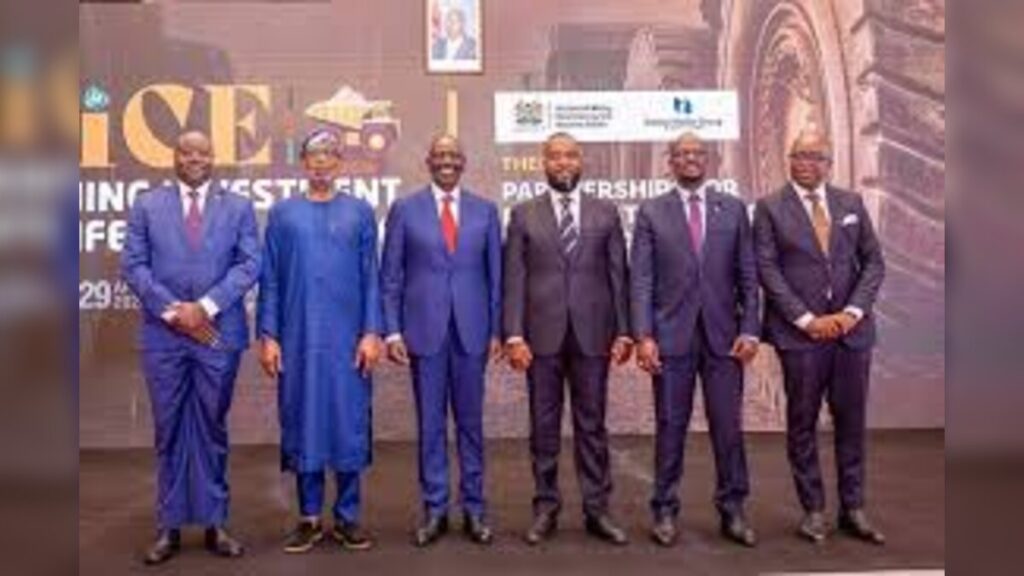
At the Kenya Mining Investment Conference and Exhibition 2026, Nigeria’s Minister of Solid Minerals Development, Oladele Alake, delivered a clear message that echoed across the room:
Africa cannot continue to sit on vast mineral wealth while remaining at the bottom of global value chains.
Speaking through a statement released by his media aide, Lara Owoeye-Wise, Alake pushed for deeper cooperation among African nations, arguing that fragmentation is costing the continent both money and influence.
His argument wasn’t abstract—it was rooted in a growing global reality where critical minerals are becoming as strategic as oil once was.
Africa Is Rich in Minerals but Poor in Value Capture
Africa holds some of the world’s most sought-after resources, including lithium, cobalt, graphite, manganese, and rare earth elements.
These materials are essential for electric vehicles, renewable energy systems, smartphones, and advanced manufacturing.
Yet despite this advantage, most African countries still export raw materials with minimal processing.
The real profits—refining, manufacturing, and technology production—happen elsewhere.
Alake pointed out that this pattern has been repeating for decades, leaving Africa dependent on importing finished goods made from its own resources.
The result is fewer jobs, slower industrial growth, and weaker economic resilience.
Why Isolation Is Becoming a Bigger Problem
One of the strongest warnings from Alake was about working in isolation.




In a global economy where supply chains are shifting rapidly due to energy transitions and geopolitical tensions, no single African country has enough leverage on its own.
He stressed that fragmented policies and disconnected mining regulations reduce bargaining power when negotiating with international partners.
In his words, unity is not just political—it is economic survival.
A Push for a United Mineral Strategy
The minister called for African countries to align mining policies and strengthen cooperation through shared frameworks. Key areas he highlighted include:
- Harmonising mining laws across borders
- Building cross-border mineral transport corridors
- Expanding regional processing and refining hubs
- Strengthening geological data systems
- Boosting intra-African trade under the African Continental Free Trade Area (AfCFTA)
The idea is simple: instead of competing individually, African nations could benefit more by acting as a coordinated bloc.
The Growing Role of the Africa Minerals Strategy Group
Alake also highlighted the Africa Minerals Strategy Group, which was established in January 2023 with 16 member states and has since grown to 31 countries.
The group is designed to help African nations speak with a more unified voice in global negotiations and improve how mineral wealth is managed.
It focuses on:
- Better governance and transparency
- Joint negotiation of mineral deals
- Shared infrastructure development
- Improved investment conditions
- Stronger regulatory coordination
This, according to Alake, is becoming a key platform for shifting Africa from raw exports to industrial participation.
Impact and Consequences
If Africa adopts stronger cooperation in its mining sector, the potential effects could be significant:
- Increased local processing of minerals instead of raw exports
- More jobs created in mining-linked manufacturing industries
- Higher government revenue from value-added production
- Reduced dependence on imported finished goods
- Stronger negotiating power in global supply chains
However, failure to coordinate could deepen existing problems, including continued resource leakage and missed industrial opportunities.
What’s Next?
The next phase will depend heavily on whether African governments move from policy discussions to implementation.
Key developments to watch include:
- Expansion of regional processing plants and mineral corridors
- Progress under the African Continental Free Trade Area
- Policy alignment between mining ministries across member states
- Foreign investment flows into African value-added industries
- Expansion of the Africa Minerals Strategy Group’s influence
Experts believe the global demand for clean energy minerals gives Africa a limited but important window to reposition itself.
Summary
Oladele Alake is urging African countries to stop operating in isolation and instead build a coordinated mineral strategy.
While the continent is rich in critical resources, it continues to lose value by exporting raw materials without processing them locally.
Through regional cooperation, harmonised policies, and stronger institutions like the Africa Minerals Strategy Group, Africa could shift from being a raw supplier to a global industrial player.
Bulleted Takeaways
- Minister Oladele Alake calls for stronger African cooperation in mining
- Africa holds major global reserves of critical minerals like lithium and cobalt
- Most African countries still export raw materials with little value addition
- Fragmented policies weaken Africa’s global bargaining power
- Africa Minerals Strategy Group has grown from 16 to 31 member states
- Key proposal includes harmonised regulations and shared infrastructure
- AfCFTA seen as a major tool for boosting intra-African mineral trade
- Value addition could drive jobs, revenue, and industrial growth
- Risk remains if Africa fails to coordinate its mineral strategy
- Opportunity exists due to global demand for clean energy minerals

