
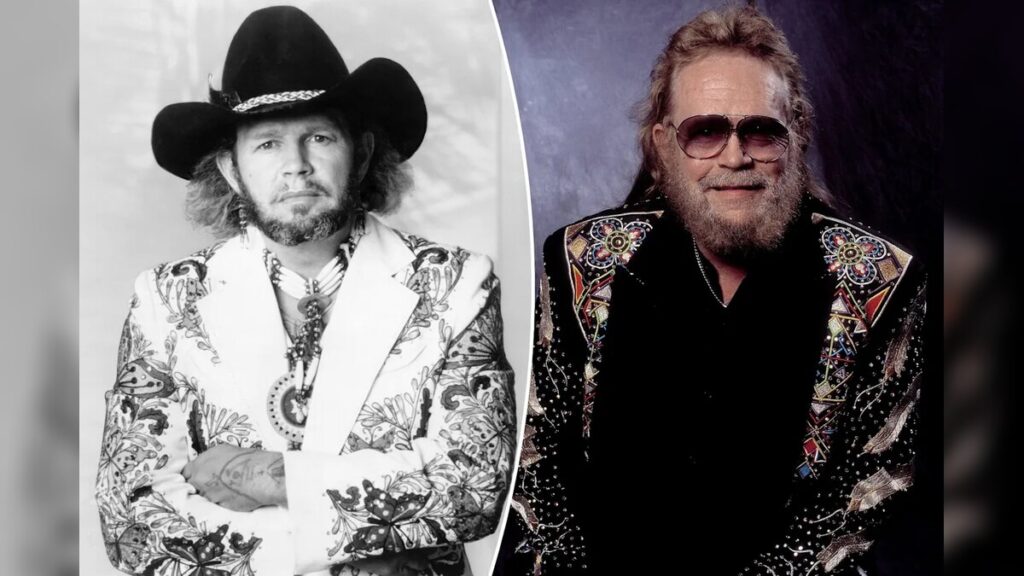
The country music world has lost one of its most polarizing and influential figures.
David Allan Coe, known for pushing boundaries in both sound and attitude, has died at the age of 86.
His representative confirmed that he passed away on Wednesday at approximately 5:08 p.m., describing him as a “Country Music treasure” who deeply appreciated his fans.
The statement also praised him as a true outlaw spirit in the industry, highlighting his long career as a singer, songwriter, and performer.
Coe had reportedly been in intensive care before his death.
In recent years, he had faced several health challenges, including a COVID-19 hospitalization in 2021 and knee replacement surgery two years earlier.
A Life That Started Far From the Spotlight
Born in Akron, Ohio, Coe’s early life took a difficult turn when he spent a significant portion of his twenties in prison.
It was during this time that he began seriously developing his connection to music, setting the foundation for the career that would later define him.
After his release in 1967, he moved to Nashville and started performing on the streets as a busker.
That raw beginning shaped the rugged, outsider identity he carried throughout his career.
Rise of an Outlaw Country Icon
Coe released his first album, Penitentiary Blues, in 1970, drawing directly from his experiences behind bars.
He quickly built a reputation as a songwriter with a sharp edge and an unapologetic voice.
By the early 1970s, he was writing major hits for other artists, including Tanya Tucker’s 1973 chart-topper “Would You Lay with Me (In a Field of Stone).”
His own career also began gaining momentum with albums like The Mysterious Rhinestone Cowboy in 1974.
In 1975, he released Once Upon a Rhyme, featuring his breakthrough hit “You Never Even Called Me by My Name,” which became a country classic.




More success followed with albums such as Longhaired Redneck (1976) and Rides Again (1977).
He also wrote Johnny Paycheck’s famous 1977 hit “Take This Job and Shove It,” which earned him a Grammy nomination.
Over nearly six decades, Coe released an impressive 42 studio albums, building a catalog that helped define the “outlaw country” movement alongside artists like Willie Nelson and Waylon Jennings.
Fame, Outlaw Identity, and Controversy
Coe often embraced his reputation as a rebel within country music, openly leaning into the outlaw label.
In interviews, he insisted he had been living that lifestyle long before it became a recognized movement in the industry.
However, his legacy is complicated. He faced long-standing criticism for racially offensive and controversial material recorded in underground releases during the 1980s.
Reports later surfaced that some of these recordings contained deeply offensive themes, leading to widespread backlash.
Although those recordings were later made available through his website in 2000, Coe denied accusations of racism, arguing that he was never given a fair chance to respond to the claims made against him.
His career, therefore, remains a mix of musical influence and enduring controversy that continues to shape how he is remembered.
Health Struggles in Later Years
In the final years of his life, Coe’s health had become a growing concern.
He was hospitalized in 2021 after contracting COVID-19 and underwent knee replacement surgery shortly before that.
Despite these setbacks, he remained a recognized figure in country music circles, especially among fans of traditional outlaw country sounds.
Impact and Consequences
Coe’s death marks the end of one of country music’s most unconventional careers.
His influence helped shape the outlaw country movement, giving voice to artists who resisted the polished Nashville system.
At the same time, his controversial work continues to spark debate about separating an artist’s musical contributions from their personal or artistic choices.
For many fans, he remains a defining figure of raw, unfiltered country storytelling, while others view his legacy through a more critical lens.
The industry now faces the broader question of how his work will be remembered in future country music histories.
What’s Next?
Tributes are expected to come from across the country music community, especially from artists influenced by the outlaw movement.
His extensive catalog will likely see renewed attention, streaming spikes, and retrospective discussions about his role in shaping modern country music.
There may also be renewed scrutiny of his more controversial recordings, as historians and critics revisit his career in full context.
Summary
David Allan Coe has died at 86 after a period of declining health.
Known for his outlaw country identity, songwriting success, and decades-spanning career, he leaves behind a complex legacy that blends musical influence with long-standing controversy.
Bulleted Takeaways
- Country singer-songwriter David Allan Coe died at 86 on Wednesday at around 5:08 p.m.
- He had been in intensive care and faced health issues, including COVID-19 in 2021 and knee surgery.
- Coe was a major figure in outlaw country music, releasing 42 studio albums over nearly 60 years.
- He wrote major hits including “You Never Even Called Me by My Name” and “Take This Job and Shove It.”
- His career included both major musical influence and long-running controversy over offensive underground recordings.
- Coe consistently denied accusations of racism and defended his artistic intent.
- His death closes a long and divisive chapter in American country music history.
