
The #EndSARS protests didn’t start as a political storm.
They began in early October 2020 after yet another disturbing video went viral—showing alleged brutality by operatives of the Special Anti-Robbery Squad (SARS) in Ughelli, Delta State.
That clip, shared widely on social media, ignited anger that had been building for years.
Within days, the hashtag #EndSARS turned into a national rallying cry.
Young Nigerians took to the streets in cities like Lagos, Abuja, Port Harcourt, and beyond, demanding the disbandment of SARS and broader police reforms.
What began as peaceful demonstrations quickly grew into one of the largest youth-led movements in Nigeria’s recent history.
The Lekki Toll Gate in Lagos became the most visible focal point of the protests.
It wasn’t just a meeting place—it turned into a symbol of resistance, drawing global attention as crowds camped, sang, and displayed placards for days.
Lai Mohammed’s Claim: Disinformation Changed the Direction of the Protests
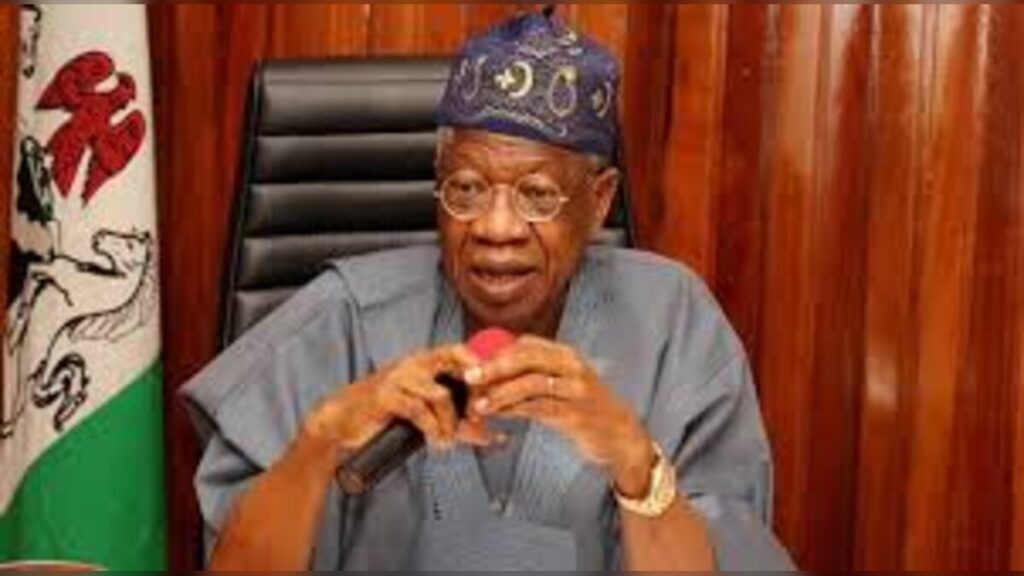
Speaking at an event at the London School of Economics and Political Science, former Minister of Information and Culture, Lai Mohammed, argued that while the protests started with legitimate grievances, they were later overtaken by misinformation and fake news.
According to him, the government’s biggest difficulty during the crisis wasn’t just communication—it was the speed and scale at which unverified information spread online and across media platforms.
He pointed specifically to the moment troops were deployed around the Lekki Toll Gate, saying that this phase triggered a surge of conflicting narratives, viral claims, and emotionally charged content that made the situation harder to manage.
Mohammed also criticised sections of international media coverage, including reports from CNN, alleging that some stories relied on unverified or misleading materials that intensified global outrage.
The Lekki Toll Gate Incident and Media Storm
One of the most controversial moments of the protest came on October 20, 2020, when reports emerged of military personnel at the Lekki Toll Gate.
Conflicting accounts followed immediately—some claiming shootings occurred, others disputing the scale or nature of the event.
This confusion created a vacuum that social media filled rapidly.
Videos, photos, and live streams circulated widely, some verified, others later questioned.
It became difficult for the public to separate fact from speculation in real time.




The incident remains one of the most debated events in recent Nigerian history, partly because of the lack of unified, immediately verifiable information during the chaos.
Government Communication Strategy and COVID-19 Lessons
Beyond #EndSARS, Lai Mohammed also reflected on Nigeria’s communication approach during the COVID-19 pandemic.
He noted that there was no ready blueprint for handling a crisis of that scale, since the last comparable global outbreak had been over a century earlier.
To manage public messaging, authorities adopted daily briefings, multilingual messaging, radio programmes, and outreach campaigns across both urban and rural communities.
Materials were translated into major Nigerian languages and Pidgin English to widen accessibility.
He also referenced opinion polling conducted during the period, which he said showed strong public approval of the government’s communication efforts.
Security Messaging and North-East Conflict Coverage
Mohammed also recalled efforts to reshape public perception of Nigeria’s counter-insurgency operations in the North-East.
According to him, media tours were organised for journalists to visit previously conflict-affected areas, allowing firsthand reporting of reclaimed territories.
The aim, he explained, was to counter narratives that painted the region as entirely overrun, and to show progress made by security forces.
Town hall meetings across the country were also part of broader attempts to improve government-citizen communication, giving officials direct access to public concerns in open forums.
Twitter Suspension and the Misinformation Debate
He further defended the Nigerian government’s 2021 suspension of Twitter (now X), describing it as a response to unresolved concerns about harmful content, misinformation, and perceived incitement.
The suspension, which lasted several months, drew criticism both locally and internationally, with many viewing it as a clampdown on free expression.
The government later lifted the ban after negotiations with the platform.
Impact and Consequences
The #EndSARS protests marked a turning point in Nigeria’s civic and digital activism landscape.
One major consequence was the heightened awareness of how quickly online information—true or false—can influence real-world events.
It also deepened conversations around police reform, accountability, and youth engagement in governance.
However, it equally exposed trust deficits between citizens and institutions, especially regarding official narratives during crises.
Internationally, Nigeria faced increased scrutiny over its handling of protests, media freedom, and security responses.
Domestically, the Lekki Toll Gate incident remains a sensitive subject that continues to shape public discourse.
What’s Next?
Years after the protests, debates around what truly happened—and how it was reported—are still ongoing.
Government officials continue to emphasise misinformation as a key factor in escalation, while activists and observers stress issues of accountability and transparency.
Future responses to civil unrest in Nigeria are likely to place more emphasis on real-time communication strategies, digital monitoring, and media coordination.
There is also growing pressure for clearer frameworks on how authorities engage with social media platforms during crises.
Summary
Lai Mohammed’s remarks at the London School of Economics revisit one of Nigeria’s most defining modern protest movements.
He argues that while #EndSARS began with legitimate demands, it was ultimately shaped—and in some cases intensified—by misinformation spreading rapidly across digital and traditional media.
The discussion ties into broader issues Nigeria continues to face: trust in government communication, the influence of social media during crises, and the challenge of managing public narratives in real time.
Bulleted Takeaways
- #EndSARS began in October 2020 after viral videos of alleged police brutality sparked nationwide outrage
- The movement quickly expanded through social media and mass street protests
- Lekki Toll Gate became the central symbol of the demonstrations
- Lai Mohammed says fake news and disinformation worsened the crisis response
- The government faced major challenges controlling narratives during troop deployment at Lekki
- International media coverage, including CNN reports, was criticised by the former minister
- COVID-19 communication strategies included multilingual messaging and nationwide broadcasts
- Nigeria also used media tours in the North-East to reshape conflict narratives
- The 2021 Twitter suspension was defended as a response to misinformation concerns
- The legacy of #EndSARS continues to shape discussions on governance, policing, and digital information control

