
What should have been a simple football build-up ahead of the Soweto Derby between Orlando Pirates and Kaizer Chiefs quickly spilled into political territory in South Africa.
The match, scheduled for Sunday, 26 April, became the backdrop for a heated exchange between political heavyweights.
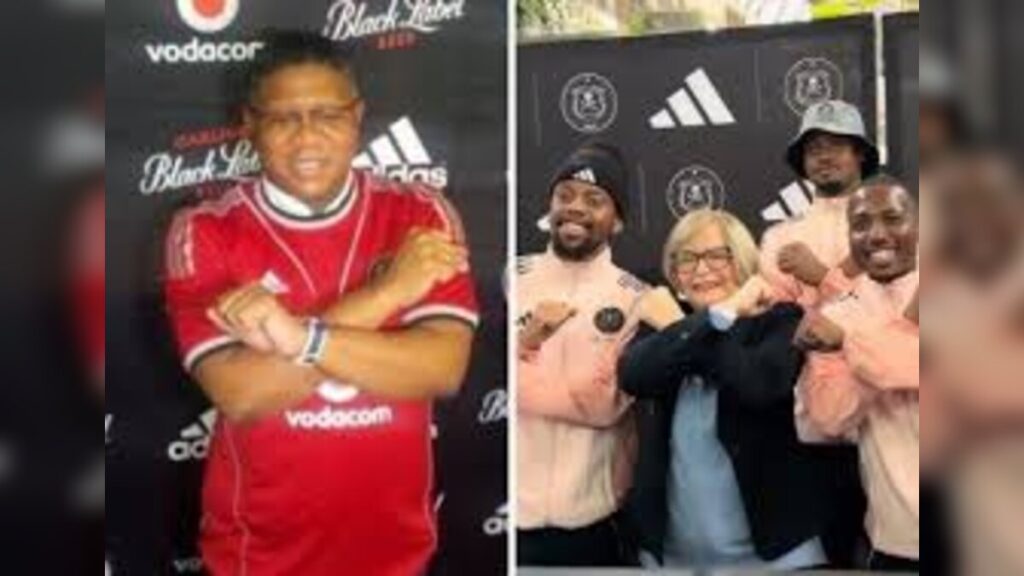
At the centre of it all was Helen Zille, former Democratic Alliance leader and current Joburg mayoral candidate, who publicly showed support for Orlando Pirates.
Her actions included wearing the club’s new jersey, attending team-related events, and receiving a vintage signed kit linked to the club’s historic 1995 continental success.
For many fans, it looked like a celebrity-style show of support. For others, it looked political.
Fikile Mbalula Fires Shots Over Alleged “Campaign Support”
ANC Secretary-General Fikile Mbalula didn’t hold back.
Taking to social media, he accused Zille of using Orlando Pirates as a political tool aimed at appealing to black voters ahead of elections.
In his post, he suggested her enthusiasm for the club was not genuine, describing it as “patronising” and politically calculated.
In his view, it was less about football and more about image-building in a highly competitive political landscape.
He also insisted that long-time Pirates supporters could see through what he considered an opportunistic display.
The Bigger Political Crowd Joins the Debate
Mbalula wasn’t alone in his criticism.
Several prominent South African figures also questioned Zille’s sudden visible support for the Soweto-based club.
Names like Gauteng Premier Panyaza Lesufi, EFF leader Julius Malema, ActionSA’s Michael Beaumont, and outspoken media personality Ntsiki Mazwai all weighed in, suggesting her involvement felt staged or politically motivated.
At the same time, her supporters argued that there is nothing unusual about politicians aligning themselves with popular cultural institutions like football clubs, especially during campaign season.
Helen Zille’s Football Engagements Under Scrutiny
Zille’s interaction with Orlando Pirates supporters and players included attending events and posting about her excitement ahead of the derby.



She also shared moments from receiving club merchandise and engaging with fans.
While she has previously expressed admiration for the club, critics argue that the timing—close to political activity in Johannesburg—makes her involvement look strategic rather than spontaneous.
The controversy highlights how deeply football and politics often overlap in South Africa, especially around major matches like the Soweto Derby, which is one of the country’s biggest sporting events.
Football Culture Meets Political Identity in South Africa
In South Africa, football is more than sport—it’s identity, history, and community pride.
Clubs like Orlando Pirates and Kaizer Chiefs are not just teams; they are cultural institutions with massive followings across generations.
Because of this emotional weight, political figures often find themselves walking a fine line when engaging with teams.
Any appearance of alignment can quickly be interpreted as messaging aimed at voters rather than fans.
Online Backlash and Public Division
As expected, the debate exploded on social media.
Mbalula’s comments drew thousands of reactions, with users split between supporting his criticism and accusing him of focusing on the wrong issues.
Some argued that political leaders should prioritise governance challenges like infrastructure, service delivery, and corruption, rather than football allegiances.
Others felt his comments reflected legitimate concerns about political image-making.
Impact and Consequences
The incident has once again highlighted how quickly sports culture can become politically charged in South Africa.
It also shows how football clubs, especially high-profile ones like Orlando Pirates, are often pulled into broader national debates.
For politicians, public engagement with sports now carries higher scrutiny than ever.
What may appear as harmless fan interaction can easily be interpreted as calculated political branding.
For the public, it reinforces ongoing scepticism about authenticity in political messaging, especially during election periods.
What’s Next?
With the Soweto Derby approaching, attention is expected to remain high both on and off the pitch.
Political commentary around the match is likely to continue, especially if public figures remain visible in football spaces.
Going forward, similar controversies may influence how politicians engage with sports teams, possibly leading to more cautious public appearances or more deliberate communication strategies.
Summary
The clash between Fikile Mbalula and Helen Zille over Orlando Pirates support has turned a football moment into a political debate.
While Zille’s engagement with the club was presented as enthusiasm for sport, critics argue it carries political undertones linked to voter influence.
The situation reflects a broader reality in South Africa where sport, identity, and politics often intersect in highly visible and emotionally charged ways.
Bulleted Takeaways
- Soweto Derby build-up triggered political controversy in South Africa
- Helen Zille publicly engaged with Orlando Pirates ahead of the match
- Fikile Mbalula accused her of using football to attract black voters
- Other political figures also questioned her sincerity
- Orlando Pirates and Kaizer Chiefs rivalry remains culturally significant
- Social media reactions were divided over Mbalula’s criticism
- The incident highlights overlap between sports culture and political messaging
- Public trust issues around political authenticity were reinforced
- Football engagement by politicians now faces increased scrutiny
- The debate is likely to continue as election season approaches

