
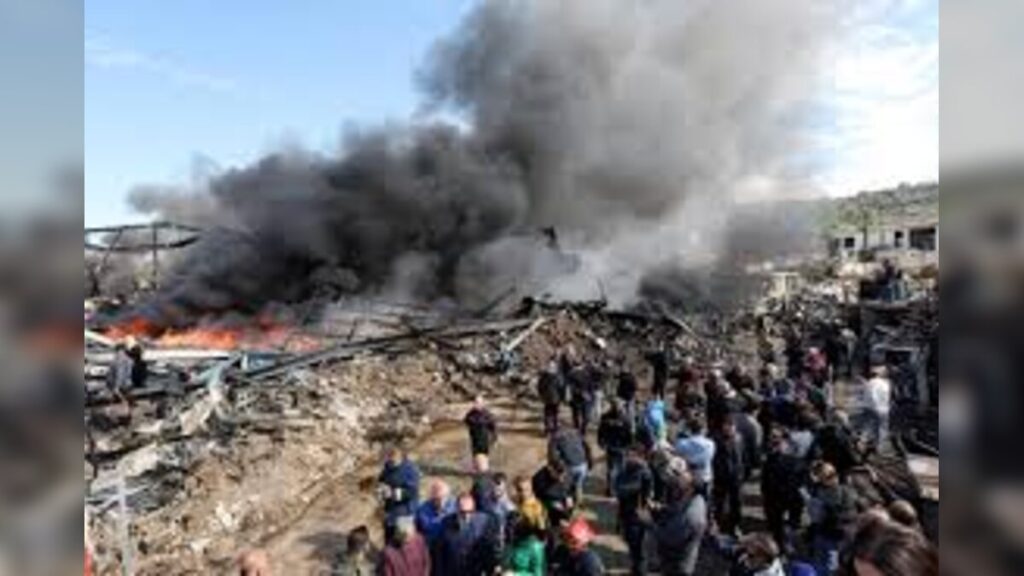
Things flared up once more along the northern frontier after rocket fire was reported toward the Israeli community of Shtula, a small settlement close to the border.
In response, the Israel Defense Forces carried out strikes targeting positions linked to Hezbollah in southern Lebanon.
The situation is part of an already fragile and volatile border dynamic that has been simmering for months, with both sides frequently exchanging fire in limited but escalating cycles.
What Triggered the Latest Strikes
According to military statements, rockets were launched toward Shtula, prompting a swift response.
The IDF said it targeted what it described as Hezbollah military infrastructure in the areas of Kherbet Selem and Touline in southern Lebanon.
These kinds of strikes are typically framed by Israel as defensive actions aimed at degrading militant capabilities and preventing further attacks near its northern communities.
On the ground, however, these exchanges often unfold quickly—rocket fire, followed by artillery or air responses within hours.
Southern Lebanon Once Again in the Spotlight
The areas mentioned, including Kherbet Selem and Touline, sit within a broader region in southern Lebanon that has frequently been associated with cross-border tensions.
southern Lebanon has long been a sensitive zone, especially given the presence and influence of Hezbollah, which maintains both political and military structures across parts of the area.
While local communities live daily life there, the region also sits within range of recurring military activity tied to the Israel-Lebanon border conflict.
A Conflict That Never Fully Cools Down
The latest exchange fits into a broader pattern of tit-for-tat incidents that have intensified since the wider regional escalation following the Israel-Gaza war period.




Even when large-scale war is avoided, border areas between Israel and Lebanon have seen frequent drone activity, rocket launches, and retaliatory strikes.
Security analysts often describe it as a “managed but unstable” conflict—contained enough to avoid full-scale war, but unpredictable enough to flare up at any time.
Why These Exchanges Matter
Each incident like this adds pressure to an already tense border.
Even limited strikes can carry wider risks, including miscalculation or escalation beyond intended targets.
For Israel, actions are usually framed around deterrence and protecting northern communities.
For Hezbollah, responses are often tied to broader regional positioning and solidarity narratives.
But in practical terms, civilians on both sides of the border are the ones most affected by disruptions, evacuations, and uncertainty.
Impact and Consequences
The immediate impact is a rise in military alertness along the border region, with both the Israel Defense Forces and Hezbollah likely adjusting their defensive postures.
For communities near Shtula and surrounding areas, this means continued insecurity and the possibility of further alerts or evacuations.
On a broader level, these exchanges contribute to regional instability and keep international diplomatic efforts under pressure, especially as multiple Middle East flashpoints remain active at the same time.
What’s Next?
What happens next depends largely on whether either side chooses to escalate or contain the situation.
If rocket fire continues, further strikes from the IDF are likely.
If not, the situation may return to a tense quiet—though not a true resolution.
Diplomatic actors, including international mediators, typically push for de-escalation after incidents like this, but enforcement is limited and largely dependent on the parties involved.
Summary
Rocket fire toward Shtula prompted the Israel Defense Forces to strike Hezbollah-linked military structures in Kherbet Selem and Touline in southern Lebanon.
The exchange reflects ongoing border tensions between Israel and Hezbollah that continue to flare intermittently.
Bulleted Takeaways
- Rockets were launched toward the Israeli border community of Shtula
- The IDF responded with strikes in southern Lebanon
- Targets included areas in Kherbet Selem and Touline
- Hezbollah-linked sites were reportedly hit
- The incident is part of ongoing Israel–Lebanon border tensions
- Southern Lebanon remains a recurring flashpoint region
- Risk of further escalation remains if exchanges continue

