
The Federal Government is preparing a draft executive bill aimed at strengthening Nigeria’s legal framework for combating cybercrime and addressing emerging digital threats, including those associated with artificial intelligence.
Attorney-General of the Federation and Minister of Justice, Lateef Fagbemi, disclosed this in a message delivered on his behalf by the Director of Public Prosecutions of the Federation, Rotimi Oyedepo, at the second International Cybersecurity Conference in Abuja.
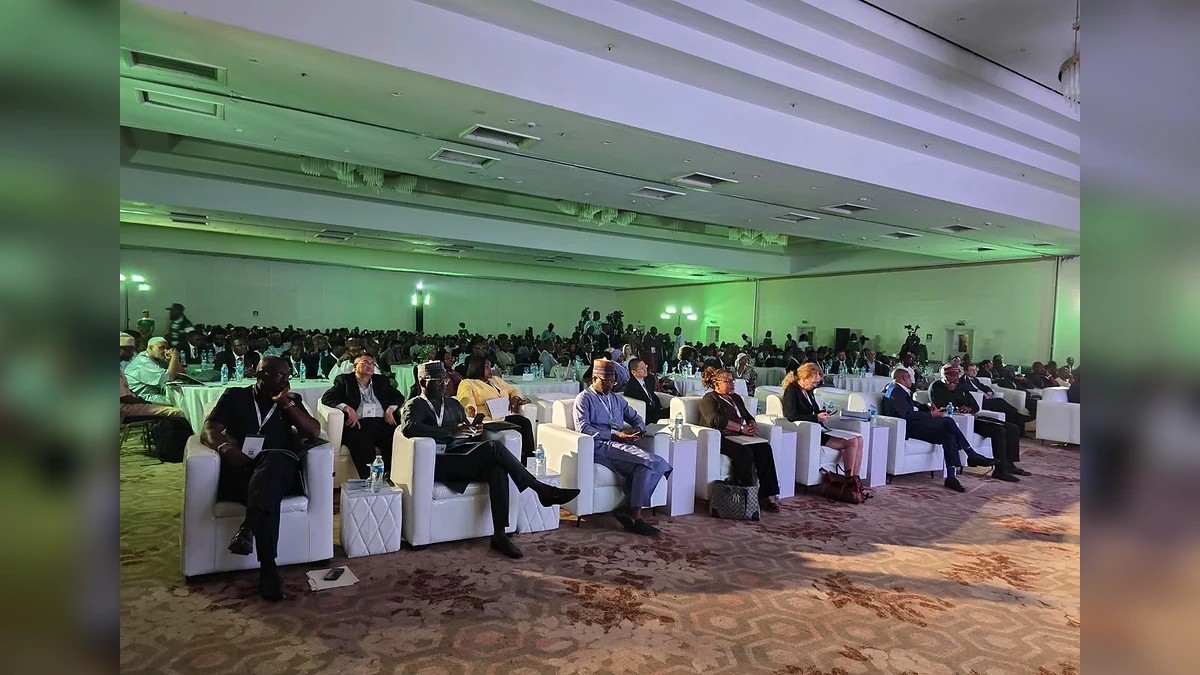
The 2026 conference, organised by the National Information Technology Development Agency (NITDA), was held under the theme, “Cyber Resilience in the Age of AI: Defending Minds, Networks and Nations”.
Fagbemi said the Federal Ministry of Justice had advanced work on legislation intended to strengthen the country’s response to evolving cyber threats.
“The Federal Ministry of Justice has advanced work on a draft executive bill to strengthen our legal framework,” he said.
Government Seeks Laws to Address AI-Driven Cybercrime
Fagbemi said advances in technology had expanded the scope of cybercrime, creating threats to financial systems, national security, personal dignity and public trust.
He explained that the government wanted legislation capable of responding to emerging technologies while supporting the preservation and exchange of electronic evidence, effective investigations and prosecutions.
The Attorney-General also stressed that efforts to improve cybersecurity must respect fundamental rights and the rule of law.
“Our objective is clear, we support laws that respond to emerging technologies, facilitate the preservation and exchange of electronic evidence, support effective investigation and prosecution, and uphold human rights and the rule of law,” he said.
He added that security measures must protect individual liberty rather than undermine it, reaffirming his office’s commitment to cooperation across government institutions and society.
NITDA Highlights the Growing Role of Artificial Intelligence in Cybersecurity
NITDA Director-General, Kashifu Inuwa, said cybersecurity and cyber resilience served related but different purposes.
He explained that cybersecurity focused on preventing attacks, while cyber resilience concerned an organisation’s ability to recover after an attack.




Inuwa noted that artificial intelligence had provided sophisticated tools for both attackers and those seeking to defend digital systems, requiring organisations to adapt their security strategies.
He said the conference would examine threats beyond physical and digital infrastructure, including attacks targeting individuals.
According to him, cybercriminals increasingly exploit people to obtain information or access rather than attempting to breach technical systems directly.
“In the age of AI today, it is very difficult defending or attacking with AI itself because you need to think of attacking and defending using AI because AI has many sophisticated tools for the attackers as well as for the people,” Inuwa said.
He added that how organisations use the technology would influence their ability to protect themselves.
NITDA Collaborates With Security Adviser and National Assembly
Inuwa disclosed that NITDA was working with the Office of the National Security Adviser and the National Assembly to review the Cybercrimes Act and strengthen Nigeria’s cybersecurity policy framework.
The proposed review is intended to address challenges arising from developments in the digital environment and improve the country’s capacity to respond to cyber threats.
Senate Committee Chairman Calls for Greater Coordination
Chairman of the Senate Committee on ICT and Cybersecurity, Senator Shuiabu Salisu, called for stronger collaboration among government institutions and other stakeholders to address challenges affecting Nigeria’s digital ecosystem.
Salisu proposed a retreat involving relevant ministries, regulatory agencies, security institutions and other stakeholders to identify common priorities and develop coordinated strategies.
He also recommended establishing a national cyber resilience index to assess the security capabilities of organisations and provide a framework for measuring and improving their preparedness against cyberattacks.
Data Protection Commission Warns About AI-Enabled Breaches
National Commissioner of the Nigeria Data Protection Commission (NDPC), Dr Vincent Olatunji, highlighted the importance of data protection and privacy in building public trust in artificial intelligence.
In a presentation titled “Trust by Design: Data Protection and Privacy in the Age of Artificial Intelligence”, Olatunji said AI-enabled data breaches cost an average of $6 million, approximately $1 million above the global average cited in his presentation.
He also reported that one in four malicious data breaches was AI-enabled, representing a 56 per cent year-on-year increase. Additionally, 43 per cent of breaches involved unapproved or unsecured AI tools.
NDPC Calls for Privacy and Security to Be Built Into AI Systems
Olatunji said building trust in artificial intelligence required action from regulators, developers, organisations and citizens.
He said regulators should establish clear rules, while developers should integrate privacy and security safeguards into AI systems. Organisations, he added, needed to assess risks and demonstrate compliance with applicable requirements.
Citizens also had a role to play by understanding their data protection rights, making informed decisions and reporting suspected misuse of personal information.
Olatunji stressed that trust should be incorporated into the design and deployment of AI systems rather than addressed only after problems emerged.
More Than 700 Participants Attend Abuja Conference
The conference attracted more than 700 participants representing approximately 200 organisations, including members of academia, industry, government policymakers and other stakeholders.
Discussions focused on cybersecurity, artificial intelligence, data protection, cyber resilience and cooperation among institutions responsible for protecting Nigeria’s digital environment.
