
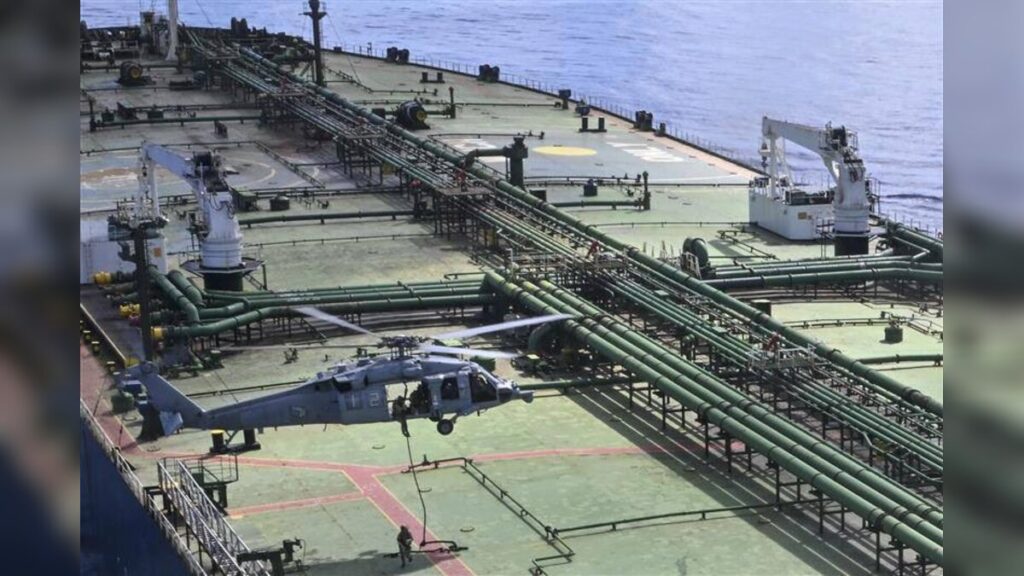
U.S. forces say they carried out an overnight maritime interdiction involving the vessel M/T Majestic X in the Indian Ocean, describing it as a sanctioned stateless ship transporting oil from Iran.
The boarding took place within the INDOPACOM area of responsibility, according to a statement attributed to the Department of War.
Boarding Operation Targets Vessel Accused of Supporting Iran
In the statement, U.S. officials said the operation included a right-of-visit boarding, a move typically used at sea when forces seek to verify the status, identity, or activity of a vessel.
The ship was described as operating without state protection and allegedly involved in moving Iranian oil, placing it directly in the path of U.S. maritime enforcement efforts.
Rather than presenting the action as a one-off event, the message framed it as part of a broader campaign aimed at disrupting networks accused of helping Iran move restricted cargo across international waters.
Washington Signals a Wider Crackdown at Sea
The wording of the statement makes clear that the U.S. wants this interdiction seen as part of a global enforcement strategy.
Officials said maritime operations will continue against vessels believed to be giving material support to Iran, regardless of where those ships are operating.
That language suggests Washington is trying to send a warning well beyond a single vessel.
The message is that ships involved in sanctioned trade, especially oil movement tied to Iran, could face interception far from the Gulf and even outside the immediate Middle East theater.
International Waters at the Center of the Message
One of the strongest points in the statement is the claim that international waters cannot be used as protection by sanctioned actors.
That line appears aimed at reinforcing the U.S. position that geographic distance and open-sea transit will not stop future interdictions.
By stressing freedom of maneuver in the maritime domain, the statement also suggests the U.S. intends to challenge not just one shipment, but the broader routes and methods used by vessels accused of sanctions evasion.

Why the M/T Majestic X Matters
The mention of a named vessel gives this incident more weight than a vague enforcement announcement.
By publicly identifying M/T Majestic X, U.S. officials appear to be making an example of the ship while also signaling to operators, insurers, cargo handlers, and shipping networks that sanctioned maritime activity is under closer watch.
For commercial shipping markets, vessel naming also increases scrutiny.
Once a ship becomes publicly associated with sanctions enforcement, it can face greater difficulty securing access, counterparties, and operational flexibility.
Impact and Consequences
This operation could raise pressure on maritime networks involved in transporting Iranian oil, especially those relying on opaque ownership structures, stateless registration issues, or routing through distant waters.
Interdictions of this kind can disrupt deliveries, delay cargo movement, and increase legal and financial exposure for anyone linked to the shipment.
There is also a wider strategic effect.
A boarding in the Indian Ocean shows that enforcement tied to Iran is not being limited to the Gulf alone.
That broadens the sense of risk for operators across multiple shipping lanes and may force some companies to rethink routes, cargo partnerships, and vessel documentation practices.
Diplomatically, the move could add to regional and international tensions.
Iran and parties sympathetic to it may view such operations as escalation, while the U.S. is clearly presenting them as lawful enforcement against sanctions evasion.
What’s next?
The next likely step is increased monitoring of vessels suspected of carrying Iranian oil or assisting related shipping networks.
U.S. forces may continue using interdictions, inspections, and public naming of ships to build pressure on operators believed to be involved in sanctions violations.
Attention will now turn to whether more vessels are stopped in coming days, whether additional cargoes are identified, and whether this latest boarding triggers diplomatic protests or retaliatory rhetoric.
Shipping companies operating in sensitive areas may also begin reviewing compliance more aggressively to avoid being caught up in similar actions.
Summary
The U.S. says it boarded the M/T Majestic X overnight in the Indian Ocean as part of a maritime interdiction targeting a sanctioned stateless vessel allegedly carrying Iranian oil.
Officials framed the move as part of a wider global enforcement effort to break up illicit maritime networks linked to Iran.
More than just a single boarding, the operation appears designed to send a message that the U.S. is prepared to challenge suspected sanctions evasion far beyond the Middle East’s immediate coastline.
Bulleted Takeaways:
- U.S. forces say they carried out an overnight boarding of the M/T Majestic X in the Indian Ocean.
- The vessel was described as a sanctioned stateless ship transporting oil from Iran.
- The operation took place within the INDOPACOM area of responsibility.
- U.S. officials said the boarding was part of a wider maritime enforcement campaign.
- Washington signaled that vessels supporting Iran could be targeted wherever they operate.
- The statement stressed that international waters will not shield sanctioned actors.
- The action could disrupt shipping networks tied to Iranian oil movement.
- The operation may increase legal, financial, and political pressure on maritime operators linked to sanctioned trade.
