
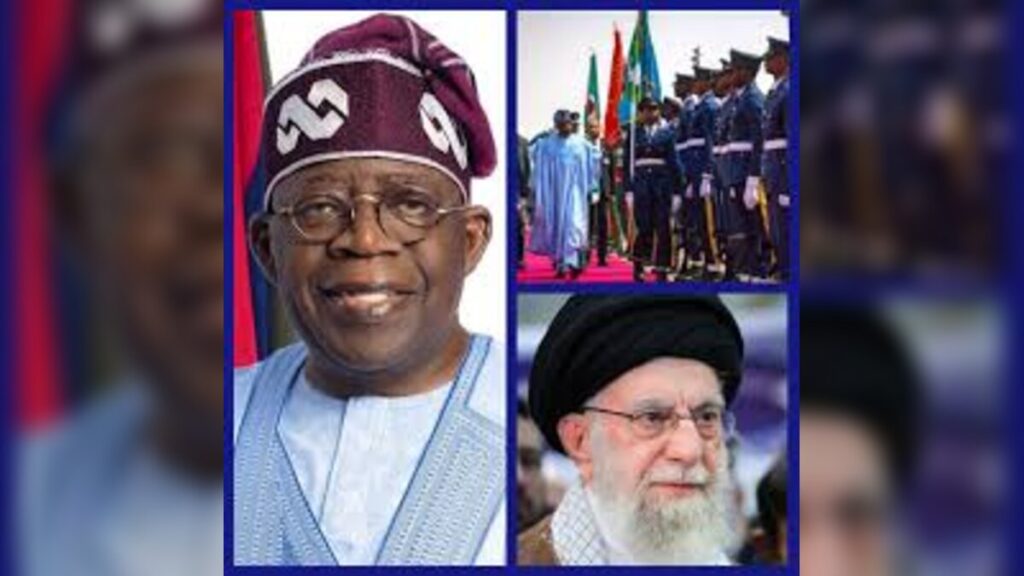
Nigeria’s President Bola Tinubu has publicly voiced support for the United Arab Emirates after recent attacks targeting civilian and economic infrastructure in the Gulf state.
His message, shared through his official X account, framed Nigeria’s position as firmly aligned with global stability and the protection of non-combatants.
The statement comes at a time when tensions in the Middle East are already running high, with multiple regional actors exchanging strikes and counterstrikes that have raised fears of broader escalation.
Nigeria’s Position: Peace, Stability, and Civilian Protection
In his remarks, Tinubu emphasized that Nigeria stands for international peace and the safeguarding of civilian life.
He specifically condemned attacks that endanger non-military targets, including infrastructure tied to daily life and national economies.
He also expressed direct support for UAE leadership, particularly Sheikh Mohamed bin Zayed Al Nahyan, acknowledging the country’s efforts to defend its population and critical facilities during the ongoing tensions.
The tone of the message reflects Nigeria’s long-standing diplomatic posture of supporting multilateral stability while avoiding alignment with conflict escalation.
Escalation in the Middle East and Regional Fallout
The broader situation traces back to rising tensions between Iran and a coalition involving the United States and Israel.
Earlier strikes—reportedly linked to an operation referred to as “Operation Fury”—were carried out following allegations related to Iran’s nuclear ambitions.
In response, Iran launched missile and drone attacks across parts of the Gulf region, with the UAE among the affected states.
These retaliatory strikes triggered widespread air defence responses.
Systems such as THAAD and Patriot interceptors were deployed by the UAE, reportedly stopping hundreds of incoming projectiles.
However, some breaches still led to damage in areas including Abu Dhabi and Dubai, with reports of injuries and civilian casualties.
Diplomatic Efforts Struggling to Hold Ground
Attempts to de-escalate the situation through diplomatic channels have so far made limited progress.


One round of talks held in Islamabad, Pakistan, reportedly ended without agreement, leaving the situation unresolved.
Further discussions are being considered, but with continued exchanges of attacks in the region, diplomatic momentum has been difficult to maintain.
This pattern is not unusual in Middle Eastern conflicts, where ceasefire negotiations often run parallel to ongoing military activity rather than stopping it outright.
Why Nigeria’s Statement Matters
Even though Nigeria is geographically distant from the conflict zone, its voice carries diplomatic weight within the African Union and broader Global South discussions.
Statements like Tinubu’s are often used to signal alignment with international norms—particularly the protection of civilians and critical infrastructure during armed conflict.
They also reinforce Nigeria’s interest in maintaining stable trade and energy relationships with Gulf nations, which remain key partners.
Historically, Nigeria has also played roles in peacekeeping missions and conflict mediation efforts across Africa, which adds context to its emphasis on stability in external conflicts.
Impact and Consequences
The ongoing conflict has several ripple effects beyond the immediate region.
Energy markets remain sensitive to disruptions in the Gulf, and any escalation involving the UAE could influence global oil prices and shipping routes.
Civilian infrastructure damage also increases humanitarian concerns, particularly in densely populated urban areas.
The use of advanced missile defence systems highlights both the intensity of the attacks and the high cost of maintaining regional security.
Diplomatically, statements like Tinubu’s contribute to international pressure for restraint, but they also underline how globalized the conflict has become, drawing in voices from outside the immediate theatre of war.
What’s Next?
The immediate outlook depends heavily on whether diplomatic negotiations can regain momentum.
If talks resume, they may focus on reducing direct attacks on civilian infrastructure and establishing temporary ceasefire arrangements.
However, continued missile exchanges could complicate any peace efforts.
Regional actors are likely to maintain heightened military readiness, while international partners may push for renewed mediation frameworks.
For Nigeria and other countries observing from afar, the focus will likely remain on diplomatic engagement and support for de-escalation efforts through multilateral institutions.
Summary
President Bola Tinubu has publicly expressed solidarity with the United Arab Emirates following recent attacks on civilian and economic infrastructure amid rising Middle East tensions.
The statement reinforces Nigeria’s broader stance on global peace and civilian protection.
Meanwhile, ongoing conflict involving Iran and regional partners continues to escalate, with limited diplomatic progress so far.
Bulleted Takeaways
- Bola Tinubu condemned attacks on civilian infrastructure in the UAE
- Nigeria reaffirmed support for peace, stability, and protection of civilians
- United Arab Emirates has faced missile and drone attacks amid regional escalation
- UAE defence systems like THAAD and Patriot have intercepted many projectiles
- Some strikes still caused damage and civilian injuries in cities like Abu Dhabi and Dubai
- Conflict traces back to rising Iran–US–Israel tensions and alleged nuclear-related disputes
- Diplomatic talks in Islamabad ended without resolution, with further negotiations uncertain
- Global energy markets and regional security remain sensitive to further escalation

