
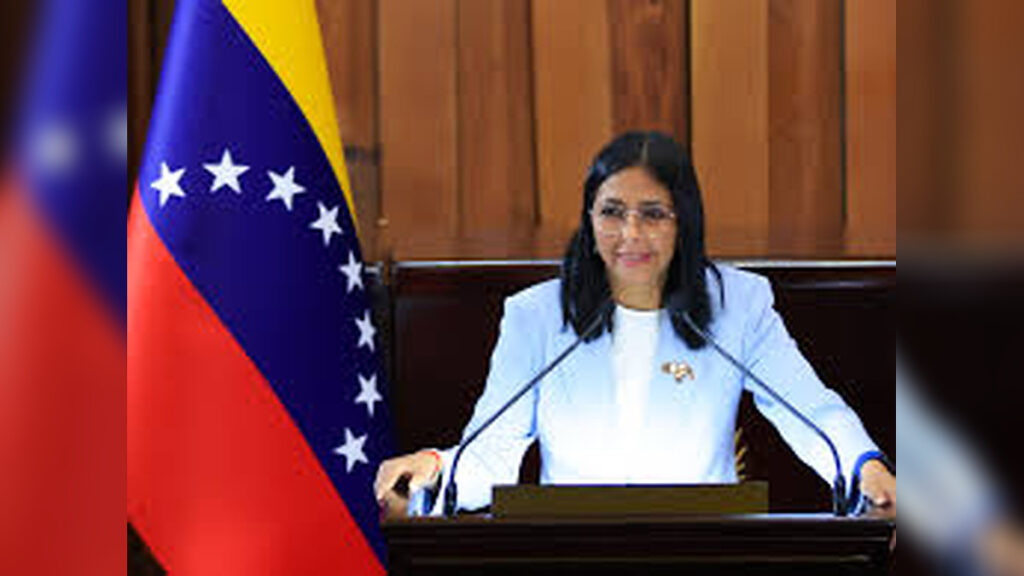
Authorities in Venezuela have announced a formal investigation into the death of political prisoner Víctor Hugo Quero Navas after growing public anger over the circumstances surrounding his detention and death in state custody.
The move came shortly after the passing of his elderly mother, Carmen Navas, whose emotional search for her missing son had become symbolic of the country’s broader human rights crisis.
According to government statements, interim President Delcy Rodríguez ordered a full investigation and requested cooperation from the Ombudsman’s Office and the Public Prosecutor’s Office.
Officials say the findings will eventually be made public.
The Long Search for Víctor Hugo Quero Navas
Quero, who was 51 years old, had been arrested in January 2025 on terrorism-related charges.
Human rights organizations have repeatedly argued that such accusations were often used by the government of former president Nicolás Maduro to silence critics and political opponents.
For more than a year, his family said they received little or no clear information about where he was being held.
His mother, Carmen Navas, reportedly visited prisons, hospitals, courts, and government offices in a desperate effort to locate him.
The situation became even more disturbing when authorities eventually disclosed that Quero had actually died months earlier while in custody.
Officials claimed he died on July 24, 2025, in a military hospital in Caracas from acute respiratory failure linked to pulmonary thromboembolism.
Human rights advocates questioned why the family was not informed immediately and why his burial allegedly took place without their knowledge.
A Mother’s Pain Became a National Symbol
Carmen Navas, who was over 80 years old, became widely known across Venezuela because of her tireless campaign to find her son.
Friends and relatives said she neglected her own worsening health while focusing entirely on discovering what had happened to him.
After authorities finally acknowledged Quero’s death, Navas reportedly demanded that his remains be exhumed so she could personally identify them.
The exhumation later took place in Caracas in the presence of forensic officials and family members.
Only days later, Carmen Navas herself died, intensifying public anger and grief across the country.



Her death triggered emotional reactions from activists, opposition figures, students, and rights groups.
Questions Continue to Surround the Official Narrative
The Venezuelan government insists Quero received medical treatment before his death and says prison officials had no information regarding family contacts.
Critics, however, argue that the explanation raises even more questions.
Several organizations have accused authorities of mishandling the case, withholding information, and failing to follow legal procedures regarding detainees and family notifications.
Rights groups such as Foro Penal say Quero’s case reflects a broader pattern involving enforced disappearances, secret detentions, and poor prison conditions.
The organization reports that roughly 20 political prisoners have died in Venezuelan custody since 2014.
Political Prisoners Remain a Major Human Rights Issue
Even after a political amnesty announced earlier this year following Maduro’s removal from power, activists say hundreds of political detainees are still imprisoned.
Organizations monitoring Venezuela’s prison system continue to report overcrowding, lack of medical care, alleged torture, and prolonged detention without due process.
International watchdogs including Amnesty International and the Inter-American Commission on Human Rights have repeatedly criticized the country’s detention practices.
The Quero case has now become one of the most emotionally charged examples of those concerns because it combined allegations of disappearance, delayed notification, secret burial, and the eventual death of a grieving mother.
Impact and Consequences
The political fallout from the case is already growing inside and outside Venezuela.
Student groups recently staged demonstrations in Caracas demanding accountability and justice for both Quero and his mother.
Protesters carried photos of Carmen Navas and accused the state of cruelty and negligence.
International attention on Venezuela’s human rights record is also likely to intensify.
Foreign governments and rights organizations may pressure authorities to allow independent investigations into detention conditions and treatment of prisoners.
Domestically, the case risks damaging public confidence in the transitional government led by Delcy Rodríguez, especially at a time when the administration is attempting to stabilize the country politically and economically after Maduro’s controversial exit.
For families of detainees, the incident has fueled renewed fear about transparency inside Venezuela’s prison system.
What’s Next?
The prosecutor’s office says a criminal investigation is already underway, while forensic examinations linked to the exhumation could play a key role in determining whether there were irregularities surrounding Quero’s death.
Human rights groups are expected to continue pushing for:
- Independent forensic reviews
- Access to detention records
- Accountability for prison officials
- International monitoring of political detainees
Meanwhile, opposition groups are likely to use the case to renew calls for prison reform and broader institutional changes.
Whether the government’s investigation produces credible answers remains uncertain, but the case has already become one of the defining human rights controversies in Venezuela this year.
Summary
The deaths of Víctor Hugo Quero Navas and his mother, Carmen Navas, have shaken Venezuela and reignited debates about political repression, prison conditions, and government transparency.
Quero died in custody months before authorities publicly acknowledged his death, while his elderly mother spent over a year desperately searching for him.
Her death shortly after identifying his exhumed body transformed the tragedy into a powerful symbol of suffering for families of political detainees.
Now, with a state investigation underway, many Venezuelans are waiting to see whether the case leads to real accountability or simply becomes another unresolved chapter in the country’s long-running political crisis.
Bulleted Takeaways
- Venezuelan authorities have opened an investigation into the death of political prisoner Víctor Hugo Quero Navas.
- Quero reportedly died in custody in July 2025, but officials disclosed the information months later.
- His mother, Carmen Navas, spent over a year searching for him before identifying his exhumed remains.
- Navas died only days after confirming her son’s death.
- Human rights groups say the case highlights deeper problems inside Venezuela’s prison system.
- Student protests and public outrage have increased pressure on the government.
- Rights organizations claim hundreds of political prisoners still remain detained in Venezuela.
- The investigation’s credibility could shape both domestic politics and international reactions to Venezuela’s human rights situation.

