
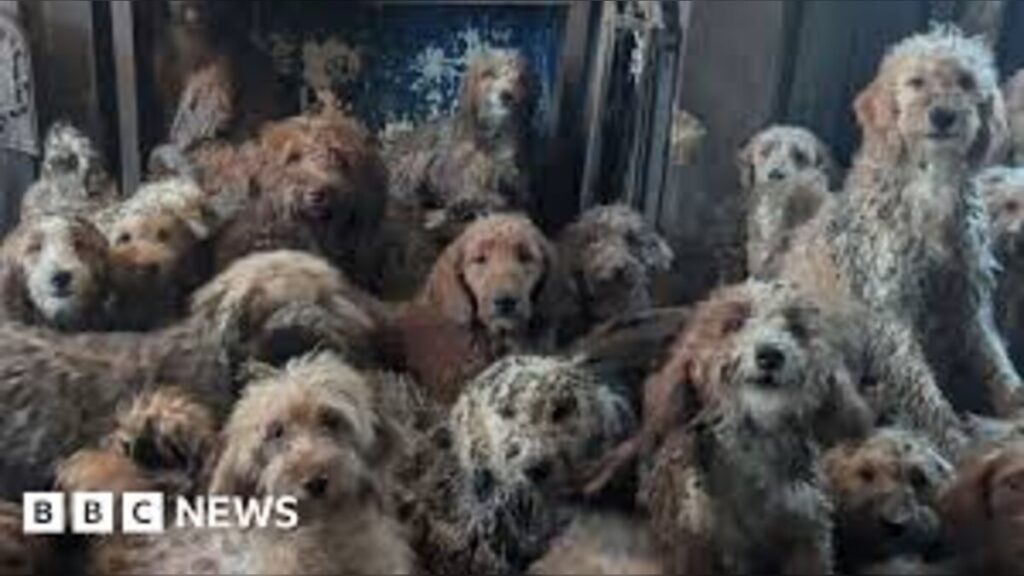
When photos first emerged of hundreds of poodles packed into a filthy Nottingham home, many people online genuinely believed the images had been created using artificial intelligence.
The scene looked too horrifying to be real.
Dogs with severely matted fur were squeezed together so tightly that it was hard to tell where one animal ended and another began.
But the nightmare was real.
The RSPCA and Dogs Trust stepped in after neighbours raised concerns about conditions inside the property.
What rescuers found was one of the most disturbing animal welfare cases many had ever witnessed.
Around 250 animals were discovered living in filth, surrounded by faeces, urine and overwhelming ammonia fumes.
Some dogs had painful skin sores, while others had coats so tangled they could barely move properly.
Only weeks later, many of those same dogs are now beginning completely different lives — sleeping in warm beds, running through gardens and learning what kindness feels like for the first time.
Inside the House of Horror
The rescue operation uncovered shocking living conditions.
According to animal welfare workers, the floor was coated in waste and many dogs had never experienced basic things such as walking on grass, using a lead or eating from a bowl.
Several animals were reportedly found sleeping inside a wood burner in the fireplace simply because there was nowhere else to go.
RSPCA staff described opening the front door and being met by what looked like “a sea of dogs.”
The smell inside was so strong it burned rescuers’ eyes.
The breeder linked to the property was described as “overwhelmed,” but animal welfare experts say the scale of neglect highlighted the dangers of uncontrolled breeding operations and poor oversight in parts of the pet trade.
Why People Thought the Images Were Fake
The original rescue photographs spread rapidly online because the images were so extreme many viewers struggled to accept they were genuine.
Dogs appeared fused together in enormous piles of tangled fur.
Their coats were stained with dirt and waste, and some animals were almost unrecognisable beneath the matting.
The RSPCA even had to publicly clarify that the pictures had not been generated by AI.
Animal charities say the reaction showed just how disconnected many people are from the reality of severe neglect cases.
Frontline rescuers, however, say situations like this sadly happen more often than the public realises.
Barney Finally Finds Safety
One of the rescued poodles, Barney, has already settled into a loving family home.
Donna and David Shultz adopted him along with their sons after being deeply moved by his frightened appearance.
Donna admitted the famous rescue image was difficult to process.
She said even knowing Barney had come from terrible conditions did not prepare them for seeing the reality of the photo.
Today, Barney is described as playful, affectionate and completely at home with his new family.
What once looked like a terrified, vulnerable dog has transformed into a happy companion enjoying a stable routine.
Boone Learns the World Is Not So Scary
Another rescued poodle, Boone, was underweight and badly matted when he was found.
Now living in London with the Murphy family, Boone is slowly discovering ordinary experiences most dogs take for granted.
His new owner Dermot Murphy revealed Boone had likely never walked on grass before.
During his first trip into the garden, he reportedly froze in place, overwhelmed by the unfamiliar sensation beneath his paws.




At first, Boone had to be carried because he did not understand leads or outdoor walks.
Weeks later, he has become more confident and playful, even developing what his owners jokingly describe as “a swagger.”
The family said Boone brought joy back into their home after the recent loss of another beloved dog.
Tiger Had Never Used a Food Bowl
Perhaps one of the saddest details to emerge involved a rescued dog named Tiger.
Her new owners discovered she did not understand what a feeding bowl was and initially had to be hand-fed.
Animal behaviour experts say dogs raised in overcrowded breeding environments often miss important stages of social and environmental development.
Many are never exposed to toys, furniture, outdoor spaces or positive human interaction.
Tiger is now adjusting to life alongside other dogs in a calm home environment where she is finally receiving proper care and companionship.
Winston’s Slow Journey Toward Trust
Ten-month-old Winston arrived at his new home terrified of almost everything.
His adopters, Lisa and Mark Bream, said he shook constantly during their first meetings.
He was even frightened by his own lead and collar.
The couple spent two weeks repeatedly visiting him at the rescue centre to build trust before taking him home.
At first, Winston had to be carried everywhere because everyday experiences felt overwhelming.
But gradually, his personality has started to emerge.
Now, one of his nightly habits involves gathering his toys and placing them neatly in his basket before bed — a small routine that reflects how secure he has begun to feel.
Jenny Discovers Comfort for the First Time
Another rescued poodle named Jenny quickly bonded with her new family in Hertfordshire.
Her owner, Jayne Parratt, recalled being shocked when she later saw the original rescue photograph and realised how serious Jenny’s condition had truly been before rehabilitation.
One touching moment came when the family unpacked Jenny’s new bed.
She immediately climbed into it and refused to leave.
For her owners, it was a heartbreaking reminder that Jenny may never previously have owned anything herself.
She has since formed a close friendship with the family’s other dog, Barney, and the pair now spend hours playing together before curling up beside each other on the sofa.
The Emotional Toll on Rescuers
For experienced RSPCA staff, the case left a lasting impact.
Anna White, who has worked with the charity for nearly four decades, described the rescue as the worst situation she had witnessed in her career.
She explained the dogs were not truly “living” in the house — they were merely surviving.
Despite everything, rescuers say the animals showed remarkable resilience.
Many quickly adapted once removed from the environment, responding positively to care, grooming, medical treatment and affection.
Animal welfare teams often say recovery stories like these are what keep them going after witnessing traumatic neglect cases.
The Bigger Problem Behind Puppy Breeding
Cases like this have reignited debate around puppy breeding regulations in the UK.
Animal welfare groups have long warned about irresponsible breeding operations where profit is prioritised over care.
Demand for designer breeds, especially poodles and doodle mixes, surged dramatically during and after the pandemic, leading to concerns about illegal or unethical breeding practices.
Experts say potential buyers should always research breeders carefully, visit properties in person and avoid sellers unwilling to answer questions about animal welfare.
Many charities also encourage adoption rather than buying from unknown online sellers.
Impact and Consequences
The rescue has had a major emotional impact across the country, with thousands following updates on the dogs’ recovery journeys.
For many people, the case highlighted the hidden cruelty that can exist behind closed doors in large-scale breeding operations.
The incident has also placed additional focus on:
- Animal welfare enforcement
- Licensing of breeders
- Online puppy sales
- Public awareness about neglect
- Support for overwhelmed animal owners before situations spiral out of control
The rescue operation itself required enormous resources, including veterinary treatment, grooming, behavioural rehabilitation and temporary shelter space for hundreds of animals.
At the same time, the story has demonstrated how quickly abused animals can recover once placed in safe and loving environments.
What’s Next?
While many of the rescued dogs have already been rehomed, some are still waiting for permanent families.
The RSPCA and partner organisations are continuing rehabilitation work for animals that remain nervous or require medical care.
Investigations linked to the property are also expected to continue as authorities examine the circumstances surrounding the breeding operation.
Animal welfare charities hope the public attention generated by the case will encourage stronger awareness around ethical pet ownership and adoption.
For the rescued dogs themselves, the next chapter is far brighter than the one they left behind.
Summary
The Nottingham poodle rescue became one of the most talked-about animal welfare stories in recent memory after shocking images emerged showing hundreds of dogs crammed into appalling living conditions.
Although many initially believed the photos were fake or AI-generated, the situation was tragically real.
Since being rescued, dozens of the dogs have undergone dramatic transformations.
Once frightened, neglected and unfamiliar with the outside world, many are now thriving in loving homes where they are finally experiencing comfort, safety and affection.
The case has also reopened wider conversations about unethical breeding practices and the importance of responsible pet ownership.
Bulleted Takeaways
- Around 250 animals were rescued from a filthy Nottingham property.
- Many people initially believed rescue images were AI-generated because conditions looked so extreme.
- Dogs suffered from severe matting, skin sores and neglect.
- Several rescued poodles have already found permanent homes.
- Some dogs had never walked on grass or used feeding bowls before.
- Winston, Boone, Barney, Tiger and Jenny are among the dogs now thriving with new families.
- RSPCA staff described the rescue as one of the worst cases they had seen.
- The incident has reignited debate around unethical breeding and animal welfare laws.
- Rehabilitation efforts are still ongoing for some of the rescued animals.
- The story has become a powerful example of animal resilience and recovery.

