
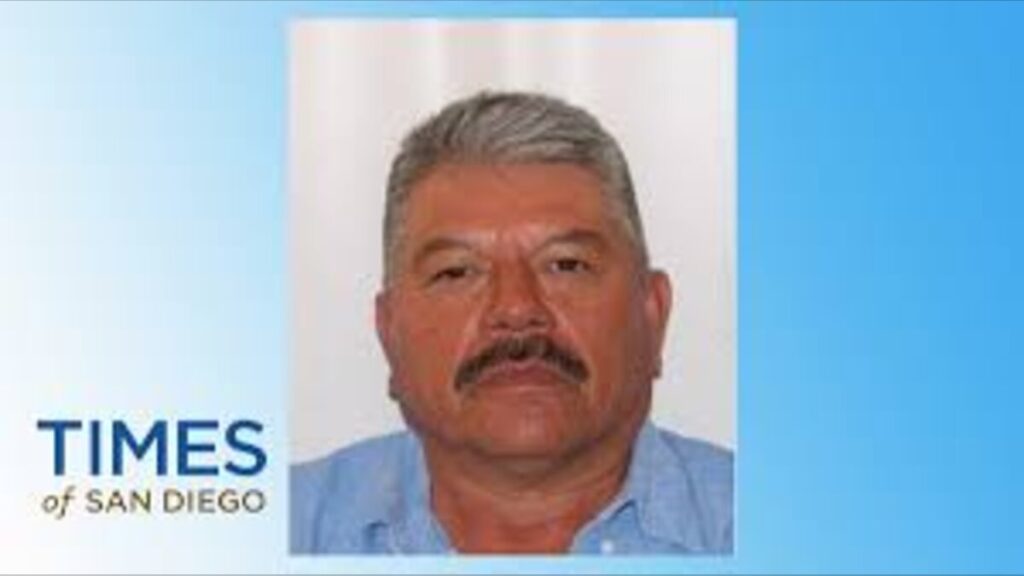
It didn’t come with flashing headlines at first, but the arrest of a suspected Guatemalan drug boss in California is the kind of development that sends ripples through international crime networks.
U.S. authorities confirmed they had taken into custody Eugenio Molina-Lopez, a man long accused of playing a central role in the cocaine pipeline flowing toward the United States.
What makes this arrest stand out isn’t just who was caught—but how long he had been on the radar.
With a staggering $10 million bounty attached to his name, Molina-Lopez was no small player.
He had been one of the most wanted figures tied to organized drug trafficking in Central America.
The Man Known as “Don Dario”
At 61, Molina-Lopez—often referred to by his alias “Don Dario”—is alleged to have led Los Huistas, a criminal group believed to operate along Guatemala’s northwestern border near Mexico.
This region has long been a strategic corridor for narcotics moving north.
Authorities say Los Huistas acted as a bridge between South American cocaine producers and Mexican cartels, coordinating shipments and ensuring safe passage across borders.
It’s a role that requires deep connections, logistical precision, and a willingness to operate in the shadows.
Arrested Far From Home
Molina-Lopez’s capture happened in San Diego, a location that underscores just how globalized these criminal networks have become.
While details about the exact timing of the arrest remain unclear, officials from the United States Attorney’s Office for the Southern District of California confirmed the development.
Soon after, Guatemala’s U.S. embassy echoed the announcement, signaling coordination between both countries on the case.
Facing Serious Charges
In a federal courtroom appearance, Molina-Lopez pleaded not guilty.
Still, the charges against him are heavy: conspiracy to import and distribute cocaine into the United States.
If convicted, he could face life behind bars.
U.S. Attorney Adam Gordon didn’t hold back, describing Molina-Lopez as one of the most prolific alleged traffickers whose case has now reached a critical stage.



A Network Under Pressure
This arrest didn’t happen in isolation.
It follows a broader crackdown on Los Huistas and similar groups.
Back in 2022, the U.S. government sanctioned several members of the organization, tightening financial restrictions and limiting their global movement.
Then, in March 2025, another key figure—Aler Baldomero Samayoa, known as “Chicharra”—was captured in Mexico.
His arrest was the result of coordinated efforts between Mexico, Guatemala, and the United States, highlighting a growing trend of cross-border law enforcement collaboration.
Why Central America Matters in the Drug Trade
To understand the weight of Molina-Lopez’s arrest, you have to look at the geography.
Central America isn’t just a waypoint—it’s a critical artery. U.S. officials estimate that about 90% of cocaine entering the country passes through this region and Mexico.
Traffickers use every method imaginable: trucks rumbling across highways, aircraft flying under radar, speedboats hugging coastlines, and even semi-submersible vessels navigating open waters.
Local groups like Los Huistas often act as facilitators, connecting larger cartels with routes and resources.
Impact and Consequences
The arrest could disrupt key trafficking routes, at least temporarily.
Leadership gaps often create confusion within criminal organizations, slowing operations and triggering internal power struggles.
However, history shows that drug networks are resilient.
When one leader falls, another often steps in. Still, capturing high-profile figures sends a strong message and can weaken coordination across regions.
On a broader level, these crackdowns may help reduce the flow of drugs—though likely not eliminate it entirely.
They also shine a light on the persistent link between trafficking and violence in Central America, where communities often bear the brunt of cartel activity.
What’s Next?
The legal process will now take center stage.
Molina-Lopez’s case will move through the U.S. court system, where prosecutors will attempt to prove his alleged role in international drug trafficking.
At the same time, authorities may use intelligence gathered from his arrest to track down other members of the network.
Financial investigations, in particular, could expose money laundering channels tied to Los Huistas.
There’s also the diplomatic angle. Continued cooperation between the U.S., Guatemala, and Mexico will be crucial if authorities hope to dismantle larger trafficking structures rather than just removing individual figures.
Summary
The detention of Eugenio Molina-Lopez marks a significant moment in the ongoing fight against international drug trafficking.
As an alleged leader of Los Huistas, his arrest highlights both the scale of the problem and the increasing coordination among governments trying to tackle it.
While it may not end the flow of cocaine into the U.S., it represents a meaningful step in disrupting one of the many networks fueling the trade.
Bulleted Takeaways
- Eugenio Molina-Lopez, a suspected Guatemalan drug kingpin, was arrested in San Diego
- He allegedly led Los Huistas, a group trafficking cocaine to Mexican cartels
- The U.S. had placed a $10 million bounty on him
- He pleaded not guilty to charges that could result in life imprisonment
- His arrest follows increased international efforts to dismantle drug networks
- Central America remains a key transit route for cocaine heading to the U.S.
- While impactful, the arrest is unlikely to completely halt trafficking operations

