
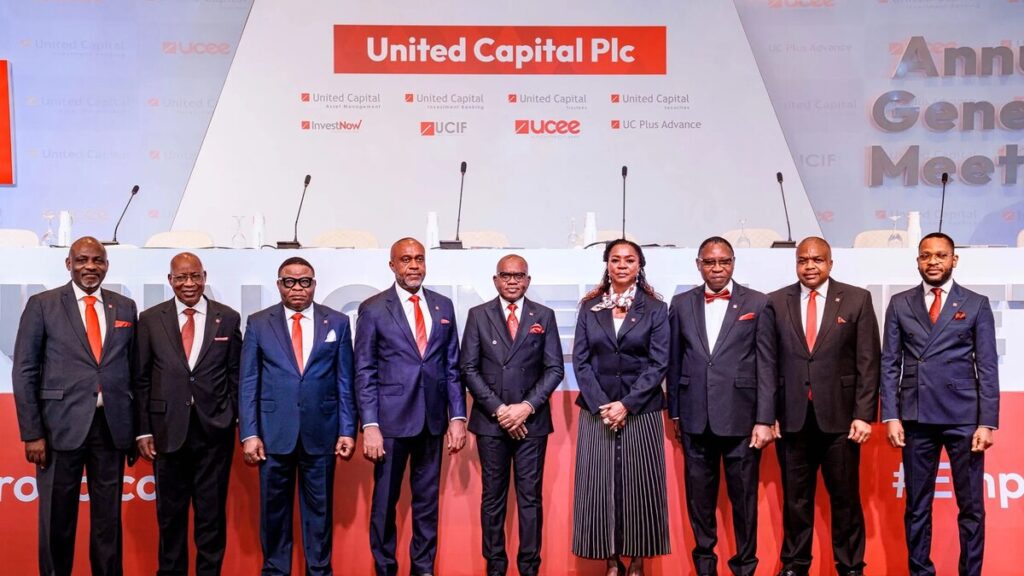
In a move that caught much of Nigeria’s investment community’s attention, United Capital Plc has quietly wrapped up a full recapitalisation of all its Securities and Exchange Commission-regulated subsidiaries—well ahead of the June 2027 deadline.
What makes the development stand out is not just the timing, but the fact that everything was achieved internally, without any external fundraising or capital injection from outside investors.
The company says the exercise strengthens its footing in Nigeria’s increasingly competitive capital market space, where regulatory expectations are rising fast and players are being forced to scale up or consolidate.
Why the Recapitalisation Matters Right Now
The overhaul follows new capital rules introduced under the Investments and Securities Act 2025 and SEC Circular No. 26, which significantly raised the financial bar for operators across the industry.
Under the updated framework, fund and portfolio managers now require at least ₦5 billion in capital, trustees must hold ₦2 billion, while issuing houses involved in underwriting are expected to maintain ₦7 billion.
These changes didn’t come lightly.
Regulators have been pushing for a stronger, more resilient capital market system that can handle bigger transactions, protect investors better, and reduce systemic risks in a more complex financial environment.
For many firms, meeting these thresholds has meant scrambling for fresh capital or restructuring operations.
United Capital, however, chose a different route—building up internally.
How Each Subsidiary Performed
Each arm of the group didn’t just meet the requirements—it surpassed them.
The investment banking division came out strongest.
It operates under United Capital Investment Banking and now holds about ₦9 billion in capital, comfortably above the ₦7 billion benchmark for issuing houses and underwriting firms.
The trusteeship arm, United Capital Trustees, also exceeded expectations, reporting ₦7.5 billion against the ₦2 billion requirement.
Meanwhile, United Capital Securities surpassed its broker/dealer threshold with ₦2.5 billion in capital.
On the asset management side, United Capital Asset Management posted an even stronger position, reaching ₦13.9 billion—well above the ₦10 billion requirement for top-tier portfolio managers overseeing large asset pools.
Leadership Framing It as a Strategic Win
Company leadership has described the recapitalisation as more than a regulatory box-ticking exercise.



Board Chairman Uche Ike pointed to governance strength and long-term planning discipline as key drivers behind the early completion.
Group CEO Peter Ashade also framed it as a signal of regulatory discipline and strategic foresight rather than reactive compliance.
There’s also a broader message embedded in the move: the group wants to be seen not just as compliant, but as structurally prepared for larger mandates, bigger deals, and regional expansion.
Strong Financial Backdrop Behind the Move
The recapitalisation comes at a time when the group is already posting solid financial results.
At its most recent AGM, shareholders approved a final dividend of ₦0.70 per share, pushing total payout for 2025 to ₦1.00 per share, or about ₦18 billion—up from ₦14.4 billion the previous year.
Revenue climbed to ₦58.55 billion, while profit after tax rose to ₦28.15 billion, reflecting steady operational momentum across the group.
Even more striking, assets under management have crossed ₦2 trillion, with all seven subsidiaries remaining profitable throughout the year—a rare consistency in the financial services sector.
A Bigger Shift in Nigeria’s Capital Market
This development also fits into a wider trend in Nigeria’s financial ecosystem.
Regulators are steadily pushing for stronger capital buffers across banks, investment firms, and asset managers.
The idea is simple: bigger capital bases reduce fragility, encourage institutional trust, and position local firms to compete with international players entering African markets.
For firms that fail to scale, the pressure is already leading to mergers, acquisitions, or exits.
For stronger institutions like United Capital, it creates room to expand aggressively.
Impact and Consequences
The immediate impact is improved regulatory standing and greater operational flexibility for United Capital’s subsidiaries.
With stronger capital buffers, the group can now take on larger underwriting deals, manage bigger institutional funds, and expand its product offerings.
It also improves investor confidence, especially among institutional clients who prioritise stability and regulatory compliance when selecting financial partners.
On a broader level, the move reinforces the ongoing consolidation and professionalisation of Nigeria’s capital market industry.
Smaller operators may struggle to meet the rising thresholds, while stronger firms position themselves as dominant market players.
However, higher capital requirements can also reduce competition if not balanced properly, potentially narrowing the field of active operators in some segments.
What’s Next?
With recapitalisation completed early, attention now shifts to expansion.
United Capital is expected to deepen its product pipeline, scale institutional services, and potentially accelerate Pan-African growth across its operating footprint.
The group has also hinted at strengthening retail penetration, meaning more financial products could be tailored for individual investors alongside its institutional dominance.
Given its strong balance sheet, analysts expect the company to pursue larger mandates in investment banking, asset management, and structured finance deals in the coming years.
Summary
United Capital Plc has successfully completed a full recapitalisation of its SEC-regulated subsidiaries well ahead of the 2027 deadline.
All subsidiaries—investment banking, trustees, securities, and asset management—exceeded their required capital thresholds under the updated regulatory framework.
The move strengthens the group’s position in Nigeria’s capital market, supports expansion plans, and reflects strong financial performance, including rising profits, dividends, and over ₦2 trillion in assets under management.
Bulleted Takeaways
- United Capital Plc completed recapitalisation ahead of the 2027 deadline
- All SEC-regulated subsidiaries met or exceeded new capital requirements
- New rules were introduced under Investments and Securities Act 2025 and SEC Circular No. 26
- Investment banking arm holds ₦9 billion against ₦7 billion requirement
- Trustees unit holds ₦7.5 billion against ₦2 billion requirement
- Securities unit holds ₦2.5 billion above minimum requirement
- Asset management arm holds ₦13.9 billion against ₦10 billion threshold
- No external fundraising was used for recapitalisation
- Group profit rose to ₦28.15 billion with revenue of ₦58.55 billion
- Assets under management surpassed ₦2 trillion
- Total dividend for 2025 reached ₦1.00 per share (₦18 billion total payout)
- Strategy positions the firm for expansion across Nigeria and wider African markets

