
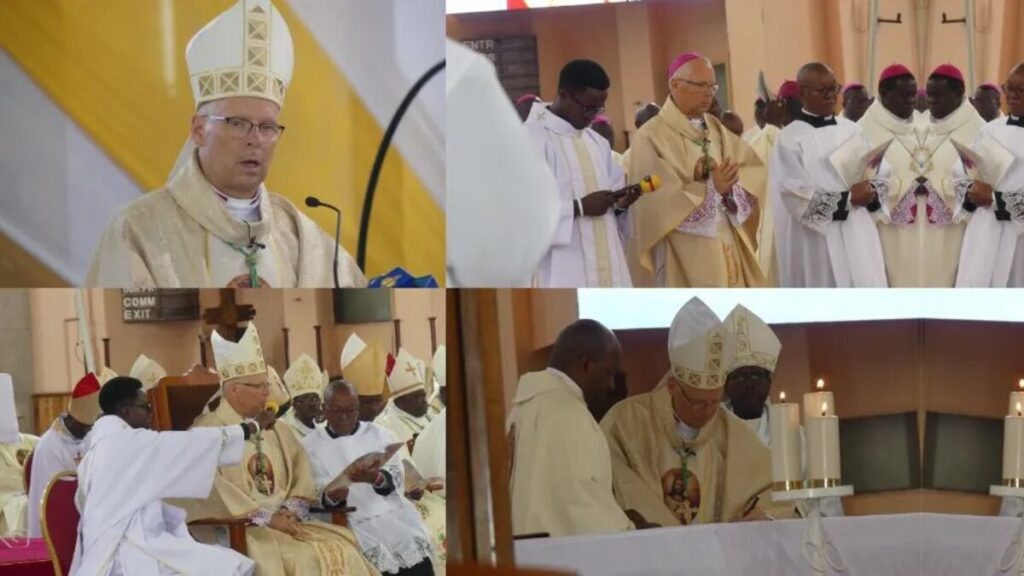
In Ethiopia’s northern highlands, Catholic leader Bishop Tesfasellassie Medhin has made a passionate appeal to halt the execution of more than 200 Ethiopian nationals reportedly facing capital punishment in Saudi Arabia.
Speaking through a report shared with international Catholic media, the bishop described the situation as a humanitarian emergency and urged world leaders not to remain silent while lives hang in the balance.
The detained individuals—mostly young Ethiopian migrants—are said to have been convicted in connection with drug-related offences.
Their cases have triggered concern among human rights observers, particularly over reports of mass sentencing and limited legal representation.
Medhin has called for diplomatic engagement and urged Saudi authorities to consider alternatives to execution, including rehabilitation-focused sentencing.
Similar concerns have previously been raised by migrant rights groups about foreign workers in Gulf detention systems, especially those from East Africa.
Free Speech Battle in Europe Heads to International Court
In Finland, a long-running legal battle involving politician Päivi Räsänen is now moving to the European Court of Human Rights after a controversial hate speech conviction.
Räsänen, who has spent nearly seven years in legal proceedings, was originally acquitted twice before being convicted by Finland’s Supreme Court for remarks deemed offensive under national criminal law provisions.
Her case began after she publicly referenced Christian teachings in social media posts and pamphlets.
Supporters argue the case raises serious concerns about freedom of expression, while critics say it reflects necessary limits on speech that targets protected groups.
Backed by legal group Alliance Defending Freedom International, she insists her prosecution sets a dangerous precedent for democratic societies.
The case has become one of the most closely watched free speech disputes in Europe, with comparisons drawn to earlier religious expression cases in the UK and Germany.
Religious Clash in India Leads to Arrests After Parish Incident
In western India, tensions between religious communities escalated after police arrested four Catholics in Rajasthan following a confrontation during a church service.
According to parish accounts, a Hindu nationalist group entered a Catholic church during Mass and accused members of illegal religious conversion activities.
The disruption reportedly occurred during Communion, leading to a chaotic scene inside the building.
When parishioners attempted to stop the intrusion, a scuffle broke out, and one protester allegedly threatened worshippers with a knife before being disarmed.



Despite this, police later arrested several Catholics on charges including rioting and attempted murder, sparking accusations of bias from local church leaders.
The incident reflects a broader pattern of religious tension in parts of India, where disputes over conversion laws and identity politics have increasingly led to legal and street-level confrontations.
Global Prayer Movement Returns as AI Ethics Debate Expands in Korea
Meanwhile, in Australia, the Pontifical Mission Societies has revived its “World Mission Rosary” initiative, a global prayer campaign created in 1951 by Venerable Archbishop Fulton Sheen.
Each decade of the rosary represents a different continent, symbolising unity in global Catholic prayer efforts.
This year’s campaign is being broadcast online throughout May, encouraging participation from Catholics worldwide.
At the same time in Asia, the Catholic Medical Center of Korea has introduced the country’s first AI medical ethics framework.
The initiative focuses on ensuring artificial intelligence in healthcare respects human dignity and moral responsibility.
Church officials in Seoul emphasised that technology must never replace human relationships in medical care, but instead support them.
Ancient Symbols and New Churches Highlight Living Tradition
Elsewhere in the Catholic world, researchers have revisited the historical meaning of episcopal head coverings in Eastern Christianity, particularly within traditions linked to Mesopotamian heritage and the Chaldean Church.
These garments, evolving over centuries, remain symbolic of authority, humility, and continuity within ancient Christian communities.
At the same time, in Cambodia, Catholics celebrated the consecration of a new parish church in Phnom Penh, marking continued growth for a small but expanding Christian population in the region.
Impact and Consequences
These stories collectively highlight how religious institutions continue to intersect with global politics, migration, and human rights debates.
The Ethiopian case has intensified calls for reform in how migrant detainees are treated in Gulf countries.
In Europe, Räsänen’s appeal could redefine legal boundaries between free speech and hate speech protections.
In India, the arrests risk deepening religious tensions and raising concerns about judicial impartiality in communal disputes.
Meanwhile, the AI ethics initiative in Korea signals a growing push to regulate emerging technologies through moral frameworks.
What’s Next?
The Ethiopian appeal for intervention will likely depend on diplomatic pressure from international partners and human rights organisations.
Räsänen’s case will now be examined by the European Court of Human Rights, a ruling that could set a major precedent for free expression across the continent.
In India, further investigation is expected into the circumstances surrounding the church confrontation and subsequent arrests.
Globally, religious organisations are expected to expand both humanitarian advocacy and digital engagement as technology and geopolitics continue to reshape their missions.
Summary
From Ethiopia to Finland, India, Australia, Korea, and Cambodia, religious and ethical issues are unfolding across multiple continents at once.
They involve life-and-death legal cases, free speech debates, interfaith tensions, technological ethics, and continued humanitarian work.
Despite their differences, each story reflects a shared theme: how faith communities are navigating an increasingly complex and divided world.
Bulleted Takeaways
- Bishop Tesfasellassie Medhin has called for intervention over 200 Ethiopian detainees facing execution in Saudi Arabia.
- Ethiopian migrants are reportedly facing mass death sentences for alleged drug offences.
- Finnish politician Päivi Räsänen is appealing a hate speech conviction at the European Court of Human Rights.
- Her case is supported by Alliance Defending Freedom International.
- Four Catholics were arrested in Rajasthan after a church confrontation during Mass.
- Global Catholic initiatives include the “World Mission Rosary” led by the Pontifical Mission Societies.
- The Catholic Medical Center of Korea introduced Korea’s first AI medical ethics code.
- Cambodia continues expanding Catholic infrastructure with new churches and clergy milestones.

