
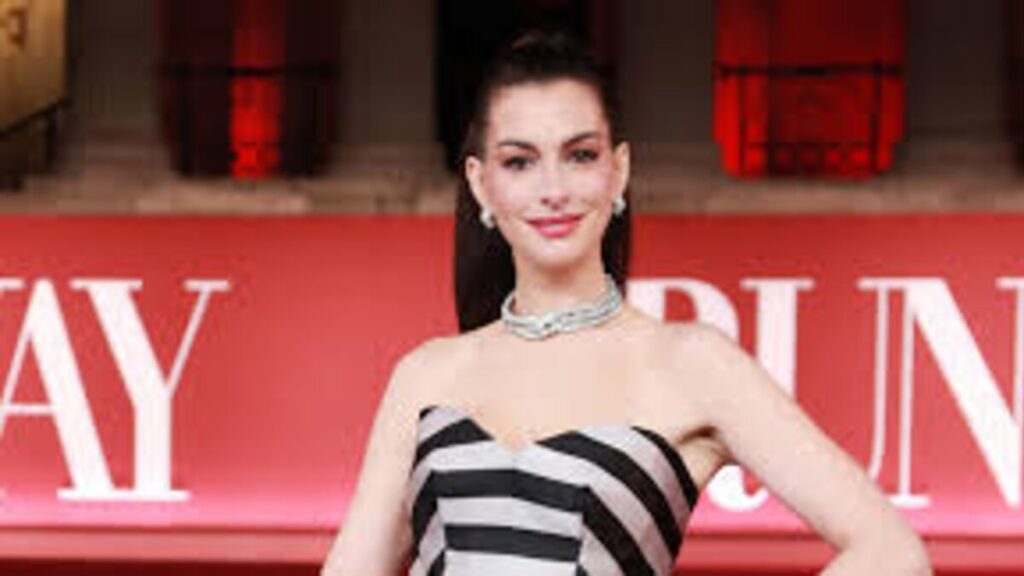
Right now, The Devil Wears Prada 2 is putting Anne Hathaway back in the spotlight, with fans celebrating her return to one of her most iconic roles.
But that glow of success hides a far more complicated story underneath—one that stretches back nearly two decades and includes one of Hollywood’s most unusual online backlash cycles.
In the early 2010s, Hathaway went from being widely admired to becoming a strange internet lightning rod.
The backlash even earned its own nickname: “Hatha-hate.” It wasn’t just criticism of her performances—it turned personal, intense, and surprisingly sustained.
When Online Opinion Turned Into a Wave
The shift didn’t happen overnight, but many trace the beginning of the storm to the 2011 Oscars, where Hathaway co-hosted the ceremony with actor James Franco.
The pairing was awkward, and viewers noticed.
Their energy didn’t match, the rhythm felt off, and what was meant to be a glamorous hosting gig quickly became a punchline online.
Franco later joked publicly about Hathaway’s high energy, while she herself admitted the situation was almost impossible to “win” in terms of public reaction.
From that moment, the tone around her started to change.
What had been a successful career suddenly came with constant over-analysis—every interview, every smile, every red carpet moment.
The Catwoman Backlash and Growing Scrutiny
Things escalated further when Hathaway was cast as Selina Kyle in The Dark Knight Rises.
Fans of the DC universe questioned the casting, arguing she didn’t fit their idea of the character’s image.
The criticism was loud, especially online, where discussions about her appearance and “fit” for the role dominated forums and early social media platforms.
At the same time, her public persona was being dissected in a way that went beyond normal celebrity critique.
The label “too theatrical” started following her, and even genuine moments—like awards speeches—were reframed as awkward or insincere.
The Oscars Win That Didn’t Feel Like a Win
In 2013, Hathaway won the Academy Award for Best Actress for Les Misérables.
It should have been a peak career moment.
Instead, it became another flashpoint.
Her acceptance speech was mocked online, with viewers focusing on her emotional tone and wording.
Even the simple phrase “it came true” was turned into a meme, reinforcing the idea that she couldn’t say or do anything without backlash.




Later, Hathaway admitted she struggled deeply that night, describing how difficult it was to express joy while feeling emotionally overwhelmed by the scrutiny surrounding her.
Why the Internet Locked Onto Her
Years later, journalists and psychologists tried to unpack why Hathaway became such a target.
One explanation pointed to “pile-on culture”—once criticism starts gaining traction, people join in simply because it feels socially rewarding or safe.
Experts described how online groups can amplify negativity, turning mild dislike into collective momentum.
Others noted that once a public figure becomes a “symbol” of annoyance, it becomes hard for audiences to reset their perception.
At one point, even radio host discussions and think pieces openly debated why she was so widely disliked, despite no single scandal or controversy driving it.
Career Pressure, Withdrawal, and a Quiet Rebuild
As the backlash grew, Hathaway stepped back from the spotlight for a time.
She later suggested that audiences simply needed a break from her presence.
But her career didn’t collapse. Instead, it was quietly rescued by filmmaker Christopher Nolan, who cast her in Interstellar at a moment when opportunities were thinning out.
That role helped reset her trajectory.
Over time, she returned with projects like ensemble films and streaming dramas, slowly rebuilding her reputation through consistent work rather than media reinvention.
From Backlash to Balance in Modern Hollywood
Today, Hathaway is again enjoying strong reviews, especially with renewed attention around The Devil Wears Prada 2.
Her career now includes a steady mix of mainstream films and prestige projects, showing how Hollywood cycles often shift dramatically over time.
Interestingly, the same internet that once amplified criticism is now far more divided in opinion, with many younger fans discovering her work without the baggage of early-2010s discourse.
Still, she isn’t completely free from online chatter.
Recent public appearances, including the Met Gala, show how quickly celebrity associations and photos can trend and spark new debates in real time.
Impact and Consequences
The “Hatha-hate” era is now often cited as an early example of modern online pile-ons directed at celebrities.
It showed how quickly digital opinion can shape careers, influence casting decisions, and affect mental health.
For Hathaway, the impact went beyond reputation.
It reportedly influenced which roles she was offered and pushed her temporarily out of Hollywood’s inner circle.
At the same time, it also sparked broader conversations about cyberbullying, collective negativity, and how the internet can distort public perception of individuals.
The episode also helped entertainment media and academics better understand how viral criticism behaves—especially when it becomes detached from actual performance or professional output.
What’s Next?
With Hathaway back in a strong professional position, the focus now shifts to sustainability rather than recovery.
She has multiple projects in production, including collaborations with major directors and adaptations of popular novels.
The bigger question is whether modern celebrity culture has actually learned from the “Hatha-hate” period, or whether similar cycles will continue to repeat under different names and faces.
As social media evolves, the pressure on public figures remains intense—but so does the speed at which narratives can shift.
Summary
Anne Hathaway’s journey from Oscar-winning actress to internet target and back again highlights how unpredictable public perception can be in the digital age.
What began as performance criticism evolved into a broader cultural phenomenon that affected her career, reputation, and emotional well-being.
Now, with major projects like The Devil Wears Prada 2 bringing her back into mainstream celebration, her story reflects both the volatility and resilience of modern Hollywood fame.
Bulleted Takeaways
- Anne Hathaway became the focus of intense online backlash dubbed “Hatha-hate”
- Early criticism escalated after the 2011 Oscars hosted with James Franco
- Her role in The Dark Knight Rises sparked further fan backlash
- She won Best Actress for Les Misérables in 2013 but was still heavily criticised
- Online “pile-on culture” helped amplify negative sentiment
- Director Christopher Nolan helped revive her career with Interstellar
- She later rebuilt her career through steady film work and streaming projects
- She is now back in the spotlight with The Devil Wears Prada 2
- Her experience is often cited as an early example of modern celebrity cyberbullying cycles

