
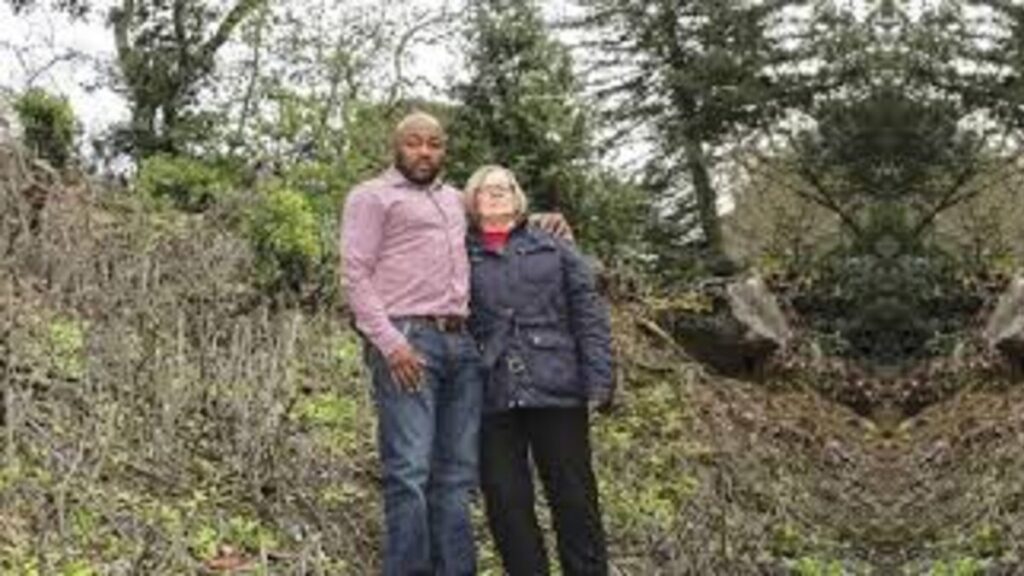
What started as a property decision on a hillside in California has turned into a costly legal and environmental battle.
In Oakland, a Nigerian medical doctor, Matthew Bernard, and his partner Lynn Warner have been ordered to pay nearly $1 million after cutting down dozens of protected trees around their Claremont Avenue property.
The case has stretched over several years, pulling in city officials, environmental experts, and concerned residents who say the damage goes far beyond private land use.
At the heart of it is a long-running conflict between property rights and strict urban tree protection laws in the United States.
How the situation escalated over time
The controversy didn’t explode overnight.
City records show repeated visits by Oakland officials to the hillside property between early 2021 and mid-2022 after complaints that trees were being removed without permission.
Over time, the issue shifted from a simple complaint into a formal enforcement case.
By the time the matter reached a public hearing, it had already become a symbol of how seriously Oakland treats its tree preservation rules.
More than 20 residents showed up at one of the hearings, urging the city to enforce environmental protections.
Their argument wasn’t just aesthetic — they said the area’s tree canopy plays a critical role in reducing wildfire risk, improving air quality, and stabilizing the local ecosystem.
What the property owners argued in their defense
Bernard and Warner pushed back against the accusations, saying the trees weren’t healthy in the first place.
According to Bernard, the removed trees were “dead, dying, leaning,” or structurally unsafe.
The couple also said they relied on professional advice from an arborist before making the decision.
From their perspective, the removal was a safety measure rather than environmental damage.
During the hearing, Bernard also requested permission to replant trees after future construction plans on the undeveloped property.




However, city officials rejected that proposal.
Why Oakland took such a strong financial stance
The final penalty came in at $915,135.40, along with a lien placed on the property.
That means the land cannot be sold or developed until the fine is fully paid.
Oakland’s position is rooted in strict environmental regulations designed to protect mature tree cover, especially in hillside areas prone to erosion and wildfire risk.
The city views unauthorized tree removal as a long-term ecological loss, not something easily reversible.
Tree specialist Erys Gagnez explained it in blunt terms: mature trees of that size simply cannot be replaced in any meaningful timeframe.
Even with replanting, the ecological benefits lost — shade, carbon storage, erosion control — could take decades or even centuries to recover.
This approach reflects a broader trend in California cities, where urban forestry is treated as a core part of climate resilience planning rather than just landscaping.
Impact and Consequences
The consequences of the case extend beyond the property itself.
Financially, the penalty is substantial enough to affect ownership plans for the land indefinitely, especially with the lien blocking any sale or development.
Environmentally, the case highlights how quickly tree loss can become a citywide concern in fire-prone regions.
Mature trees are considered part of Oakland’s natural defense system against heat and wildfire spread.
Socially, the dispute has intensified tensions between property owners and local residents who feel environmental protections must take priority over private development decisions.
For professionals in land development and real estate, the case is also a reminder that tree ordinances in places like California are not symbolic — they are strictly enforced and financially punitive when violated.
What’s next?
The immediate next step is financial compliance or legal appeal.
Bernard and Warner could challenge the fine further, but such cases are typically difficult to overturn unless procedural errors are proven.
If the penalty remains in place, the lien ensures the city maintains leverage over the property until full payment is made.
Any future development plans would also require strict environmental review and approval.
On a broader level, the case may push Oakland to continue tightening enforcement of its tree protection rules, especially as climate risks like wildfires become more severe across California.
Summary
This Oakland case sits at the intersection of environmental regulation, property rights, and urban climate policy.
A private decision to remove trees has escalated into a nearly million-dollar penalty because the city views mature tree loss as a long-term ecological harm that cannot be quickly reversed.
It also reflects how U.S. cities, particularly in California, are increasingly treating tree cover as essential infrastructure for climate resilience rather than optional greenery.
Bulleted Takeaways
- Oakland ordered Matthew Bernard and Lynn Warner to pay about $915,135 for cutting protected trees
- The trees were removed from a Claremont Avenue hillside property in California
- City officials inspected the site multiple times between 2021 and 2022
- Residents argued tree cover is vital for wildfire reduction and environmental protection
- Bernard claimed the trees were dead, unsafe, or recommended for removal by an arborist
- The city rejected a replanting request tied to future development plans
- A property lien was placed, blocking sale or development until the fine is paid
- Officials said mature trees cannot be realistically replaced for decades or centuries
- The case highlights strict enforcement of urban forestry laws in California
- It reflects growing tension between private land use and climate-focused regulations

