
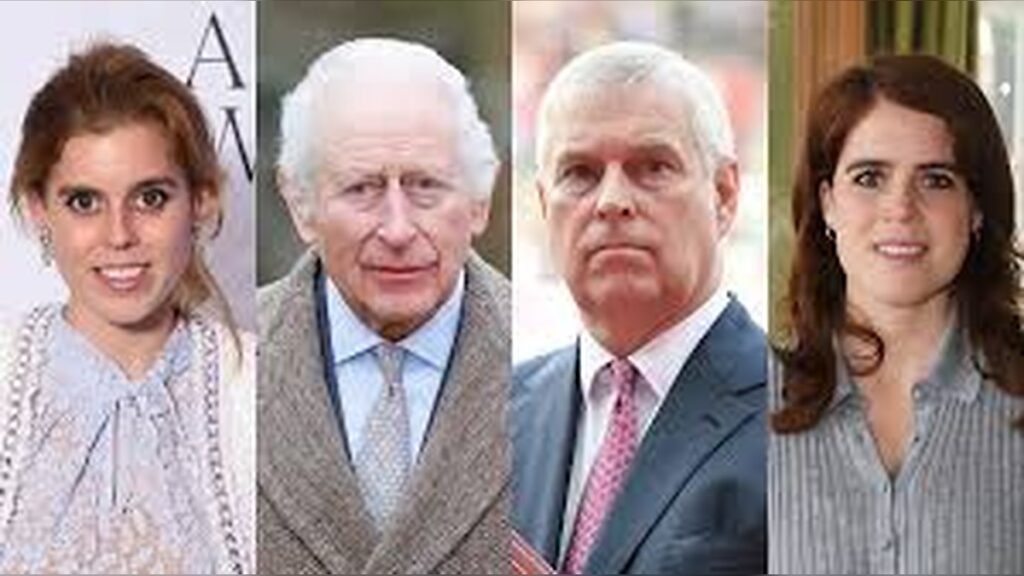
There’s been a fresh wave of discussion around the Royal Family, and this time it’s not about a speech or a public appearance—it’s about guest lists.
As summer garden parties continue at Buckingham Palace, attention has shifted to a poll asking whether King Charles was right not to invite Princess Beatrice and Princess Eugenie.
It’s one of those topics that quietly spreads beyond royal watchers and into everyday conversations, especially as people start weighing tradition against family ties.
Garden Parties, Tradition, and a Growing Spotlight
The summer garden parties at Buckingham Palace are a long-standing royal tradition, often seen as a blend of formal ceremony and social gathering.
Guests typically include public figures, community contributors, and selected members of the wider royal circle.
This year, however, the absence of Beatrice and Eugenie from the invitation list has sparked curiosity.
While the Palace rarely explains individual guest decisions, the topic has still managed to fuel public debate online and in commentary spaces.
Historically, royal invitations have often reflected both protocol and evolving family roles.
That mix tends to keep speculation alive whenever changes appear, even subtle ones.
Public Reaction and the Role of Opinion Polls
Rather than offering a fixed narrative, the current conversation has taken a more interactive turn.
A poll now invites readers to share their view on whether the decision was appropriate.
This reflects a broader trend in modern media coverage of the monarchy—audiences are no longer just passive readers but active participants in shaping discussion.




Royal coverage has increasingly leaned on engagement, with readers weighing in on decisions that would once have been discussed only behind closed doors or in formal commentary columns.
A Wider Look at Royal Coverage and Media Access
Beyond this specific question, there’s also a growing push from royal journalism platforms to offer deeper insight into the institution.
Features, analysis, photography, and insider commentary continue to be a major draw for readers interested in how the monarchy operates behind the scenes.
Some outlets now offer direct interaction with journalists, giving audiences the chance to ask questions and explore topics they might not usually get answers to.
It reflects how royal reporting has evolved from purely observational storytelling to something more interactive and ongoing.
At the same time, exclusivity remains a key part of the appeal.
Insider access, detailed reporting, and curated analysis still define much of modern royal journalism.
Impact and Consequences
Even small changes in royal invitations can have wider symbolic meaning.
Decisions about who attends public-facing events are often interpreted as signals about family roles, hierarchy, or shifting responsibilities within the monarchy.
For the public, these discussions reinforce how closely watched the Royal Family remains.
Every appearance, absence, or protocol adjustment tends to generate interpretation beyond its immediate context.
For the monarchy itself, managing perception is an ongoing challenge.
Balancing tradition, privacy, and public expectation continues to shape how events like garden parties are perceived.
What’s Next?
The conversation is likely to continue as more royal events take place throughout the summer season.
Any future appearances or changes in guest lists will probably be examined closely for meaning.
Public engagement around royal polls and commentary is also expected to grow, especially as media platforms encourage more reader participation.
If anything, this story shows that interest in royal family dynamics remains strong, and even routine events can quickly become talking points when viewed through a modern media lens.
Summary
A public poll has sparked debate over whether King Charles was right not to invite Princess Beatrice and Princess Eugenie to Buckingham Palace garden parties.
While the Palace does not typically explain guest decisions, the situation has drawn attention to royal traditions, evolving roles, and public interest in family dynamics within the monarchy.
Bulleted Takeaways
- Public poll questions King Charles’s decision on garden party invitations
- Focus centers on Princess Beatrice and Princess Eugenie’s absence
- Buckingham Palace garden parties remain key royal tradition events
- Royal guest lists often reflect protocol and evolving family roles
- Media coverage increasingly encourages reader participation and debate
- Royal decisions frequently carry symbolic public interpretation
- Interest in monarchy stories continues to drive strong public engagement

