
Long before packed MLS stadiums, billion-dollar sponsorships, and global stars like Lionel Messi arriving in the United States, soccer in America was fighting for survival.
In the early 1990s, the sport barely had a professional structure in the country.
National team players trained under difficult conditions, the federation struggled financially, and many people still viewed soccer as a niche pastime rather than a major American sport.
Then came the 1994 FIFA World Cup.
What followed was one of the strangest, wildest, and most transformative summers in sports history — a tournament filled with chaos, celebrity moments, tragedy, politics, record-breaking crowds, and unforgettable football.
The Men Who Took a Huge Gamble on America
At the center of the story was Scott LeTellier, a former lawyer who became one of the driving forces behind America’s successful World Cup bid.
Back then, few people believed the United States could host soccer’s biggest event successfully.
Brazil was heavily favored to win hosting rights, while America was considered an outsider with little football tradition.
LeTellier and other organizers, including former United States Soccer Federation officials like Alan Rothenberg and Sunil Gulati, pushed ahead anyway.
The federation itself was struggling. Offices were tiny, money was scarce, and training resources were limited.
At one point, officials reportedly bought soccer balls from ordinary retail stores because budgets were so tight.
Still, they believed the World Cup could permanently reshape the sport in America.
America Had No Real Soccer Culture at the Time
It’s difficult to imagine today, but in the early 1990s, many Americans barely understood professional soccer.
Former U.S. defender Alexi Lalas recalled telling someone on a flight that he played soccer professionally, only to be asked what his “real job” was.
There was no stable professional league after the collapse of the North American Soccer League years earlier.
American players struggled to find opportunities overseas, and the national team was largely ignored internationally.
To prepare for the tournament, players were gathered into long training camps that felt more like survival exercises than professional football preparation.
Many lived in basic accommodations, trained constantly, and fought for roster spots daily.
The Tournament Opened with Celebrity Chaos
The opening ceremony in Chicago instantly showed that this World Cup would be unlike any other.
Oprah Winfrey hosted the ceremony, while Diana Ross famously missed a ceremonial penalty kick that somehow still caused the goal to collapse theatrically.
There were even unexpected accidents backstage involving performers falling through an open trapdoor during rehearsals.
Meanwhile, then-President Bill Clinton chose to sit among fans under extreme heat instead of remaining in a protected luxury suite.
The event immediately captured headlines beyond sports.
OJ Simpson’s Car Chase Overshadowed the Competition
One of the most surreal moments of the entire tournament had nothing to do with soccer.




As the U.S. national team prepared for a major match, television screens across America were dominated by the now-infamous OJ Simpson police chase.
Players reportedly stayed awake watching the live coverage late into the night before one of the biggest games of their lives.
It became another bizarre chapter in a World Cup already overflowing with unforgettable moments.
The U.S. Team Became Unexpected Heroes
Despite doubts entering the tournament, the American squad shocked critics by advancing to the knockout stage.
Led by players like Alexi Lalas and Marcelo Balboa, the team defeated Colombia in one of the tournament’s biggest surprises.
The victory sparked genuine excitement across the country.
Suddenly, American players were becoming celebrities, and crowds began embracing the sport in ways few expected.
Lalas, with his distinctive long red hair and rock-star image, became one of the faces of the tournament.
Tragedy Struck After Colombia’s Defeat
The joy of the competition was soon overshadowed by tragedy.
Colombian defender Andrés Escobar was murdered in his home country after scoring an own goal during the loss to the United States.
The shocking incident stunned the football world and remains one of the darkest moments in World Cup history.
Many players and fans later said the tragedy permanently changed how they viewed the pressure surrounding international football.
Diego Maradona’s World Cup Career Ended in Scandal
The tournament also marked the dramatic downfall of Diego Maradona on the world stage.
The Argentine icon failed a drug test during the competition and was removed from the tournament.
For many football fans, it was a heartbreaking ending for one of the sport’s greatest players.
His exit became one of the defining stories of the 1994 World Cup.
Brazil Finally Won After a Tense Final
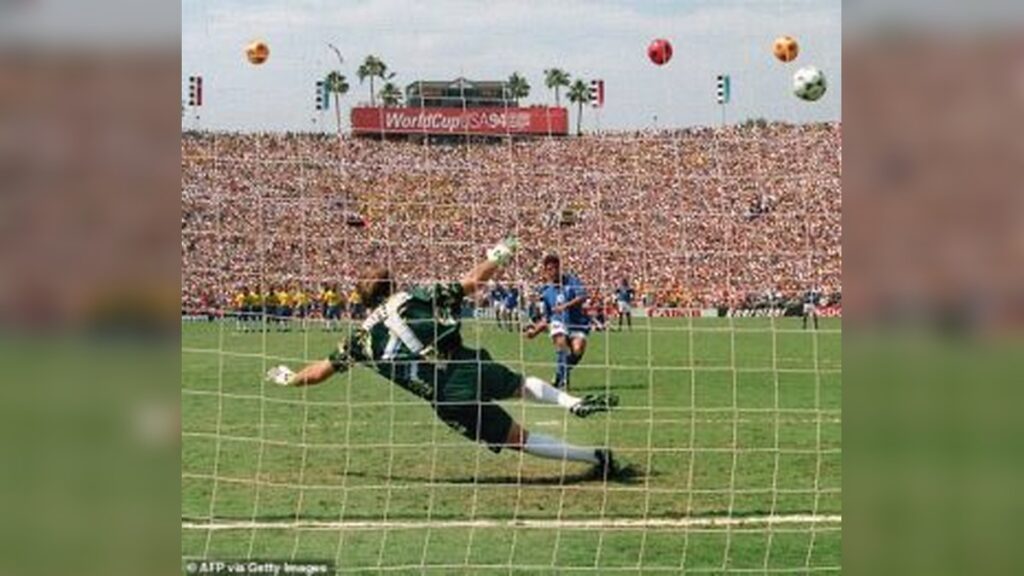
The competition ended at the Rose Bowl in California, where Brazil national football team defeated Italy in the final.
The match itself was tense and defensive, eventually becoming the first World Cup final decided by a penalty shootout.
Italian star Roberto Baggio missed the decisive kick, handing Brazil the trophy.
Despite criticism of the final itself, the tournament had already become a historic success commercially and culturally.
The Tournament Changed Soccer in America Forever
The 1994 World Cup shattered attendance records and proved massive international soccer events could thrive in the United States.
Crowds averaged nearly 70,000 fans per game across the tournament.
More importantly, the event laid the foundation for the creation of Major League Soccer in 1996.
That single development changed the future of American soccer permanently.
Today, the United States is preparing to host another World Cup in 2026, this time as one of the sport’s biggest global markets.
Impact and Consequences
The 1994 World Cup transformed soccer from a struggling niche sport into a growing commercial force in America.
The tournament:
- Helped launch Major League Soccer
- Increased youth participation nationwide
- Attracted global sponsors and broadcasters
- Encouraged investment in stadiums and training facilities
- Elevated the international reputation of American soccer
It also showed FIFA that the United States could host massive football events successfully, paving the way for future tournaments.
Without 1994, today’s soccer landscape in America would likely look very different.
What’s Next?
Attention is now turning toward the 2026 FIFA World Cup, which will return to the United States alongside Canada and Mexico.
Unlike 1994, America now has modern soccer infrastructure, world-class stadiums, dedicated fan bases, and internationally recognized stars playing domestically.
Many believe the 2026 tournament could become the biggest World Cup ever staged.
There is also hope that the event will push the sport to another level in North America, just as the 1994 edition did three decades earlier.
Summary
The 1994 FIFA World Cup was far more than just a football tournament.
It became a cultural spectacle filled with celebrity appearances, shocking scandals, unforgettable matches, and emotional moments that helped reshape soccer in the United States.
Against all expectations, America successfully hosted the event, shattered attendance records, and laid the foundation for modern professional soccer in the country.
Three decades later, its impact can still be seen across every level of the sport in America.
Bulleted Takeaways
- The United States hosted the 1994 FIFA World Cup despite major skepticism
- Scott LeTellier, Alan Rothenberg, and Sunil Gulati played major roles in organizing the event
- Alexi Lalas became one of the breakout stars of the tournament
- Oprah Winfrey and Diana Ross featured prominently in the opening ceremony
- The OJ Simpson police chase became one of the tournament’s most surreal off-field moments
- Andrés Escobar was tragically murdered after the competition
- Diego Maradona exited the tournament after failing a drug test
- Brazil national football team won the World Cup after defeating Italy in a penalty shootout
- The tournament helped launch Major League Soccer in 1996
- The success of 1994 helped pave the way for the 2026 FIFA World Cup in North America

