
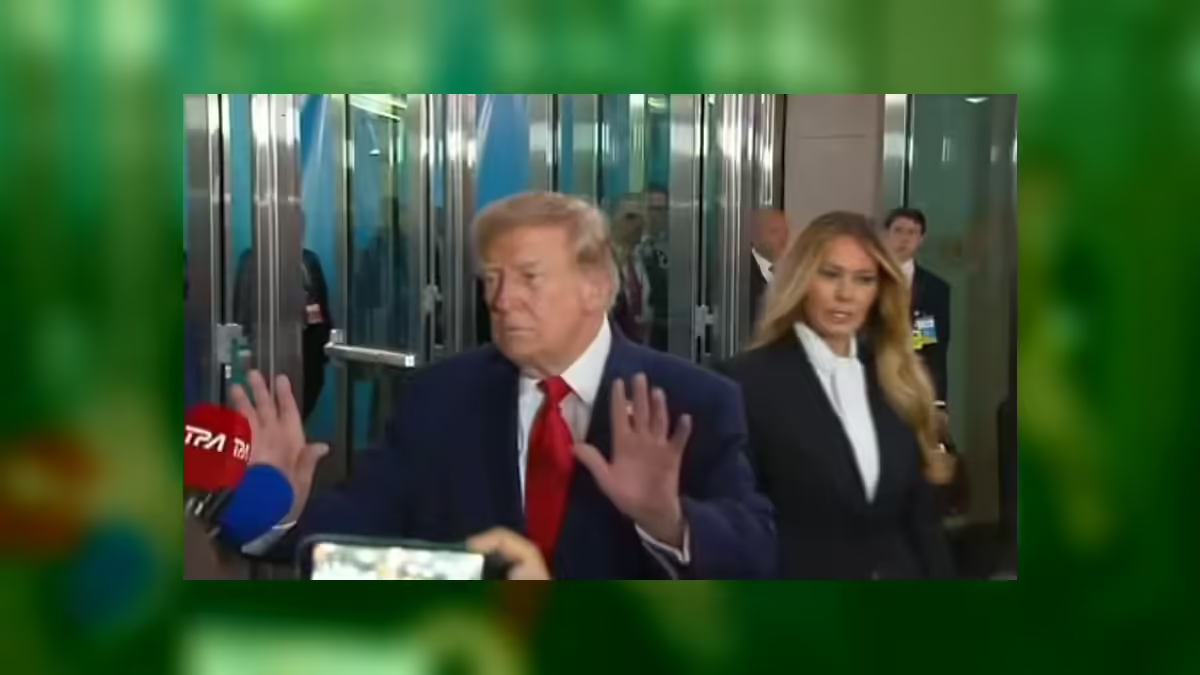
Donald Trump confronted a CNN journalist as he arrived at the United Nations in New York on Tuesday, telling the reporter she “shouldn’t be here” just days after his administration barred CNN and two other news organisations from the White House.
The US president was arriving alongside First Lady Melania Trump for the United Nations General Assembly when CNN’s Kaitlan Collins questioned him about the war involving Iran.
Trump responded by turning the exchange into another attack on the network, reviving his long-running dispute with CNN and its coverage of his administration.
Trump Tells CNN Reporter ‘You Shouldn’t Be Here’
Rather than immediately focusing on the substance of Collins’ question, Trump questioned why CNN was covering his appearance.
“You shouldn’t be here,” Trump told her.
He added that he was surprised CNN was present and referred to the network’s coverage of him.
“You said you weren’t gonna cover me, you shouldn’t be covering me,” Trump said.
The exchange came amid a rapidly escalating confrontation between the White House and several major American news organisations.
CNN Question Focused on Iran War
Collins had attempted to question Trump about the Iran conflict as he arrived for the UN gathering.
Trump offered a brief assessment of the situation, saying his administration was making significant progress.
“We’re making a lot of progress, our country is doing really, really well,” he said before continuing on with Melania.
The United Nations gathering comes as conflicts involving Iran and Ukraine remain among the major foreign-policy issues confronting the Trump administration.
Trump Delivers Short Message to Vladimir Putin
Trump was also questioned about Russia’s continuing war in Ukraine.
As he walked away, another journalist asked what message he had for Russian President Vladimir Putin.
Trump turned back and responded with three words: “Settle the war.”
The remark was brief but consistent with the president’s continuing push for a negotiated end to the conflict.
The Trump administration has recently renewed diplomatic efforts aimed at reaching a settlement, including contacts involving both Moscow and Kyiv.



Confrontation Comes Days After White House Media Ban
Trump’s exchange with Collins came only days after he announced that CNN, MS NOW and Politico would be barred from the White House.
Trump announced the decision on September 18, accusing the three organisations of repeatedly publishing what he described as “fake news.”
Journalists from the affected outlets were subsequently denied access to the White House grounds and had their credentials revoked.
Trump has defended the decision as a response to reporting he considers false and unfair. The affected news organisations reject that characterization and argue that the administration is retaliating against them because of their journalism.
CNN, Politico and MS NOW Take Trump Administration to Court
The dispute has since moved into federal court.
CNN, MS NOW and Politico filed a lawsuit challenging their exclusion, alleging violations of their First Amendment press rights and Fifth Amendment due-process protections.
The organisations are seeking expedited judicial intervention to restore their access.
The Trump administration, meanwhile, maintains that restricting special White House access to particular news organisations does not amount to banning them from reporting on the president.
Major Television Networks Rally Behind CNN
The White House decision has generated an unusually coordinated response from other major television networks.
ABC, CBS, Fox News and NBC joined CNN in suspending television pool coverage of presidential events following CNN’s removal from its scheduled pool duties.
The networks said the public has an important interest in receiving accurate and independent information about its government and argued that administrations should not restrict news organisations because they object to their reporting.
The move has significantly expanded what began as a dispute involving three outlets into a wider confrontation between the administration and the White House press corps.
White House Press Pool Becomes Centre of Growing Battle
The White House press pool allows a rotating group of journalists and news organisations to cover presidential activities in circumstances where it would be impractical for the entire press corps to attend.
Material gathered by pool reporters is then distributed more widely among participating news organisations.
The Trump White House had already taken greater control over which organisations participate in parts of the pool system before the latest confrontation.
CNN’s exclusion became particularly significant because the network was one of the television organisations that traditionally rotated responsibility for filming presidential events.
Media Organisations Say Ban Threatens Press Freedom
CNN, MS NOW and Politico argue that excluding journalists because the government dislikes their reporting creates a serious constitutional problem.
Press organisations and First Amendment advocates have also criticised the restrictions.
The administration disputes that interpretation.
Trump has repeatedly said he supports a free press while arguing that organisations he accuses of publishing false information should not automatically receive privileged access to the White House.
Legal experts interviewed by Reuters said the case is likely to centre on whether the government engaged in unconstitutional viewpoint discrimination when it excluded the outlets.
Trump’s UN Appearance Puts Media Feud on International Stage
Tuesday’s confrontation brought the domestic media battle directly into Trump’s appearance at one of the world’s most prominent diplomatic gatherings.
His arrival at the United Nations was expected to focus heavily on international security, particularly developments involving Iran and the continuing Russia-Ukraine war.
Instead, his brief encounter with Collins immediately highlighted another controversy surrounding his administration: who gets access to the president and whether the White House can restrict that access because of reporting it considers hostile or inaccurate.
With CNN, MS NOW and Politico now challenging the administration in federal court, that dispute is moving beyond Trump’s verbal confrontations with journalists and into a potentially significant legal fight over presidential press access.
