
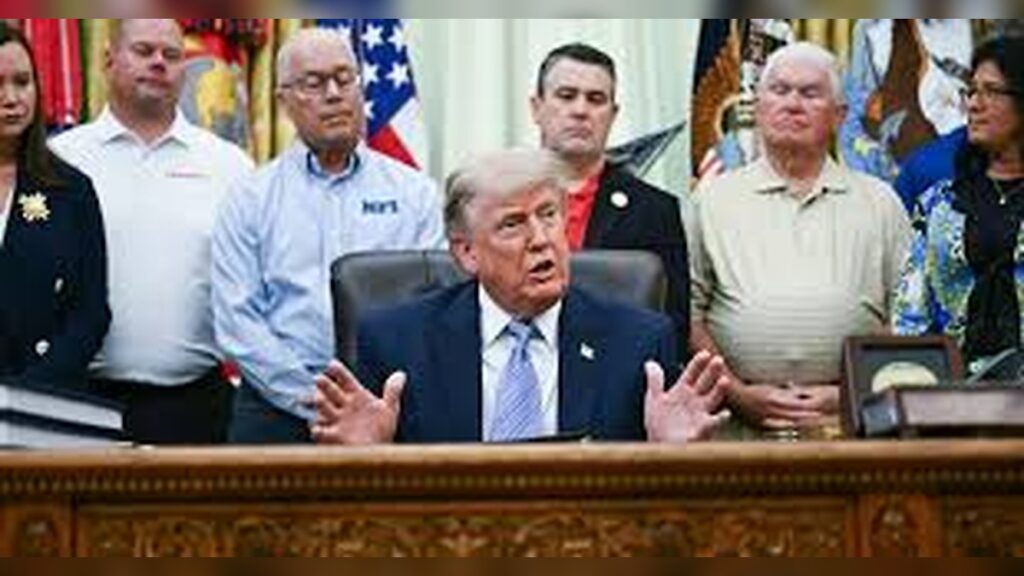
A tense political moment is unfolding in Washington as former US President Donald Trump brings together his Cabinet team to push forward a diplomatic effort aimed at sealing a deal intended to end an ongoing war.
The discussions come at a sensitive time, with the proposed agreement stirring debate even among some of Trump’s own supporters.
While the goal is framed as ending a prolonged conflict, critics inside and outside political circles argue the outcome could shift power dynamics in the Middle East in ways that strengthen Iran strategically.
Inside the Cabinet Room: Pressure, Politics, and Urgency
The Cabinet meeting is described as a tightly focused session, with senior officials weighing the final details of a potential agreement.
The atmosphere is said to be a mix of urgency and caution, as negotiators try to balance ending the war quickly with avoiding unintended geopolitical consequences.
At the heart of the talks is a broader question that has followed the administration’s foreign policy approach for years: how to conclude a major regional conflict without creating a new set of risks elsewhere.
That tension is now front and center, as officials try to lock in consensus before moving forward.
Supporters Split Over What the Deal Could Mean
While Trump’s push for a resolution has been welcomed by those eager to see the war end, not all supporters are fully convinced about the implications.
Some backers worry that the structure of the agreement could indirectly empower Iran by reshaping alliances or reducing pressure on Tehran’s regional influence.
Others argue that ending the war itself should take priority, even if the broader consequences are uncertain.
This divide highlights a recurring pattern in foreign policy debates: the trade-off between immediate peace efforts and long-term strategic positioning.




Broader Regional Stakes Hover Over the Negotiations
Even though the Cabinet discussions are focused on finalizing terms, the wider regional context looms heavily over the process.
The Middle East remains deeply interconnected, and any major diplomatic shift tends to ripple across neighboring states, military alliances, and energy markets.
Analysts note that attempts to resolve one conflict often intersect with other ongoing tensions, especially those involving Iran’s role in regional politics.
That complexity is part of why the negotiations are being closely watched both domestically and internationally.
Impact and Consequences
If the deal is successfully finalized, the most immediate impact would be a potential pause or end to active hostilities, depending on enforcement and compliance mechanisms.
That could reduce military casualties and ease pressure on humanitarian systems affected by the conflict.
However, the political consequences may be more complicated.
Critics fear that altering the balance of power without clear safeguards could allow Iran to expand its influence in ways that reshape regional security dynamics.
Domestically, the move could also deepen political divisions, as supporters of a strong containment approach toward Iran clash with advocates of rapid conflict resolution.
International allies may also reassess their positions depending on the structure of the final agreement.
What’s Next?
Attention now turns to whether the Cabinet can unify behind a final version of the deal.
Any internal disagreement could delay or reshape the proposal before it reaches implementation.
If consensus is reached, the next step would likely involve formal diplomatic channels and coordinated international engagement to ensure compliance from all parties involved in the conflict.
At the same time, regional actors will be watching closely for signals about how the agreement could affect security arrangements, alliances, and long-term geopolitical influence.
Summary
Trump has convened his Cabinet to advance negotiations aimed at ending an ongoing war, but the effort is drawing mixed reactions even within his support base.
While the push for peace is central, concerns remain that the deal could unintentionally strengthen Iran’s regional position.
The outcome now depends on whether political leaders can balance immediate conflict resolution with broader strategic stability.
Bulleted Takeaways
- Donald Trump is holding Cabinet-level discussions to finalize a war-ending agreement
- The goal is to bring an ongoing conflict to a close through diplomatic terms
- Some supporters fear the deal could strengthen Iran’s regional influence
- Internal debate reflects tensions between peace efforts and strategic concerns
- Regional dynamics in the Middle East add complexity to negotiations
- A finalized deal could reduce active hostilities if implemented successfully
- Political and diplomatic fallout may follow depending on the agreement’s structure
- Next steps depend on Cabinet consensus and international coordination

