
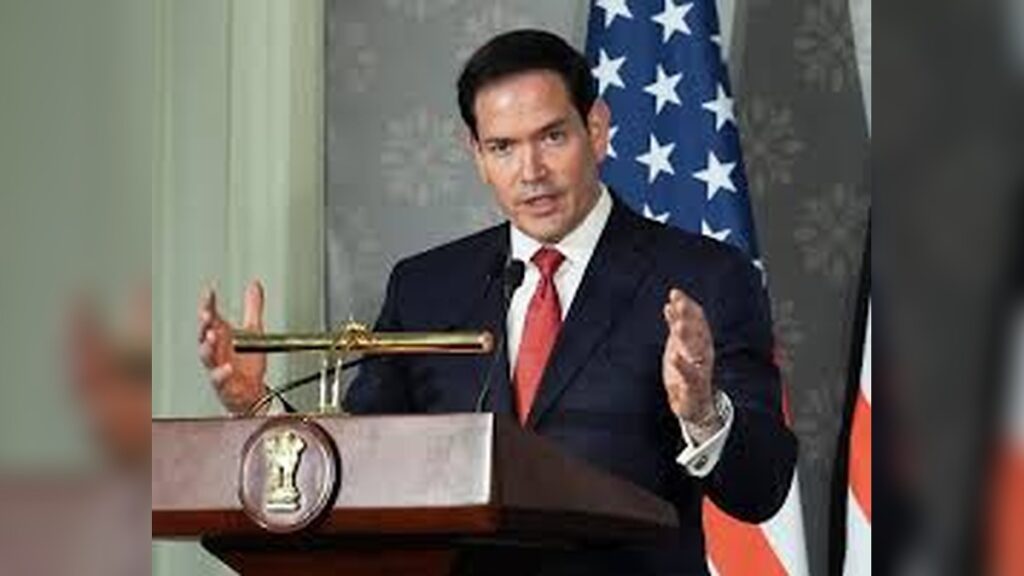
A fresh round of diplomatic signals emerged on Sunday after US Secretary of State Marco Rubio announced that Washington has made “significant progress” in talks linked to a potential peace arrangement with Iran while visiting India.
Speaking to reporters, Rubio hinted that an official update could come very soon, suggesting that developments in the negotiations may be announced directly by the White House.
While careful not to declare a final breakthrough, his tone suggested the talks are moving faster than expected.
The discussions are centered on long-running tensions between the United States and Iran, particularly over nuclear enrichment concerns and regional security flashpoints.
Nuclear Tensions and the Push for Uranium Control
At the heart of the negotiations is Iran’s stockpile of highly enriched uranium, which US officials have repeatedly described as a major security risk.
Washington’s long-standing position is that limiting or removing this stockpile is essential to preventing the development of nuclear weapons capability.
This issue has remained one of the most sensitive points in US–Iran relations for decades, with repeated breakdowns in previous diplomatic attempts.
Known context shows that earlier agreements in the 2010s attempted to cap enrichment levels, but enforcement disputes and political shifts led to renewed escalation over time.
Strait of Hormuz Becomes a Central Flashpoint Again
Another key element in the current talks is the Strait of Hormuz, one of the world’s most important maritime trade routes.
Reports indicate that negotiations include the possibility of reopening the strait fully after disruptions linked to military and naval tensions in the region. The waterway, which connects major oil shipping routes, has long been a strategic pressure point between Iran and Western powers.
Rubio described the strait as an international passage that no single country owns, warning that interference with commercial shipping risks escalating global instability.
Rising Maritime Tensions and Regional Blockade Concerns
According to officials cited in reports, the strait had been temporarily reopened before being closed again amid continued military positioning and naval restrictions near Iranian ports.



The US has maintained pressure through maritime presence in the region, arguing that safe passage for commercial vessels must be protected under international law.
These developments have contributed to rising global concern, especially among energy-importing countries that rely heavily on stable shipping routes through the Gulf region.
Rubio’s Warning on International Law and Global Risks
During his remarks, Rubio stressed that blocking or threatening commercial shipping lanes is illegal under international norms and could set a dangerous precedent if left unchecked.
He warned that allowing disruption in such a critical maritime corridor could normalize instability in other strategic waterways around the world.
His comments reflect broader US concerns that regional conflict could spill into global trade disruptions, particularly in energy markets.
Historical Backdrop of US–Iran Conflict
The tension between the United States and Iran has deep historical roots, stretching back decades of political disputes, sanctions, and proxy conflicts across the Middle East.
The current escalation is part of a long cycle of negotiation attempts and breakdowns, with nuclear concerns repeatedly sitting at the center of diplomatic friction.
While the latest talks suggest movement forward, previous agreements have shown how fragile such progress can be when political conditions shift.
Impact and Consequences
If negotiations succeed, the most immediate impact would likely be reduced tension in global energy markets and improved stability in maritime shipping routes, especially through the Strait of Hormuz.
A deal involving uranium restrictions could also ease international concerns about nuclear proliferation risks in the Middle East.
However, failure to reach a final agreement could quickly reverse recent progress, potentially escalating naval tensions and affecting global oil prices due to renewed uncertainty in shipping lanes.
What’s Next?
The next steps depend on whether Washington formally announces a framework agreement or continues behind-the-scenes negotiations.
Further statements from the US administration are expected soon, and any official breakthrough would likely include detailed terms on uranium control and maritime security arrangements.
Diplomatic observers expect follow-up talks to continue even if partial agreements are reached, especially given the complexity of enforcement and verification mechanisms.
Summary
US Secretary of State Marco Rubio said “significant progress” has been made in peace talks with Iran during a visit to India.
The discussions reportedly focus on Iran’s uranium stockpile and the reopening of the Strait of Hormuz, a critical global shipping route.
While no final agreement has been confirmed, US officials suggest further announcements may come soon as negotiations continue.
Bulleted Takeaways
- Marco Rubio says US has made “significant progress” in talks
- Negotiations involve long-standing tensions with Iran
- Key issue includes Iran’s highly enriched uranium stockpile
- The Strait of Hormuz remains a central strategic and shipping concern
- US warns disruption of shipping lanes violates international law
- Maritime tensions in the Gulf have contributed to global economic uncertainty
- No final deal has been confirmed, but further announcements are expected
- The situation remains fluid with continued diplomatic engagement underway

