
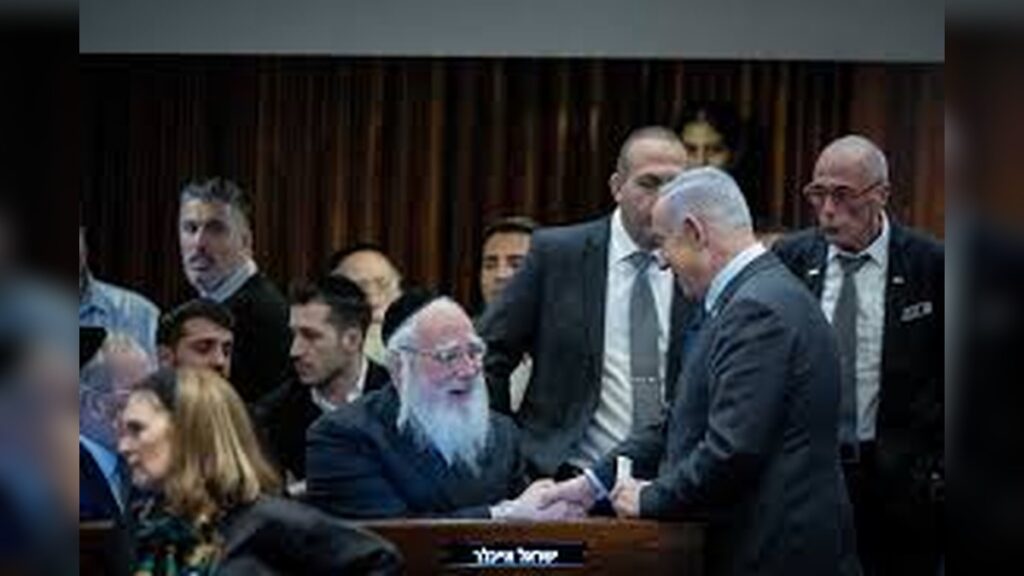
A fresh wave of political tension unfolded in the Israeli parliament this week after lawmakers in the Knesset advanced a controversial bill in its preliminary reading that would reshape how daycare subsidies are allocated.
The proposal passed by a narrow margin of 44–37, immediately triggering criticism from opposition figures and reigniting debate over military service exemptions and social welfare priorities.
The legislation, officially titled the Law on Admission of a Child to a Daycare Center and State Participation in Tuition Costs, was introduced by MK Moshe Gafni and supported by several ultra-Orthodox lawmakers.
It now moves to committee review before facing three additional parliamentary votes required for final approval.
A Subsidy Model That Centers on Mothers Alone
At the heart of the proposal is a significant change in eligibility rules.
Instead of considering both parents’ employment status, the bill would base daycare subsidy qualification solely on the mother’s income or education level.
Supporters argue that the change simplifies the system and better reflects household caregiving roles.
However, critics say it creates a loophole that could expand state support to families where fathers are not working, including cases involving military draft exemptions.
This concern is especially sensitive in Israel’s ongoing debate over conscription, where ultra-Orthodox (Haredi) communities have long negotiated exemptions from mandatory military service.
The bill’s structure could therefore indirectly increase subsidies for families of draft-eligible men who are not serving in the Israel Defense Forces, a point that has intensified political backlash.
Coalition Maneuvering and Last-Minute Parliamentary Tensions
The vote did not happen in isolation. Ahead of the session, political negotiations reportedly became highly strategic, with coalition dynamics shaping the order of parliamentary business.
Ultra-Orthodox factions, including United Torah Judaism and Shas, pushed strongly for the bill’s advancement.
Reports suggest that MK Moshe Gafni used parliamentary leverage, at one point threatening to align with opposition efforts on unrelated legislation calling for a state inquiry into failures surrounding the October 7 attacks.
In response, the coalition rearranged the Knesset agenda so the subsidy bill would be voted on before the inquiry motions.
Once the subsidy bill passed, opposition lawmakers withdrew their inquiry proposals from the agenda, further deepening political frustration.
The result was a tightly choreographed parliamentary sequence that underscored just how fragile Israel’s governing coalition has become.




Divisions Inside Netanyahu’s Coalition
The vote exposed cracks even within Prime Minister Benjamin Netanyahu’s governing bloc.
While most coalition members supported the bill, some dissent emerged.
Notably, MK Dan Illouz of Likud voted against the proposal, calling attention to concerns about fairness in military service obligations.
At the same time, figures such as Itamar Ben-Gvir backed the legislation, aligning with the ultra-Orthodox bloc despite broader coalition disagreements.
The political backdrop is already tense, with haredi parties pushing for broader changes to draft policies and even supporting efforts to dissolve the Knesset in previous votes.
This daycare subsidy bill has now become part of a wider bargaining landscape involving military service, welfare funding, and coalition survival.
Public Backlash and Accusations of Inequality
Opposition lawmakers reacted sharply after the vote passed.
One of the strongest criticisms came from MK Efrat Rayten of The Democrats, who accused the coalition of prioritizing political deals over national security concerns.
Critics argue that approving subsidies under these conditions effectively rewards families where fathers avoid military service, at a time when the Israeli state is facing significant security pressures and manpower shortages within its armed forces.
The debate reflects a broader societal divide in Israel between secular and ultra-Orthodox communities over compulsory military service, economic participation, and state support systems.
A Long Legislative Road Ahead
Despite passing its first hurdle, the bill is still far from becoming law.
It must now go through the Knesset House Committee and survive three additional readings in the plenum before final approval.
Historically, many bills that pass preliminary readings in the Knesset undergo substantial revision or stall entirely during committee scrutiny, meaning the final outcome remains uncertain.
Impact and Consequences
If enacted, the bill could significantly reshape Israel’s childcare subsidy system by narrowing eligibility criteria to maternal income alone.
This could increase state spending on certain households while also shifting the demographic balance of recipients.
Politically, the legislation deepens tensions between secular and ultra-Orthodox communities, particularly around the sensitive issue of military conscription.
It also risks further destabilizing the governing coalition, which already faces internal disagreements and external pressure over national security policy.
On a broader level, the controversy adds to ongoing debates about fairness in public funding, equal civic obligations, and how the state balances welfare policy with military manpower needs.
What’s Next?
The bill will now enter committee review, where lawmakers are expected to debate its structure, legal implications, and fiscal impact.
Amendments are likely as political negotiations continue behind the scenes.
Meanwhile, opposition parties are expected to revisit efforts to establish an independent inquiry into the October 7 government failures, potentially reigniting the procedural conflict that shaped this week’s vote.
Further coalition negotiations are also expected as ultra-Orthodox parties continue pushing for policy concessions related to military exemptions and social benefits.
Summary
Israel’s parliament has advanced a controversial daycare subsidy bill that shifts eligibility rules to focus only on mothers’ income, a change critics say could indirectly benefit families of draft evaders.
The vote, passed in the Knesset, has intensified political divisions over military service, welfare policy, and coalition stability, while setting up further legislative battles in the weeks ahead.
Bulleted Takeaways
- Knesset advances daycare subsidy bill by 44–37 vote
- Subsidy eligibility would be based only on mother’s income
- Critics say it could benefit families of military draft evaders
- Ultra-Orthodox lawmakers strongly backed the legislation
- Internal coalition disagreements surfaced during the vote
- Opposition condemned the bill amid wartime manpower concerns in the Israel Defense Forces
- Bill still requires committee review and three more readings to pass
- Debate reflects deeper divisions over conscription and welfare policy
- Political tensions linked to October 7 inquiry disputes influenced proceedings

