
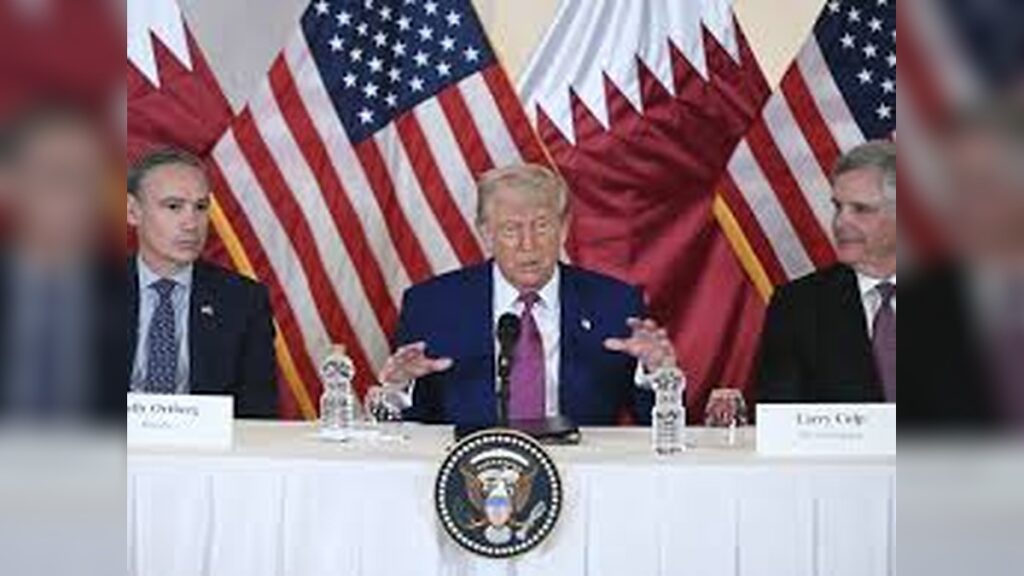
US President Donald Trump has suggested that relations between Washington and Tehran may be entering a calmer phase, even as discussions around a possible 60-day ceasefire continue to gather attention.
In a post shared on Truth Social, Trump described the current dialogue with Iran as “more professional and productive,” a notable shift considering the years of hostility between the two countries.
Still, he made it clear that the United States would not soften its core position on Iran’s nuclear ambitions.
According to Trump, Iran must fully understand that developing or obtaining a nuclear weapon remains unacceptable to the United States.
While he acknowledged ongoing negotiations, he stressed that American officials were under instructions not to move too quickly toward an agreement.
Trump Says Pressure Will Continue Until a Deal Is Signed
Trump’s comments also revealed that economic and strategic pressure on Iran is far from over.
He stated that the existing blockade would remain active until any agreement is finalized, independently verified, and officially signed.
The president argued that patience was essential, saying both parties needed enough time to avoid costly mistakes.
His remarks appear aimed at reassuring critics who fear that Washington could compromise too much in exchange for temporary calm in the region.
This cautious approach mirrors Trump’s long-standing negotiation style.
During his previous presidency, he frequently relied on maximum-pressure tactics, including sanctions and diplomatic isolation, to force adversaries into concessions.
Ceasefire Reports Add New Layer to Middle East Diplomacy
The discussion surrounding a possible 60-day ceasefire has sparked fresh debate across international circles.
While details remain limited, reports of a temporary truce have fueled speculation that behind-the-scenes diplomacy may be gaining momentum.
The Middle East has faced heightened instability in recent years, especially after conflicts involving Iran-backed groups, maritime tensions in the Persian Gulf, and fears over disruptions in the Strait of Hormuz — one of the world’s most critical oil shipping routes.
Analysts believe any pause in hostilities could help reduce pressure on global energy markets while creating space for broader negotiations involving regional security and nuclear oversight.
Abraham Accords Return to the Spotlight
Trump also used the moment to renew his push for wider participation in the Abraham Accords, the diplomatic agreements established during his administration to normalize relations between Israel and several Arab nations.
He thanked Middle Eastern countries involved in mediation efforts and suggested that regional cooperation could become even stronger if more nations joined the accords.
In a surprising remark, Trump even floated the possibility of Iran one day participating in the framework.




That idea would have seemed almost unimaginable just a few years ago given the deep hostility between Iran and Israel.
However, the comment may reflect an attempt to present diplomacy as an alternative to escalating military confrontation.
Republican Concerns Over Iran’s Influence
Despite the optimistic tone from Trump, several American lawmakers remain skeptical about the direction of negotiations.
Critics have warned that any arrangement allowing Iran to retain nuclear capabilities, gain financial relief, or maintain influence over the Strait of Hormuz would be viewed as a strategic failure.
These concerns highlight divisions within Washington over how best to handle Iran.
Some policymakers support diplomacy backed by pressure, while others argue that Tehran cannot be trusted under any circumstances.
Iran’s nuclear program has been one of the most sensitive international issues for more than two decades.
Western governments have repeatedly accused Tehran of pursuing capabilities that could eventually lead to nuclear weapons production, while Iran insists its program is intended for peaceful energy purposes.
Marco Rubio Defends Trump’s Position
US Secretary of State Marco Rubio strongly defended Trump’s approach during a press conference in India.
Rubio dismissed suggestions that the administration would agree to a weak deal, arguing that Trump had already demonstrated a willingness to take aggressive action when necessary.
He insisted that the president’s goal remained preventing Iran from ever obtaining a nuclear weapon.
Rubio also hinted that progress had been made behind closed doors, describing developments on the issue as “good news,” although he stopped short of providing specific details.
His comments appeared designed to reassure allies and critics alike that negotiations were not being conducted from a position of weakness.
Impact and Consequences
If negotiations continue positively, the immediate effect could be reduced military tension across the Middle East.
A successful ceasefire or diplomatic breakthrough might lower the risk of direct conflict involving Iran, Israel, and US forces in the region.
Global oil markets could also benefit.
Any sign of stability around the Strait of Hormuz typically eases fears of supply disruptions, which can influence fuel prices worldwide.
Politically, Trump’s handling of Iran may become a major talking point both domestically and internationally.
Supporters may see the negotiations as proof that pressure tactics work, while opponents could argue that diplomacy with Tehran carries significant risks.
For Iran, the talks may offer a path toward economic relief if sanctions are eventually eased.
However, Tehran would likely face strict conditions tied to nuclear inspections and regional conduct.
What’s Next?
Attention will now shift toward whether the reported ceasefire framework develops into a formal agreement. Diplomats from multiple countries are expected to continue mediation efforts in the coming weeks.
Observers will also watch for any official announcements regarding sanctions, nuclear inspections, or security guarantees tied to the negotiations.
At the same time, skepticism in Washington and among US allies means any final deal will likely face intense scrutiny before gaining broad support.
Much will depend on whether both sides can maintain patience while balancing political pressure at home and security concerns abroad.
Summary
Donald Trump says relations between the United States and Iran are becoming more constructive as negotiations and ceasefire discussions continue.
While signaling optimism, he emphasized that Iran would never be allowed to obtain nuclear weapons and confirmed that pressure measures would remain in place until a formal agreement is reached.
The situation has renewed debate over Middle East diplomacy, the future of the Abraham Accords, and the balance between negotiation and deterrence in dealing with Iran’s nuclear ambitions.
Bulleted Takeaways
- Donald Trump claimed US-Iran relations are becoming more productive.
- Reports of a possible 60-day ceasefire have fueled speculation about diplomatic progress.
- Trump said American negotiators were instructed not to rush into a deal.
- Existing pressure measures and blockades against Iran will remain until an agreement is finalized.
- Trump again promoted expansion of the Abraham Accords.
- Some US lawmakers fear a deal could leave Iran too powerful strategically.
- Marco Rubio defended Trump’s approach and insisted Iran would not be allowed to obtain nuclear weapons.
- Any breakthrough could influence regional stability, oil markets, and global diplomacy.

