
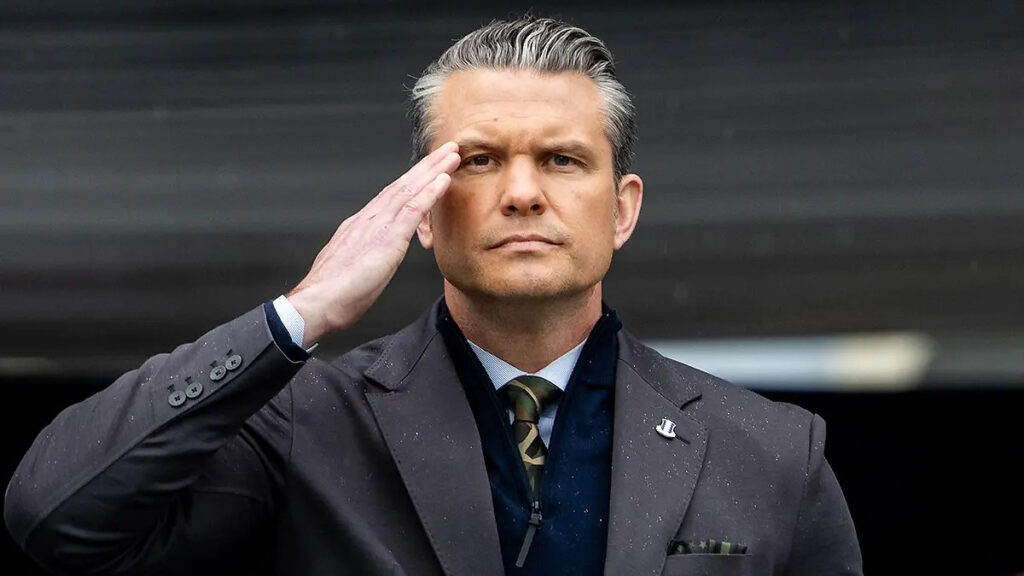
Newly appointed Defense Secretary Pete Hegseth grabbed headlines during his commencement address at the United States Military Academy after unexpectedly slipping into a near-perfect imitation of Donald Trump.
Standing before graduating cadets, Hegseth paused midway through his remarks and jokingly announced what he called a “complete and total pardon” for students who had committed small academy violations.
The line, delivered in Trump’s recognizable speaking style and cadence, instantly drew loud cheers and laughter from the audience.
The moment quickly spread online, especially on X, where many users praised the impression and described it as “full Trump mode.”
While the opening humor entertained the crowd, the speech soon shifted into a far more aggressive political tone.
Hegseth Declares End of “Woke” Military Culture
After the joke-filled opening, Hegseth launched into a fiery criticism of diversity and inclusion programs within the US military.
He argued that recent leadership had become distracted by identity politics instead of focusing on battlefield readiness and discipline.
According to Hegseth, phrases such as “our diversity is our strength” represented what he called one of the military’s biggest mistakes in recent years.
He insisted that unity, not diversity, was the real foundation of military power.
The defense secretary accused previous Pentagon leadership of lowering standards in an effort to accommodate social and political trends.
He specifically criticized diversity studies and identity-focused policies that had reportedly gained attention at West Point and across branches of the armed forces.
Hegseth compared those changes to turning the academy into a politically correct university environment instead of a combat-focused military institution.
Sharp Remarks on Gender and Identity Debates
One of the most controversial moments of the speech came when Hegseth addressed gender identity discussions in the armed forces.
Speaking directly to cadets, he argued that warfare leaves no room for political correctness.
He told graduates that combat performance cannot be measured through identity categories or personal expression, insisting that military success depends entirely on readiness, discipline, and effectiveness under pressure.
The remarks immediately fueled debate online, with supporters praising his emphasis on combat standards while critics accused him of politicizing the military and dismissing inclusion efforts.
The “Snapback” Generation of Soldiers
Throughout the address, Hegseth repeatedly referred to the graduating cadets as the military’s “snapback” generation.
He described them as the group that would reverse what he viewed as years of declining standards across the Army.




According to him, the era of weakened leadership and lowered expectations was ending.
He framed the Class of 2026 as a symbol of restoration — a return to tougher training, stronger discipline, and battlefield-focused leadership.
Hegseth also promised cadets that promotions and opportunities under his leadership would not revolve around racial or identity-based quotas.
Instead, he stressed merit, performance, and combat effectiveness as the primary standards.
Tension Behind the Scenes With Trump
The speech came at an especially sensitive political moment for Hegseth.
Reports had recently surfaced claiming Trump was furious after the defense secretary canceled a planned troop deployment to Poland without sufficient consultation.
The move reportedly frustrated both the White House and Polish officials, especially given Poland’s critical role as one of America’s strongest NATO allies in Eastern Europe.
Although neither the Pentagon nor the White House denied the reports outright, officials publicly insisted that Trump and Hegseth remained aligned on military priorities in Europe.
Soon afterward, Trump announced plans to deploy an additional 5,000 US troops to Poland, a move widely interpreted as an attempt to reassure allies and demonstrate continued American commitment to NATO security.
A Speech That Reflects a Larger Shift in Military Politics
Hegseth’s speech reflects a broader ideological battle currently shaping American politics and military culture.
Conservatives aligned with Trump have increasingly argued that the armed forces became too focused on social issues during recent administrations.
Supporters of diversity initiatives, however, argue that inclusion efforts strengthen recruitment, morale, and representation within a modern military force.
This debate has become especially intense in recent years as military academies and Pentagon leadership faced pressure from both political parties over race, gender, and cultural policies.
West Point itself has often been at the center of those discussions because of its symbolic importance in shaping future Army leadership.
Impact and Consequences
The speech is likely to deepen political divisions surrounding the US military.
Supporters of Trump and Hegseth may see the address as a long-overdue rejection of politically correct policies inside the armed forces.
Critics, however, could view the remarks as evidence that military leadership is becoming increasingly partisan and ideological.
The controversy may also affect recruitment conversations, internal morale, and relationships between military leadership and service members who support diversity initiatives.
Internationally, the speech — combined with recent confusion over troop deployments in Europe — may raise concerns among NATO allies about consistency within American defense policy.
What’s Next?
Attention will now shift toward how Hegseth implements his vision inside the Pentagon.
Military observers are expected to watch closely for changes involving diversity programs, recruitment standards, leadership policies, and training priorities.
At the same time, Trump’s influence over defense strategy remains a major factor, especially as questions continue about US military commitments abroad.
Future speeches, Pentagon decisions, and troop deployment plans will likely reveal whether Hegseth’s remarks were primarily symbolic political messaging or the beginning of a major policy shift within the armed forces.
Summary
Pete Hegseth’s commencement speech at West Point started with humor but quickly evolved into one of the strongest political statements yet from the new defense secretary.
His Trump impression entertained cadets, but his harsh criticism of diversity initiatives and “woke” military culture dominated headlines afterward.
The address highlighted growing political battles over the direction of the US military and underscored Hegseth’s alignment with Trump-style conservative messaging.
Coming amid reports of internal tensions over troop deployments to Poland, the speech also exposed the complicated dynamics shaping American defense policy.
Bulleted Takeaways
- Pete Hegseth opened his West Point speech with a Donald Trump impression that drew applause and laughter.
- He jokingly offered cadets a “complete and total pardon” for minor rule violations.
- The defense secretary strongly criticized DEI and “woke” policies in the military.
- Hegseth argued that combat readiness should take priority over identity politics.
- He described the graduating cadets as the military’s “snapback” generation.
- The speech came amid reports of tension between Trump and Hegseth over troop deployments to Poland.
- Trump later announced plans to send 5,000 additional troops to Poland.
- The remarks intensified debate over politics, diversity, and leadership inside the US armed forces.

