Greta Gerwig’s upcoming adaptation of The Chronicles of Narnia: The Magician’s Nephew has divided fans after the release of its first trailer, with some viewers criticising its computer-generated imagery, visual style and departures from their understanding of C.S. Lewis’s beloved fantasy series.
The filmmaker, known for directing Barbie, has written and directed the first screen adaptation of Lewis’s first chronological Narnia novel.
The story explores the origins of the magical world, introducing the events that lead to the creation of Narnia.
Netflix launched the film’s promotional campaign on Tuesday with a trailer screening for selected journalists and influencers at an IMAX theatre in New York.
The teaser subsequently appeared on YouTube, prompting sharply contrasting reactions from viewers.
Trailer Draws Criticism Over CGI-Heavy Visuals
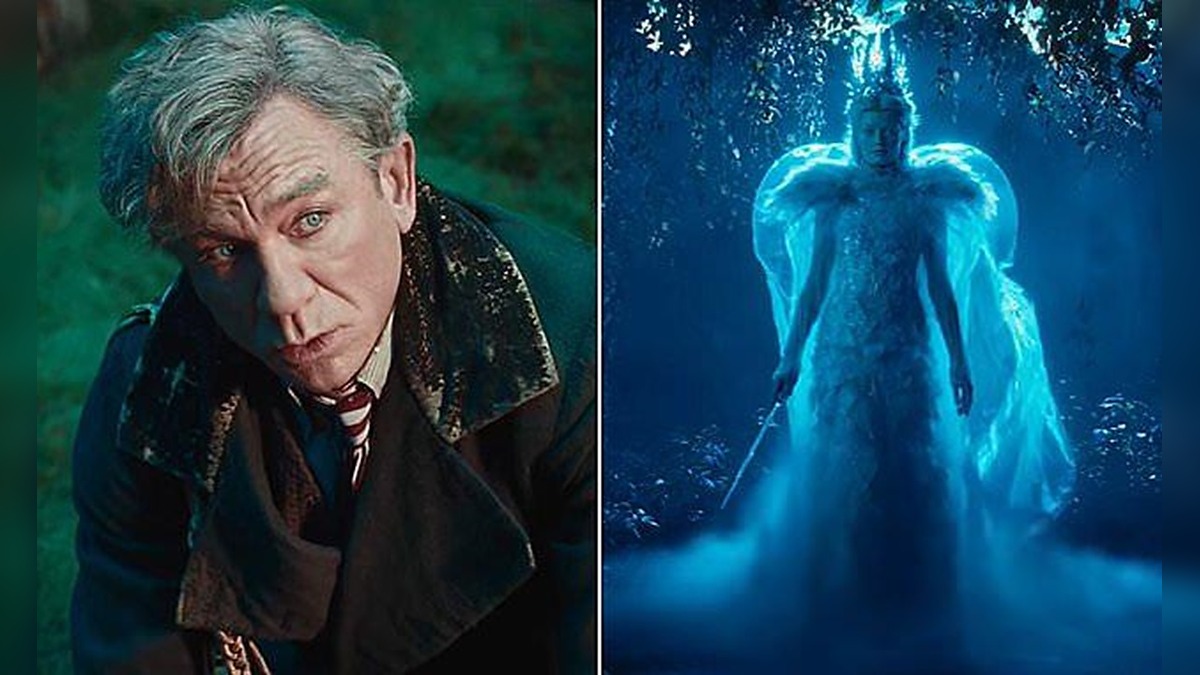
The trailer opens with an image of the famous wardrobe before introducing Daniel Craig as Uncle Andrew, who teaches Digory Kirke, played by David McKenna, and Polly Plummer, portrayed by Beatrice Campbell, about the existence of magic.
The children soon find themselves transported to another realm through a magical ring.
The footage then moves through glittering landscapes, flying horses and brief appearances by Emma Mackey as the White Witch and Aslan, the great lion voiced by Meryl Streep.
A sequence depicting Aslan singing Narnia into existence accompanies Led Zeppelin’s iconic song Stairway to Heaven.
The combination of elaborate visual effects, fantastical imagery and the rock anthem has become one of the most discussed elements of the teaser.
However, several viewers have criticised what they consider an excessive reliance on computer-generated imagery, arguing that the presentation sacrifices the atmosphere and subtlety associated with the original books.
“God this looks awful. Just spectacle slop, no sense of intrigue, no ‘less is more’, no subtlety, just bombast and colour,” one YouTube commenter wrote.
The same viewer argued that the Narnia books and earlier film adaptations benefited from a more grounded approach, adding that this quality was one of the stories’ strengths.
Another viewer described the trailer as “a bizarre, disastrous fever dream”, questioning the quality of its CGI backgrounds and expressing disappointment with the adaptation.
One social media user simply labelled the footage “CGI SLOP”, while another claimed that the film’s visuals looked as though they had been generated using artificial intelligence.
Fans Compare Gerwig’s Narnia to Marvel Films
The trailer has also prompted comparisons with Marvel productions, with some viewers accusing Gerwig and Netflix of giving the fantasy franchise the appearance of a conventional modern blockbuster.
One fan appealed directly to the filmmaker and streaming company, writing: “Please don’t Marvel my Narnia.”
Other viewers responded with sarcastic alternative taglines, including “Aslan the Great Lion will return in Avengers: Doomsday” and “Narnians of the Galaxy”.
Another commenter compared the production to a combination of Thor: Love and Thunder and Barbie, arguing that the new interpretation appeared to change the personalities and roles of the central characters.
“I am extremely unimpressed. This is not Narnia. This is Thor: Love and Thunder and Barbie had a baby,” the viewer wrote, criticising what they perceived as a portrayal of Digory as a coward and Polly as the more adventurous character.
Some critics also expressed concern that the adaptation might move away from the themes and characterisation they associate with Lewis’s original work.
“C.S. Lewis rolling in his grave. All the core messages he had in this series will be completely ignored and replaced with someone else’s interpretation. No thanks,” another viewer commented.
Meryl Streep’s Casting as Aslan Divides Audiences
The criticism surrounding the trailer follows an earlier debate about Streep’s casting as Aslan, the powerful lion at the centre of the Narnia stories.
The decision to use a female actor to voice the character has attracted objections from some fans, particularly those who regard Aslan’s identity and symbolism as inseparable from the Christian themes of Lewis’s books.


Aslan is widely understood as a Christ-like figure within the series, and some viewers have argued that the character’s depiction as a male lion should be preserved in the adaptation.
One social media user wrote that removing the Christian themes from Narnia would leave a fundamentally different story.
Another questioned the decision by pointing to the connection between Aslan and Jesus Christ, arguing that the character’s established identity should not be changed.
A separate commenter addressed Streep directly, expressing admiration for her acting career while criticising her involvement in the production.
“Dear Meryl Streep. I have watched your films and loved your talent for 40 years.
Please do not do this,” the user wrote, claiming that the casting decision was disrespectful to Christians.
The criticism has centred on the perceived gender change rather than on Streep’s acting credentials, with some fans arguing that the character should remain consistent with the source material.
Liam Neeson previously voiced Aslan in the three Narnia films released between 2005 and 2010.
Those productions collectively earned approximately $1.5 billion worldwide.
Gerwig Explains Why She Chose Streep for the Role
Gerwig has previously discussed her decision to cast Streep in the upcoming adaptation during an interview with Empire magazine.
The director said she wanted an actor capable of conveying authority and emotional depth without making the character excessively solemn.
“I wanted someone who was profound but not pretentious, who had gravitas but not morose self-seriousness,” Gerwig explained.
She added that she wanted a performer who could communicate both emotional intensity and a sense of joy.
Gerwig also specified that she was looking for someone older than 70, believing that such a performer could bring the wisdom of experience to the role while retaining a childlike capacity for wonder.
The filmmaker described the opportunity to work with one of the greatest actors in the industry as another important consideration.
She has also identified David Bowie as one of the inspirations behind her interpretation of Aslan and the film more broadly.
Led Zeppelin Approves Use of Stairway to Heaven
The choice of Stairway to Heaven for the trailer has attracted attention because the song is famously difficult to license for use in film and television productions.
Gerwig revealed during Tuesday’s promotional event that she had shown the film to Led Zeppelin members Robert Plant and Jimmy Page.
According to the director, the musicians were moved by what they saw and agreed to let her use the song.
The track accompanies the trailer’s presentation of Narnia as a world emerging through extraordinary acts of creation, with sweeping landscapes and fantastical imagery appearing throughout the sequence.
Gerwig has previously spoken about her childhood connection to The Magician’s Nephew, explaining that she fell in love with its imaginative premise.
She recalled being captivated by the idea of a cosmic lion singing an entire world into existence, describing the concept as both improbable and brilliant.
The director’s approach to the material has therefore placed considerable emphasis on translating the novel’s surreal elements into large-scale cinematic imagery.
Gerwig Says She Makes Films for the Big Screen
Speaking at Tuesday’s trailer event, Gerwig said she was not intimidated by the scale of adapting Lewis’s fantasy novel, explaining that she approaches filmmaking with cinema viewing in mind.
She recalled telling Netflix co-chief executive Ted Sarandos that her creative process begins with imagining what it would be like to watch a film in a theatre.
According to Gerwig, Sarandos encouraged her to make the film for the largest screen she could imagine.
The approach is reflected in the trailer’s expansive landscapes, elaborate fantasy sequences and emphasis on spectacle, although those elements have divided viewers over whether the adaptation captures the atmosphere of the original novel.
Other Fans Praise the Trailer’s Surreal Interpretation
Despite the criticism, the teaser has also received enthusiastic responses from viewers who believe its unusual imagery suits the story.
Some fans have argued that The Magician’s Nephew is among the most difficult Narnia novels to adapt because of its abstract concepts and account of the world’s creation.
One viewer described the trailer as the best they had seen in years, adding that the production appeared to be exploring the more mythological aspects of Narnia.
Another fan, who identified the book as their favourite in the series, praised the visuals for capturing the surreal quality of the story.
Others described the adaptation as faithful to the novel’s imaginative spirit, with one viewer saying the footage appeared to have successfully visualised the birth of Narnia.
A separate commenter welcomed the combination of fantasy and rock music, comparing Gerwig’s creative direction to a mixture of The Dark Crystal, Labyrinth, the Harry Potter films and Led Zeppelin.
The differing responses reflect the contrasting expectations surrounding Gerwig’s interpretation, with some viewers questioning its visual style and character choices while others have welcomed its ambitious presentation of Lewis’s fantasy world.
Narnia: The Magician’s Nephew is scheduled to be released in cinemas in February 2027.
