
The U.S. Central Command has reported continued maritime and air operations in the Arabian Sea, describing a heightened state of naval activity involving carrier strike groups and amphibious ships as part of ongoing enforcement operations in regional waters.
Recent statements highlighted coordinated deployments involving the USS Abraham Lincoln Carrier Strike Group and amphibious forces operating in proximity to key shipping routes near Iranian maritime approaches.
USS Comstock Observes Commercial Traffic During Maritime Enforcement Operations
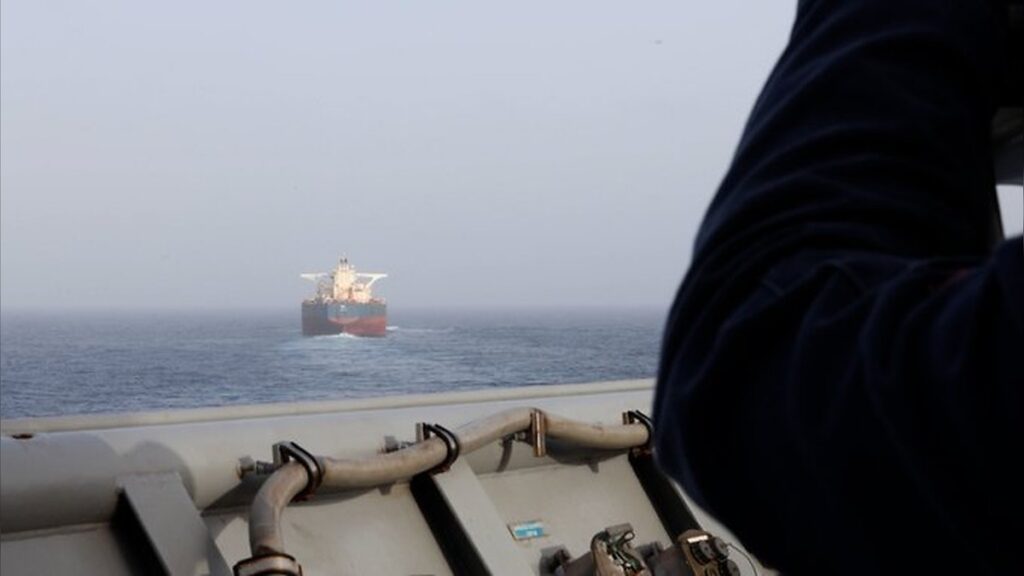
In one of the updates, a U.S. sailor aboard USS Comstock (LSD-45) was reported observing commercial shipping activity while conducting enforcement duties at sea.
According to CENTCOM’s description, U.S. naval forces have redirected 97 commercial vessels and disabled four since the start of what it characterized as a blockade-style enforcement operation involving Iranian maritime access routes.
The operation was framed as part of broader efforts to control maritime movement in strategically sensitive waters.
Carrier-Based Air Operations Conducted From USS Abraham Lincoln
Separately, CENTCOM reported that naval aviation operations were launched from USS Abraham Lincoln (CVN-72) operating in the Arabian Sea.
Carrier-based fighter jets were seen conducting flight operations as part of what officials described as sustained high-tempo readiness activity.
The Abraham Lincoln Carrier Strike Group was said to be maintaining operational readiness while supporting maritime enforcement missions in the region.




Escalating Maritime Enforcement Posture in Strategic Waters
CENTCOM messaging described a broader pattern of intensified naval and air operations aimed at controlling commercial shipping movement through critical maritime corridors.
The reported redirection of vessels and deployment of carrier aviation assets suggests an expanded enforcement posture, with sustained presence in international shipping lanes near the Middle East.
While official statements emphasize operational security and deterrence, the scale of reported activity indicates a significant naval footprint in the region.
Impact and Consequences
The reported operations reflect heightened tensions in already sensitive maritime corridors, where commercial shipping and military presence intersect.
If sustained, the redirection of vessels could affect global trade flows, insurance risks, and shipping route planning across the Arabian Sea and adjacent waters.
The deployment of carrier-based aircraft also signals a strong U.S. military posture, potentially influencing regional security dynamics and diplomatic calculations involving Iran and neighboring states.
What’s Next?
Further updates from U.S. Central Command are expected as maritime enforcement operations continue.
Analysts will likely monitor whether vessel redirection patterns increase or stabilize in the coming weeks.
Additional naval deployments or adjustments to carrier strike group positioning may follow depending on evolving regional conditions and strategic assessments.
Summary
U.S. Central Command reported ongoing naval and air operations in the Arabian Sea involving the USS Abraham Lincoln Carrier Strike Group and USS Comstock.
The updates describe vessel redirections, carrier-based flight operations, and sustained maritime enforcement activity in waters near Iran, reflecting an expanded U.S. military presence in the region.
Bulleted Takeaways
- U.S. Central Command reported intensified maritime and air operations
- USS Comstock (LSD-45) observed commercial shipping during operations
- CENTCOM claims 97 vessels redirected and 4 disabled since start of enforcement activity
- Carrier jets launched from USS Abraham Lincoln (CVN-72)
- The Abraham Lincoln Carrier Strike Group is maintaining high operational readiness
- Operations are described as part of enforcement activity near Iranian maritime routes
- Broader implications include potential impact on regional shipping and security dynamics
