
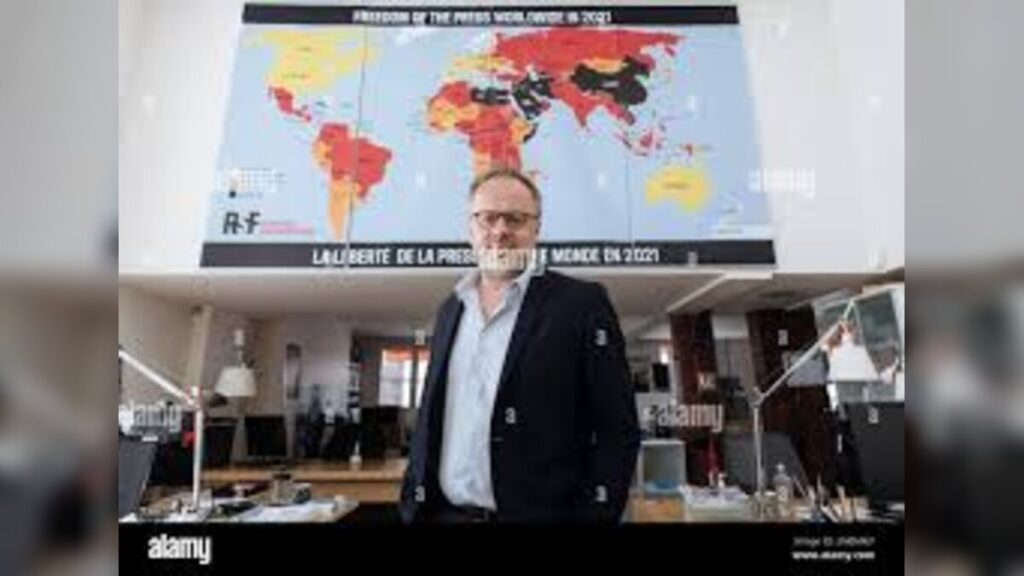
A new report from Reporters Without Borders has painted a bleak picture of the state of journalism worldwide, warning that press freedom has fallen to its lowest level in more than two decades.
The findings suggest that independent reporting is becoming increasingly difficult in many parts of the world, with political pressure, conflict, and legal restrictions all tightening their grip on the media landscape.
A World Where Free Journalism Is Shrinking Fast
According to the report, more than half of all countries now fall into either “difficult” or “very serious” categories when it comes to press freedom.
That marks a historic low since RSF began tracking global media conditions 25 years ago.
Even more striking, the proportion of people living in countries considered “good” for press freedom has collapsed from about 20% to less than 1%.
Today, only a small group of Northern European countries—led by Norway—still meet that standard.
United States Sees Notable Decline
One of the most closely watched developments is the continued drop in the United States’ ranking.
The country, which had already shifted into a “problematic” category in recent years, has now fallen further to 64th place.
The report points to growing political hostility toward journalists, including what it describes as systematic criticism of the press by President Donald Trump during and after his re-election period.
It also highlights cases such as the detention and expulsion of journalist Mario Guevara, as well as reductions in funding for US international broadcasting outlets.
Russia and Legal Pressure on the Media
In Russia, press freedom continues to deteriorate under strict legal frameworks.
The report says the government has increasingly relied on laws related to terrorism, extremism, and separatism to limit journalistic activity.




As of April 2026, RSF estimates that 48 journalists are currently imprisoned in the country.
The situation has raised ongoing concerns about the shrinking space for independent reporting under President Vladimir Putin.
Sahel Region and Military Rule Crackdowns
The steepest regional decline was recorded in Niger, which dropped 37 places in the index.
The country is part of the wider Sahel region, where military juntas and armed conflict have significantly restricted access to independent news.
In these environments, journalists often face threats, censorship, or outright bans on reporting sensitive issues, particularly around security operations and political instability.
A Global Pattern of Decline
RSF warns that the trend is not isolated.
Across multiple regions, from authoritarian states to democracies under pressure, journalists are facing increasing challenges.
These include legal harassment, funding cuts, online abuse, and physical threats.
The overall result is a shrinking space for independent journalism and reduced access to reliable information for the public.
Impact and Consequences
The decline in press freedom has wide-reaching consequences beyond journalism itself.
When media independence weakens, societies often experience:
- reduced government accountability
- increased spread of misinformation
- weaker democratic oversight
- limited public access to reliable news
- higher risk for journalists on the ground
Experts warn that once press freedom erodes, it becomes difficult to rebuild trust and institutional protection for journalists.
What’s Next?
RSF is calling for stronger international protections for journalists, including legal safeguards, funding support for independent media, and pressure on governments that restrict reporting.
Future improvements, however, depend heavily on political will.
In regions experiencing conflict or authoritarian rule, meaningful change may take years rather than months.
Summary
The latest RSF report shows global press freedom has fallen to its lowest point in 25 years, with more than half of countries now facing serious restrictions.
From the United States to Russia and parts of Africa, journalists are increasingly working under pressure, legal threat, or outright danger.
Bulleted Takeaways
- Press freedom has reached its lowest level in 25 years globally
- Over half of countries are now in “difficult” or “very serious” categories
- Less than 1% of the world’s population lives in countries with strong press freedom
- Only seven Northern European countries maintain “good” press conditions
- United States dropped further to 64th place amid political and institutional pressure
- Russia continues to imprison journalists and restrict reporting through legal tools
- Niger recorded the steepest decline due to instability in the Sahel region
- Declining press freedom threatens democracy, transparency, and public trust worldwide

