
Nigeria’s federal government has once again signaled that protecting strategic infrastructure remains a top national priority.
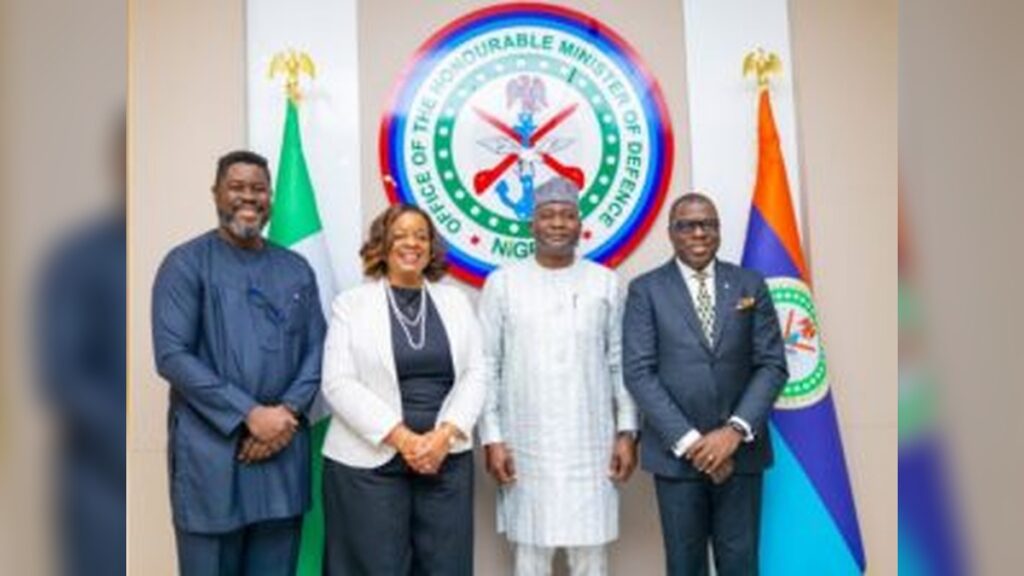
During a high-level meeting in Abuja, the Honourable Minister of Defence, Christopher Musa, welcomed executives from Nigeria LNG Limited to discuss deeper cooperation on energy security and national economic stability.
The meeting, held at the Ministry of Defence headquarters known as Ship House, focused heavily on how both sides can work together to secure oil and gas infrastructure that plays a major role in Nigeria’s economy.
With energy exports still contributing a huge share of national revenue, the discussions reflected growing concerns about threats to production facilities, maritime routes, and supply chains.
Why NLNG Matters to Nigeria’s Economy
Nigeria Liquefied Natural Gas Limited, commonly called NLNG, remains one of the country’s most important revenue-generating companies.
The company exports liquefied natural gas to global markets while also helping to support domestic gas supply.
Because the federal government owns a majority stake in the venture, disruptions affecting NLNG operations directly impact national income, foreign exchange earnings, and industrial activity.
Over the years, attacks on pipelines, crude theft, vandalism, and insecurity in coastal areas have repeatedly slowed production and affected investor confidence.
That reality has made energy infrastructure security a national issue rather than just a corporate concern.
“Nigeria Needs Gas” Says Defence Minister
During the meeting, General Musa stressed that natural gas remains central to Nigeria’s economic future.
He openly acknowledged the importance of collaboration between government agencies, security institutions, and private-sector operators.
According to him, solving operational challenges requires stronger coordination and practical joint action rather than isolated efforts.
He noted that the government understands the urgency of protecting facilities tied to energy production and export.
The minister also assured NLNG executives that the Armed Forces would continue supporting their operations and expansion projects.
He emphasized that Nigeria cannot afford disruptions that weaken energy output at a time when global demand for cleaner energy alternatives continues to rise.
Maritime Security Becomes a Major Focus
One of the strongest points raised during the meeting was the issue of maritime insecurity in the Gulf of Guinea.
The region has historically faced problems linked to piracy, illegal bunkering, kidnapping, and attacks on vessels.
To tackle those threats, the Defence Minister highlighted the establishment of a dedicated Maritime Task Force designed to improve security operations within the Gulf of Guinea corridor.
The Nigerian Navy was particularly praised for strengthening maritime surveillance and helping energy companies maintain safer operations offshore.
Improved security along these routes is considered vital because much of Nigeria’s gas infrastructure and export activity depends on uninterrupted marine transportation systems.
Nigeria Looks Inward for Defence Production
Another major revelation from the meeting involved Nigeria’s growing interest in local defence manufacturing.
General Musa explained that global delays and complications in arms procurement are forcing many countries to reconsider dependence on foreign military supplies.




As a result, Nigeria is now investing more attention into developing indigenous defence production capabilities.
The long-term goal is to improve military readiness while reducing reliance on external suppliers during periods of international uncertainty.
Security experts have increasingly argued that local production could help Nigeria respond faster to internal security threats while supporting job creation and industrial development.
NLNG Expands Capacity Through Train 7 Project
Leading the NLNG delegation, Managing Director and Chief Executive Officer Leye Falade expressed appreciation to the Armed Forces for protecting critical infrastructure across the country.
Falade explained that attacks or disruptions within the upstream supply chain can quickly reduce national output and negatively affect the economy.
He added that maintaining stable operations is essential not only for shareholders but also for Nigeria’s wider development goals.
A key highlight from his remarks was the ongoing Train 7 expansion project, which aims to increase NLNG’s production capacity by about 35 percent.
The expansion is one of the largest gas infrastructure projects currently underway in Nigeria.
Industry analysts believe the project could significantly increase export earnings, create thousands of jobs, and strengthen Nigeria’s position in the global liquefied natural gas market.
Clean Cooking Demand Adds More Pressure
Beyond exports and revenue generation, Falade also touched on another growing issue — domestic energy demand.
Millions of Nigerian households still rely on firewood and charcoal for cooking, contributing to environmental degradation and health problems caused by indoor air pollution.
NLNG says it is working to improve access to cleaner cooking alternatives as gas demand rises across the country.
This aligns with broader government efforts to encourage cleaner energy adoption and reduce dependence on traditional biomass fuels.
Armed Forces and Energy Sector Seek Closer Coordination
The meeting ended with both parties agreeing to strengthen operational cooperation moving forward.
The goal is to ensure that NLNG’s facilities, maritime operations, and expansion projects remain protected against both internal and external threats.
The renewed partnership also reflects a broader strategy by the Nigerian government to stabilize the energy sector while attracting more investment into oil and gas infrastructure.
As global competition in the energy market intensifies, maintaining security around strategic assets could become even more critical for Nigeria’s economic future.
Impact and Consequences
The renewed security partnership between the Defence Ministry and NLNG could produce several major outcomes for Nigeria.
Improved protection of pipelines, gas facilities, and maritime routes may help reduce production losses caused by vandalism and criminal activity.
That, in turn, could boost export earnings and improve investor confidence in Nigeria’s energy sector.
The Train 7 expansion project may also generate employment opportunities and increase government revenue if operations continue without disruption.
On the other hand, persistent insecurity in oil-producing regions remains a serious challenge.
Any failure to secure infrastructure could slow production growth, discourage investors, and weaken Nigeria’s position in global energy markets.
The push toward local defence manufacturing may also reshape Nigeria’s security strategy over the coming years by reducing dependence on foreign military suppliers.
What’s Next?
Attention will now shift toward how effectively the government implements the promised security measures.
Observers will be watching for stronger naval patrols, faster responses to pipeline threats, and deeper collaboration between security agencies and private energy operators.
The success of NLNG’s Train 7 project is also expected to remain under close scrutiny, especially as Nigeria competes with other major gas-exporting nations for international market share.
In the coming months, the federal government may introduce additional initiatives aimed at boosting domestic gas utilization, improving energy access, and strengthening local industrial capacity tied to the gas sector.
Summary
Nigeria’s Defence Ministry and NLNG have moved to strengthen cooperation around the protection of critical energy infrastructure.
The discussions centered on maritime security, safeguarding gas operations, and ensuring the success of NLNG’s Train 7 expansion project.
Defence Minister Christopher Musa reaffirmed the government’s commitment to protecting strategic national assets, while NLNG leadership praised the Armed Forces for supporting energy operations crucial to the country’s economy.
The meeting also highlighted Nigeria’s growing focus on local defence production and the importance of gas in supporting future economic growth.
Bulleted Takeaways
- Nigeria’s Defence Ministry hosted NLNG executives in Abuja for high-level security discussions.
- The government reaffirmed its commitment to protecting critical national assets.
- A Maritime Task Force is already operating within the Gulf of Guinea to improve security.
- NLNG says disruptions to operations directly affect Nigeria’s economy and output.
- The company’s Train 7 project aims to increase production capacity by 35 percent.
- Nigeria is exploring local defence manufacturing due to global arms procurement challenges.
- The Nigerian Navy received praise for supporting maritime safety and energy infrastructure protection.
- Both parties agreed to strengthen operational cooperation moving forward.
- Increased gas production could improve export earnings and job creation.
- Clean cooking alternatives remain a growing focus as domestic gas demand rises.

