
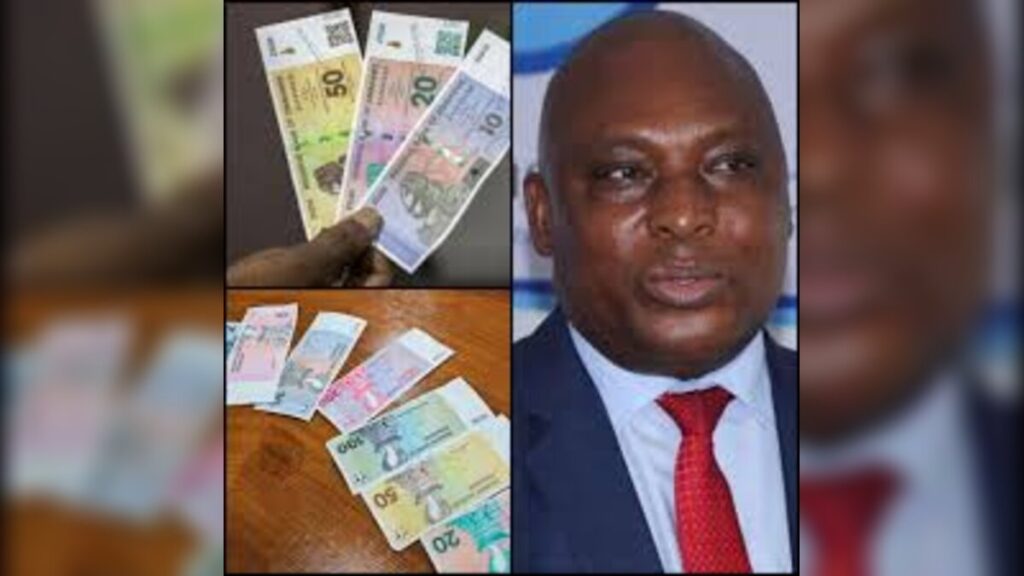
Zimbabwe’s monetary debate has taken a sharp turn after the Reserve Bank of Zimbabwe (RBZ) suggested its gold-backed currency, the Zimbabwe Gold (ZiG), may actually be undervalued.
The statement has sparked fresh conversations about whether the country is finally stabilising its long-troubled currency system or simply managing perceptions.
RBZ governor John Mushayavanhu believes the ZiG should be trading much stronger than it currently is against the US dollar.
The Exchange Rate Debate Heats Up
According to Mushayavanhu, the true value of the ZiG is closer to 15 per US dollar, rather than the current official rate of around 25.
That’s a big gap, and it immediately raises questions about confidence, liquidity, and market trust.
He argued that Zimbabwe’s reserves are strong enough to support such a valuation, suggesting that if the central bank decided to buy back all local currency in circulation, it could justify a much stronger exchange rate.
Why the ZiG Was Introduced in the First Place
The Zimbabwe Gold (ZiG) was introduced in April 2024 to replace the Zimbabwe dollar, which had been severely weakened by years of inflation and repeated currency crashes.
Authorities positioned it as a more stable alternative, backed by gold and foreign reserves, with the aim of restoring trust in the financial system and reducing dependence on the US dollar.
This wasn’t just a currency switch—it was meant to be a reset button for Zimbabwe’s economy.
Reserves and Stability Claims
Official data suggests Zimbabwe held about 3.4 metric tons of gold reserves by mid-2025.
The RBZ also reported a rise in foreign currency reserves from $276 million in 2024 to about $1.2 billion by late 2025.
Inflation, according to the central bank, has eased into single digits, and exchange-rate fluctuations have become less dramatic compared to previous years.
On paper, these are signs of improvement—but the reality on the ground tells a more complicated story.
The US Dollar Still Rules Daily Life
Despite government optimism, the US dollar remains dominant in everyday transactions.




Estimates from business groups suggest that over 90% of economic activity is still conducted in foreign currency.
That means most people, shops, and businesses continue to rely on dollars for pricing and payment, with the Zimbabwe Gold (ZiG) playing a secondary role in practice.
This dual-currency reality has created a trust gap that is difficult to close.
Business Skepticism and Market Doubts
Industry groups, including the Confederation of Zimbabwe Industries, have expressed concerns that the apparent stability of the ZiG may not be sustainable.
Many businesses still see the currency as being heavily managed rather than freely market-driven.
That perception makes long-term confidence harder to build, even if short-term indicators look stable.
IMF Concerns and External Pressure
International observers, including the International Monetary Fund, have also flagged concerns.
One key issue is the RBZ’s continued intervention in the currency market through foreign exchange sales.
While this helps stabilise the exchange rate, critics argue it masks underlying demand pressures that could resurface later.
A Confidence Problem at the Core
Even the central bank admits the biggest challenge is trust.
Mushayavanhu himself acknowledged that the gap between official valuation and public perception reflects a confidence issue.
In his words, rebuilding that trust is still a work in progress, especially after years of currency instability in Zimbabwe’s financial history.
Impact and Consequences
If the RBZ’s valuation is correct, Zimbabwe could be sitting on a stronger currency foundation than markets currently believe.
That could eventually attract investment and reduce reliance on foreign currency.
However, if confidence continues to lag behind policy claims, the country may face continued dollarisation, where citizens prefer holding US dollars instead of local currency.
For businesses, uncertainty around exchange rates makes planning difficult, while for households, pricing instability remains a daily concern.
What’s Next?
The immediate focus will likely be on whether the Zimbabwe Gold (ZiG) can gain real traction in everyday transactions.
The RBZ may continue adjusting monetary policy, managing reserves, and trying to strengthen market confidence.
But the bigger test will be behavioural—whether citizens and businesses actually begin trusting and using the currency at scale.
Summary
Zimbabwe’s central bank is pushing a bold narrative that its gold-backed currency is undervalued and stronger than market rates suggest. While economic indicators show some improvement, widespread dollar usage and lingering trust issues continue to challenge the ZiG’s credibility.
Bulleted Takeaways
- RBZ governor John Mushayavanhu says ZiG is undervalued
- Zimbabwe Gold (ZiG) should trade closer to 15 per US dollar, not 25
- Currency launched in 2024 to replace unstable Zimbabwe dollar
- Backed by gold reserves and foreign currency holdings
- US dollar still dominates over 90% of transactions
- IMF raises concerns over continued market intervention
- Main challenge remains public and business confidence in the currency
- Long-term success depends on adoption beyond official policy claims
