
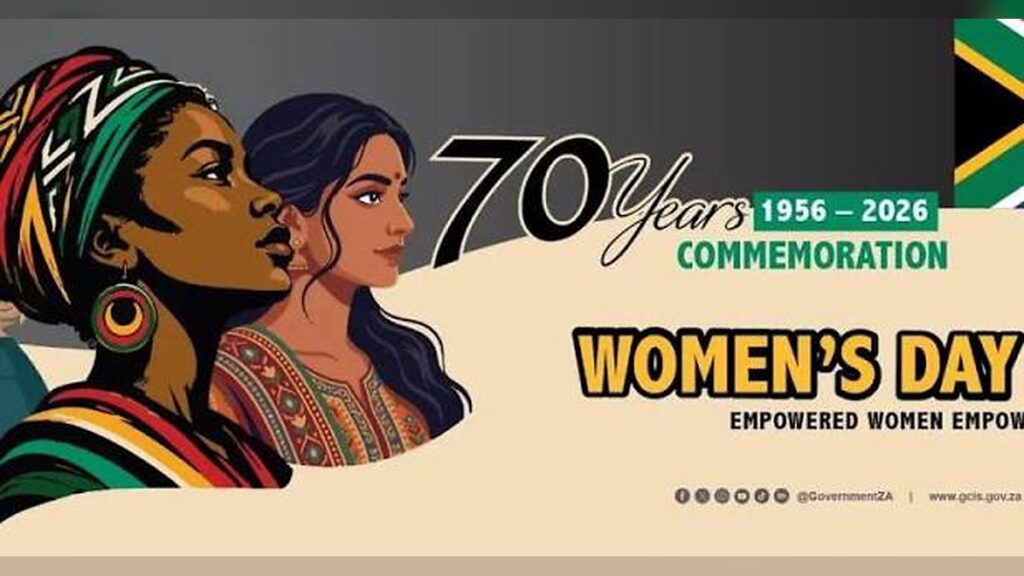
South Africa is marking 70 years since one of the defining protests of the anti-apartheid struggle, when around 20,000 women marched to Pretoria to challenge laws that forced Black women to carry passes restricting their movement.
The historic demonstration on August 9, 1956, brought together women from different racial backgrounds who stood against the apartheid government and its discriminatory pass laws.
Seven decades later, the march remains a powerful symbol of courage.
But many South African women say the freedom those protesters demanded remains incomplete, with gender-based violence, unemployment, poverty and inequality continuing to shape their lives.
A UN Women-supported study published in 2024 found that more than one in three women in South Africa have experienced physical or sexual violence during their lifetime.
A Teenager Witnessed a Historic Day
Ramnie Dinat was only a teenager when she took part in the events of 1956.
Her mother, Ama Naidoo, was an anti-apartheid activist who helped organise women ahead of the demonstration.
The protesters included Black women, women of Indian heritage and some white women who joined the resistance.
Dinat remembers that those involved did not realise they were creating an event that would eventually become a defining moment in South African history.
They were, she recalled, ordinary women who simply believed they had a responsibility to challenge something they considered unjust.
The Prison That Preserves Their Story
In Johannesburg, the former Women’s Jail now serves as a museum and forms part of Constitution Hill, close to the Constitutional Court.
During apartheid, the prison became one of the places where women who opposed the regime were detained.
Prisoners were segregated according to race, reflecting the wider system of racial separation imposed throughout the country.
The conditions were designed to intimidate and degrade those held there.
Nolubabalo Memese, a visitor services manager at Constitution Hill, said the prison was intended to “break, humiliate, and dehumanise” its inmates.
Black women were subjected to particularly harsh conditions, including inadequate access to underwear and sanitary products.
Today, however, the site has been transformed into a place of remembrance.
Remembering the Women History Nearly Forgot
The museum honours well-known anti-apartheid figures including Winnie Madikizela-Mandela and Albertina Sisulu.
But Memese says the story cannot be limited to famous activists.
Thousands of women who resisted apartheid never became household names, despite enduring imprisonment and other hardships.




Their contribution, she argues, helped make modern South Africa possible.
“Our freedom is built on the shoulders of those kinds of women,” she said.
The message is particularly significant as the country reflects on the anniversary of the 1956 march.
A Champion Who Says Their Sacrifice Opened Doors
Paralympic wheelchair tennis champion Kgothatso Montjane sees a direct connection between the women who marched in 1956 and the opportunities available to women today.
Montjane, 40, won the Wimbledon wheelchair doubles title in 2024 and has become one of South Africa’s most accomplished para-athletes.
She is also the first Black South African woman to compete at all four major tennis tournaments.
For Montjane, that achievement would not have been possible without the generations of women who challenged apartheid and helped create a more equal society.
She believes those protesters “paved the way” for women like her.
GBV Has Become a New Barrier to Freedom
The end of apartheid in 1994 removed many of the legal restrictions that had controlled where Black South Africans could live, work and travel.
Yet women continue to face another form of restriction through widespread violence.
Memese argues that gender-based violence can limit women’s freedom just as profoundly as discriminatory laws once did.
A woman who wants to exercise early in the morning, for example, may think twice about going outside because of safety concerns.
The United Nations has described South Africa’s levels of violence against women and girls as a crisis and a national wound.
Poverty and Unemployment Remain Major Obstacles
Freedom has also failed to erase the economic inequalities experienced by many South African women.
Government figures indicate that women continue to experience higher unemployment than men, while also carrying much of the burden of unpaid care work.
Women remain under-represented in many senior positions, creating another barrier to economic equality.
Montjane has experienced similar obstacles in sport.
The High Cost of Reaching the Top
Tennis is particularly expensive, requiring access to equipment, coaching, travel and international competition.
Montjane says financial circumstances can determine whether talented young athletes ever get the opportunity to reach the professional level.
She pointed to the continued racial imbalance in tennis as evidence that access to the sport remains unequal.
For athletes from disadvantaged backgrounds, talent alone may not be enough to overcome the financial demands of competing internationally.
Turning the Past Into a Foundation for the Future
The transformation of the Women’s Jail itself has become a symbol of South Africa’s journey.
Some of the bricks from the former prison were reused when the museum was created, giving new meaning to a structure once associated with oppression.
For Memese, the symbolism is clear: the country can take the material remnants of its painful past and use them to construct a better future.
But she also warns that remembering history remains essential.
Without understanding how discrimination and oppression took hold, future generations risk repeating the same mistakes.
Every Generation Has Its Own Fight
For Dinat, the teenager who witnessed the 1956 march, the anniversary is not simply an opportunity to celebrate the past.
She believes every generation eventually faces its own injustice and must decide whether it is willing to challenge it.
The women who travelled to Pretoria 70 years ago could not have known how their actions would be remembered.
But their protest helped change the course of South African history.
Today, as women continue confronting violence, economic inequality and poverty, the legacy of the 1956 march remains both a source of inspiration and a reminder that the struggle for genuine equality did not end when apartheid did.

