
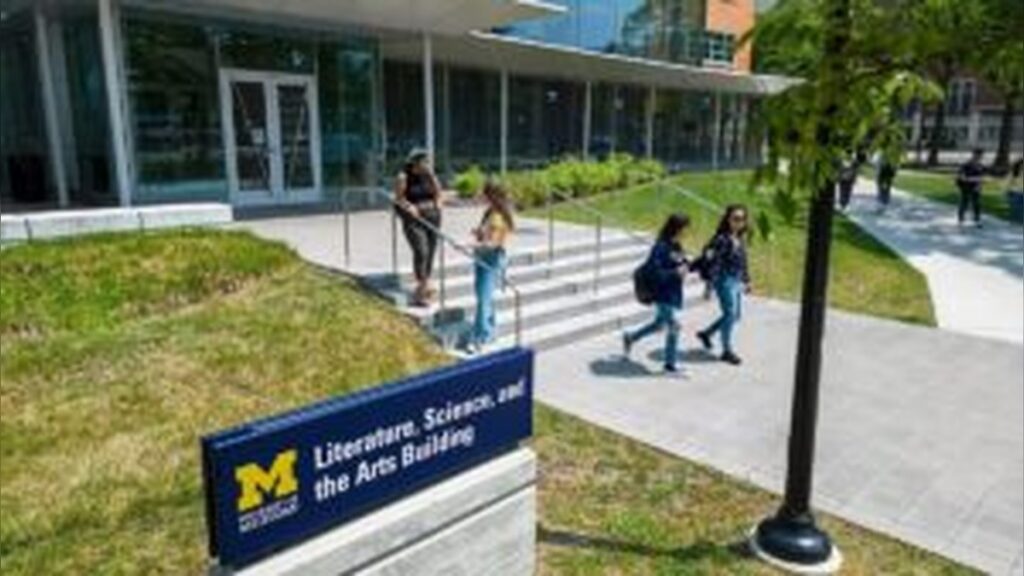
The University of Michigan is preparing to make a major change to the way some students’ academic results are recorded, with its largest college planning to temporarily hide first-semester grades for incoming freshmen.
The College of Literature, Science and the Arts (LSA) will introduce a pass/no-credit system for first-year students beginning in fall 2027.
The initiative is designed to help new students adjust to university life without the immediate pressure of traditional letter grades affecting their academic records.
LSA says the move is intended to help students build confidence during their transition to college while addressing concerns surrounding mental health among young adults.
First Semester Grades Won’t Appear on Transcripts
Students will not stop receiving academic feedback altogether.
They will continue to receive grades on assignments and assessments throughout their first semester, allowing them to understand how they are performing and where they need to improve.
However, their final letter grades from that semester will not appear on their external transcripts and will not be included in their cumulative GPAs.
The university believes removing the immediate consequences of those grades could give freshmen greater freedom to adapt to the demands of higher education and explore subjects without being overly focused on their academic averages.
Michigan Wants Students to Start Strong
LSA described early momentum as a crucial component of the university’s wider Student Success Initiative.
The college said the policy is intended to create an environment where students can become comfortable with the academic expectations of the University of Michigan while taking on new challenges.
Rather than allowing competition over grades to dominate the first semester, officials hope students will have greater opportunities to concentrate on learning, collaboration and personal development.




Grades Will Still Be Kept Behind the Scenes
Although first-semester results will be removed from external transcripts, the university will not erase the academic records entirely.
LSA said it will retain students’ grades internally for purposes including academic advising, compliance, scholarships and potential academic awards.
Students will also be able to use their first-semester results when necessary for applications involving internships, programmes outside LSA or other academic and professional opportunities.
The traditional grading system will return from the second semester onward.
At that point, grades will once again be included on transcripts and contribute to students’ GPAs for the remainder of their time at Michigan.
A Large Student Population Will Be Affected
The policy will apply to students enrolled in the College of Literature, Science and the Arts, which has more than 18,000 students.
LSA is home to several of the university’s largest academic programmes, including economics and computer science, meaning the experiment could affect a substantial number of freshmen entering some of Michigan’s most popular fields.
The university says the approach is ultimately intended to support student well-being and encourage a culture built around connection and collaboration rather than academic competition.
Michigan Is Following a Long-Running Model
The idea of temporarily covering grades is not new in American higher education.
The Massachusetts Institute of Technology introduced a similar approach in 1968, allowing first-year students time to adjust to heavier workloads, different teaching styles and varying levels of academic preparation.
Other institutions, including the California Institute of Technology, Swarthmore College and Wellesley College, have also adopted versions of the system.
MIT has described its policy as a way of giving new students breathing room while they become accustomed to university-level expectations.
Debate Over Grades and Student Well-Being Continues
Michigan’s decision reflects a growing debate over whether traditional grading systems place unnecessary pressure on students during their transition from high school to university.
LSA argues that giving freshmen a protected first semester could encourage them to pursue meaningful academic interests without immediately worrying about how their results will affect their long-term GPA.
The pilot is scheduled to begin in fall 2027, giving the university time to prepare for the change and assess how the approach affects student success and well-being.
The University of Michigan’s LSA was contacted for further comment about the planned programme.

