
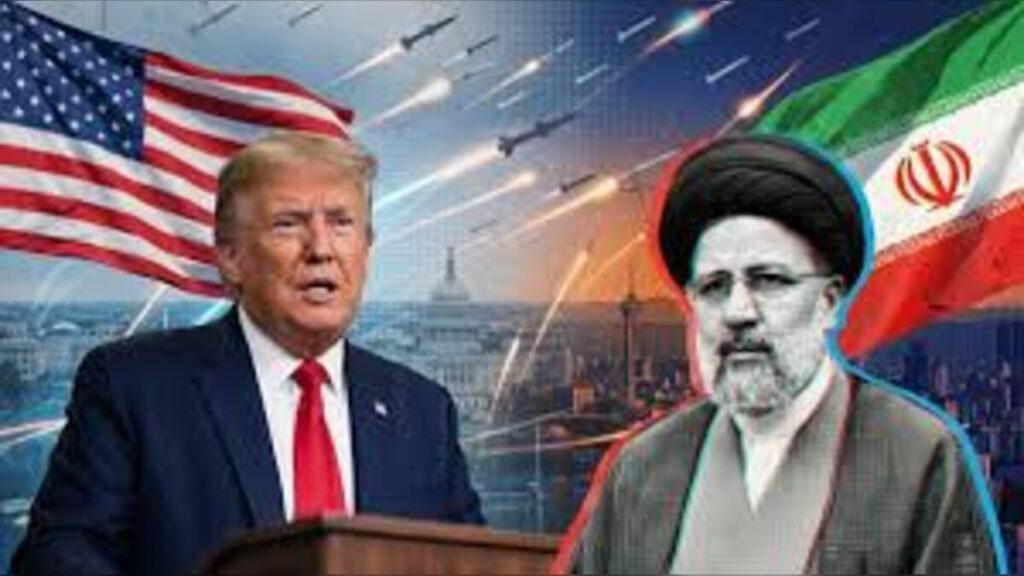
The conflict between the United States and Iran has entered another tense phase, with Tehran now saying it is actively reviewing fresh American proposals aimed at ending the war.
At the same time, U.S. President Donald Trump has escalated pressure, warning that bombing could resume if Iran refuses to agree to terms that include reopening the strategically vital Strait of Hormuz.
It’s a mix of diplomacy and open threat that has defined much of this conflict so far, leaving global markets and governments unsure which direction things will swing next.
Oil markets react as tensions briefly ease
Despite the uncertainty, there was a small moment of calm in global energy markets.
Brent crude hovered around $100 a barrel as traders weighed the possibility that the Strait of Hormuz could reopen, allowing oil shipments from the Persian Gulf to flow normally again.
The strait is one of the most important shipping routes in the world, handling a huge share of global oil and gas transport.
Any disruption there immediately sends shockwaves through energy prices and international trade.
Even a hint of reopening has been enough to steady nerves in financial markets, though that stability remains fragile.
Military escalation at sea raises the stakes
On Wednesday, the situation intensified when the U.S. military reportedly targeted an Iranian oil tanker in the Gulf of Oman.
According to U.S. Central Command, the vessel attempted to breach a blockade, leading to its rudder being disabled by a fighter jet strike.
The United States has also been enforcing restrictions around Iranian ports, effectively tightening pressure on Tehran’s shipping capabilities.
Meanwhile, Iran has already restricted access through the Strait of Hormuz, creating a bottleneck that has left hundreds of commercial vessels stuck in limbo.
Trump’s warning and shifting strategy
President Trump has taken a highly aggressive tone throughout the crisis.
In recent statements, he claimed Iran wants a deal but warned that failure to agree would lead to “bombing at a much higher level and intensity than before.”
At the same time, his administration’s messaging has shifted repeatedly, sometimes within hours, as officials attempt to balance military pressure with diplomatic negotiation.
Reports suggest Washington is pushing a framework deal that includes a pause on Iranian uranium enrichment, the lifting of some sanctions, release of frozen funds, and reopening of the Strait of Hormuz.




Iran pushes back but keeps talks alive
Iranian officials have rejected parts of the U.S. proposals, calling them unacceptable, while still leaving the door open for review of newer offers.
Foreign ministry spokesman Esmaeil Baghaei confirmed that Tehran is examining the latest American plan but stressed that earlier versions had been strongly dismissed.
Behind the scenes, Iran is also engaging with global partners, including discussions in Beijing involving Chinese officials, who have called for an immediate ceasefire and expressed concern over the global economic fallout.
Global trade feels the pressure
The impact of the conflict is already being felt far beyond the battlefield.
Shipping companies report massive losses, with one major operator estimating tens of millions of dollars in weekly costs due to rerouted vessels, higher fuel prices, and soaring insurance premiums.
Hapag-Lloyd has warned that disruptions linked to the Strait of Hormuz shutdown are costing it around $60 million per week.
Energy-dependent economies are also feeling the strain, as the blockade has made it harder for oil, gas, and fertiliser shipments to reach global markets.
Strategic importance of the Strait of Hormuz
The Strait of Hormuz remains the centre of the crisis.
It is one of the world’s most critical maritime chokepoints, connecting the Persian Gulf to open oceans.
A significant share of global oil exports passes through it daily.
Its closure or even partial disruption has immediate consequences for fuel prices worldwide and adds volatility to already sensitive energy markets.
Impact and Consequences
The most immediate consequence is global economic uncertainty.
Oil prices remain unstable, shipping routes are disrupted, and supply chains are under pressure.
Politically, the conflict is increasing tensions between major global powers, with countries like China becoming more involved diplomatically due to their reliance on Gulf energy imports.
Militarily, the risk of escalation remains high.
Even isolated strikes at sea or near ports could trigger wider retaliation, making the situation unpredictable.
For civilians indirectly affected, rising fuel costs and trade disruptions are already feeding into inflationary pressure in multiple regions.
What’s next?
The next major development will depend on whether Iran formally accepts or rejects the latest U.S. proposal.
If negotiations progress, there could be a phased reopening of the Strait of Hormuz and partial easing of sanctions.
However, if talks collapse, the risk of renewed airstrikes or expanded naval confrontation increases significantly.
Upcoming diplomatic meetings, including engagements involving China and other regional stakeholders, may also influence whether the conflict moves toward de-escalation or further confrontation.
Summary
The Iran–U.S. conflict is at a critical turning point, with diplomacy and military pressure unfolding simultaneously.
While Iran reviews American proposals, threats of renewed bombing and continued maritime blockades keep global markets on edge.
Bulleted Takeaways
- Iran is reviewing new U.S. proposals to end the ongoing conflict
- President Trump has threatened renewed bombing if no agreement is reached
- The Strait of Hormuz remains effectively shut, disrupting global oil flows
- Brent crude stabilised near $100 per barrel amid uncertainty
- A U.S. strike reportedly damaged an Iranian oil tanker attempting to breach a blockade
- Shipping giant Hapag-Lloyd reports heavy financial losses from disruptions
- China and other global actors are pushing for a ceasefire
- Negotiations include sanctions relief, nuclear limits, and reopening of key shipping routes
- The situation remains volatile with risks of both escalation and diplomatic resolution

