
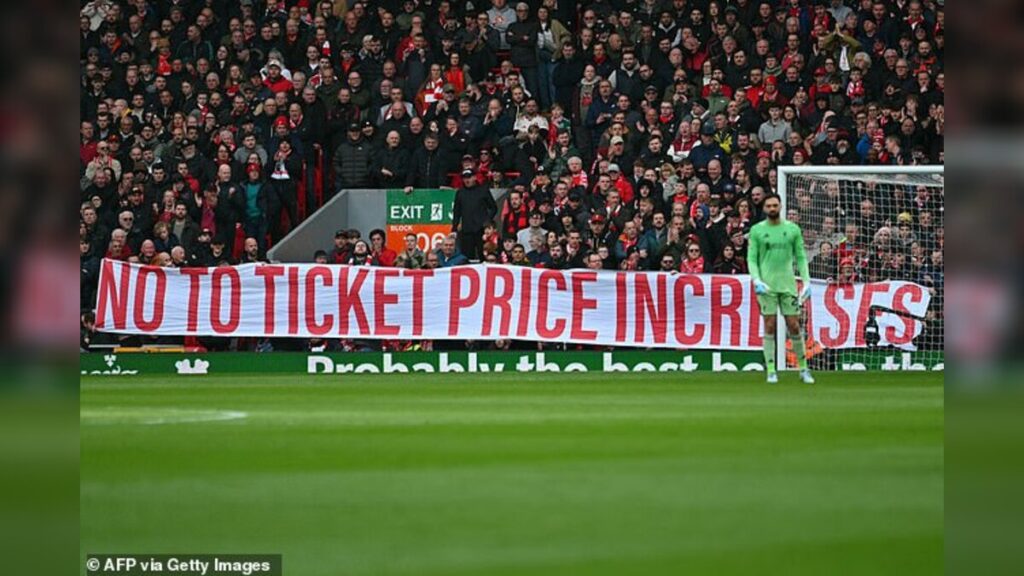
Tension had been building around Liverpool FC for weeks, but supporters finally appear to have forced a major rethink from the club’s ownership.
After protests inside and outside Anfield, Liverpool has softened its original ticket-pricing strategy and agreed to a compromise following talks with fan groups.
The decision comes after growing anger from supporters who feared long-term price increases would make attending matches even less affordable for ordinary fans.
Anfield Protest Sent a Loud Message
During Liverpool’s recent home fixture, Anfield transformed into a visual protest.
Thousands of fans raised yellow cards in the air, symbolically warning club owners that supporters believed the identity of the club was under threat.
Banners carrying phrases such as “Anfield’s soul is at risk” could be seen throughout the stadium, while chants aimed at owners Fenway Sports Group echoed around the ground.
The demonstrations were organised with backing from supporter organisations determined to stop what they viewed as aggressive long-term ticket hikes.
Club Changes Course After Discussions
Liverpool had initially planned a three-year pricing structure tied to inflation, but that proposal has now been partially withdrawn.
Instead, the club confirmed there will be a 3% increase in general admission ticket prices for the 2026/27 season, followed by a complete freeze for the 2027/28 campaign.
The club described the move as the result of further discussions with its Supporters Board, signalling that fan pressure played a direct role in reshaping the final outcome.
Spirit of Shankly Prepared to Escalate Protest
Supporter union Spirit of Shankly had reportedly been preparing stronger action if talks failed.
Among the ideas being discussed was a coordinated delay in taking seats during Liverpool’s clash against Chelsea, potentially leaving the famous Kop stand visibly empty at kickoff.
Earlier protest actions had already included the “No Pound in the Ground” campaign, encouraging supporters to avoid spending money on food, drinks, and merchandise inside the stadium.


That growing pressure appears to have accelerated negotiations between supporters and club executives.
Why Fans Were So Frustrated
Ticket affordability has become an increasingly sensitive issue across English football.
Many supporters believe match-going fans are slowly being priced out as clubs chase larger commercial revenues.
Liverpool supporters argued that continuous increases—even small ones tied to inflation—could eventually damage the atmosphere and accessibility that made Anfield famous worldwide.
For many fans, the issue was not only about money but also about preserving football culture and ensuring younger generations can still afford to attend matches regularly.
Wider Football Context Behind the Debate
The disagreement at Liverpool reflects a broader issue affecting clubs throughout the Premier League.
Rising wages, transfer fees, and stadium operating costs have pushed clubs to seek additional revenue streams, while supporters continue demanding fairer pricing.
Across England, fan groups have become increasingly organised in challenging owners over ticket costs, scheduling, and commercial decisions.
Liverpool’s compromise could now influence discussions at other clubs facing similar pressure from supporters.
Impact and Consequences
The revised pricing plan is being viewed as a rare example of supporter activism producing immediate results at an elite football club.
The protests not only gained national attention but also forced ownership into direct engagement with fans.
However, some supporters remain unhappy about any increase at all, arguing that football’s financial growth should not come at the expense of loyal local supporters.
For Liverpool’s leadership, the situation also highlights the reputational risk of alienating the fanbase that fuels the club’s identity and global image.
What’s Next?
Talks between Liverpool and supporter representatives are expected to continue over the coming months.
Spirit of Shankly says it wants the club to explore alternative revenue options instead of relying on ticket-price increases in future seasons.
Attention will now turn to whether the freeze for 2027/28 becomes the foundation for a longer-term affordability strategy or simply delays another pricing dispute.
Fans will also be watching closely to see whether other Premier League clubs adopt similar compromises under supporter pressure.
Summary
Liverpool has stepped back from plans for a long-term ticket price increase after visible protests and negotiations with supporter groups.
While ticket prices will still rise slightly next season, the club has agreed to freeze prices the following year, easing tensions at Anfield and showing the growing influence of organised fan movements in modern football.
Bulleted Takeaways
- Liverpool revised plans for long-term ticket price increases
- Fans protested with yellow cards and anti-ownership chants at Anfield
- General admission tickets will rise 3% for 2026/27
- Prices will then freeze for the 2027/28 season
- Spirit of Shankly played a major role in negotiations
- Supporters had discussed escalating protests against Chelsea
- “No Pound in the Ground” campaign targeted stadium spending
- Fans argued rising prices threaten football culture and accessibility
- Issue reflects wider affordability concerns across the Premier League
- Continued discussions between supporters and club officials are expected

