
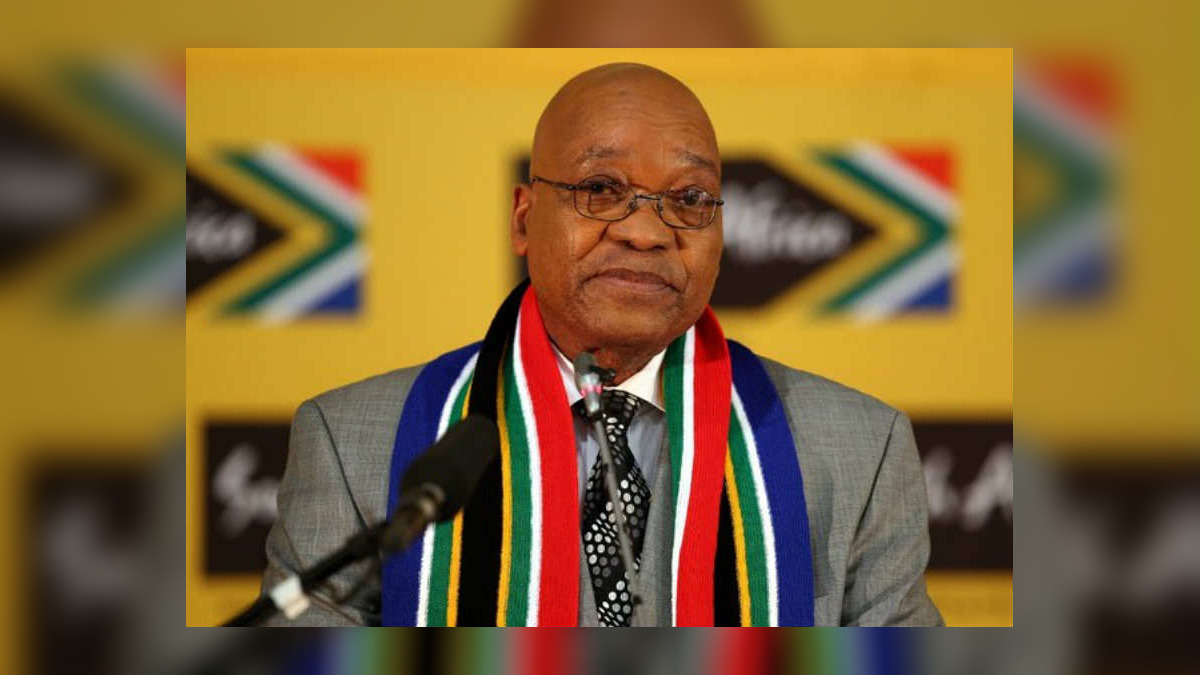
Minister in the Presidency Khumbudzo Ntshavheni has urged the public to respect former president Jacob Zuma’s medical privacy, saying only the doctors treating him can provide an authoritative account of his condition.
Her comments follow reports that Zuma was admitted to Netcare St Anne’s Hospital in Pietermaritzburg, KwaZulu-Natal, earlier in the week after reportedly falling ill following an uMkhonto weSizwe (MK) Party event in Msinga.
While speculation has circulated about the 84-year-old’s health, the Presidency has declined to offer a detailed medical assessment, stressing that such information should come from the medical team, the family and Zuma himself.
Ntshavheni Warns Against Speculation Over Former President’s Condition
Speaking during a media briefing in Pretoria on Sunday, 11 October, Ntshavheni said Zuma was receiving medical attention under a process involving the Surgeon General of the South African National Defence Force (SANDF).
She argued that holding high public office does not remove a person’s right to medical confidentiality.
Ntshavheni said ethical obligations meant that the doctors responsible for Zuma’s treatment were the appropriate people to explain his health status.
She also questioned the expectation that government officials should repeatedly comment on his condition while medical professionals were managing his care.
According to the minister, questions about Zuma’s health should be directed to the medical team and handled in consultation with his family and the former president.
MK Party Maintains Zuma Is Undergoing Routine Medical Checks
The MK Party has offered a more reassuring account of Zuma’s hospitalisation, describing it as a routine medical check-up of the kind he reportedly undergoes twice a year.
The party has also maintained that he is well and in good spirits.



However, media reports have suggested that Zuma’s condition could be serious and that transferring him by air to Pretoria had been ruled out. Those reports have not been confirmed by the Presidency in its public comments.
Under South Africa’s arrangements for the medical care of the sitting president and former heads of state, treatment is provided through the SANDF, with 1 Military Health Hospital in Pretoria serving as a designated facility.
Ntshavheni’s remarks indicate that the authorities are leaving public communication about Zuma’s condition to those directly involved in his treatment.
Surgeon General Involved in Zuma’s Medical Care
The minister confirmed that the SANDF’s Surgeon General had been assigned a role in the process overseeing Zuma’s care.
She said the president had also been briefed on the arrangements, reinforcing the involvement of the state’s medical structures.
Ntshavheni did not provide further details about Zuma’s diagnosis, the severity of his condition or how long he might remain in hospital.
Her position was that any disclosure should respect medical ethics and the former president’s privacy rather than rely on speculation circulating in public.
Ramaphosa Wishes His Predecessor a Speedy Recovery
President Cyril Ramaphosa has expressed his concern for Zuma and wished him a quick recovery.
Ramaphosa said his predecessor had been unwell and was receiving treatment from doctors. He added that the SANDF Surgeon General had been properly briefed.
The President also expressed hope that Zuma would recover soon and continue contributing to South Africa in whatever capacity he chooses.
The message came amid growing public interest in the former president’s hospitalisation and questions about his health.
Medical Privacy Remains Central to Official Response
Zuma’s hospitalisation has prompted renewed discussion about the health of prominent political figures, particularly former heads of state whose medical circumstances attract considerable public attention.
The Presidency’s response has focused on the distinction between public interest and the right to medical privacy.
Although Zuma’s political standing makes his health a matter of widespread concern, Ntshavheni has maintained that this does not justify disclosing confidential medical information without appropriate authority.
For now, the official position is that updates on Zuma’s condition should come from his treating doctors, with the family and former president involved in decisions about what information is made public.

