
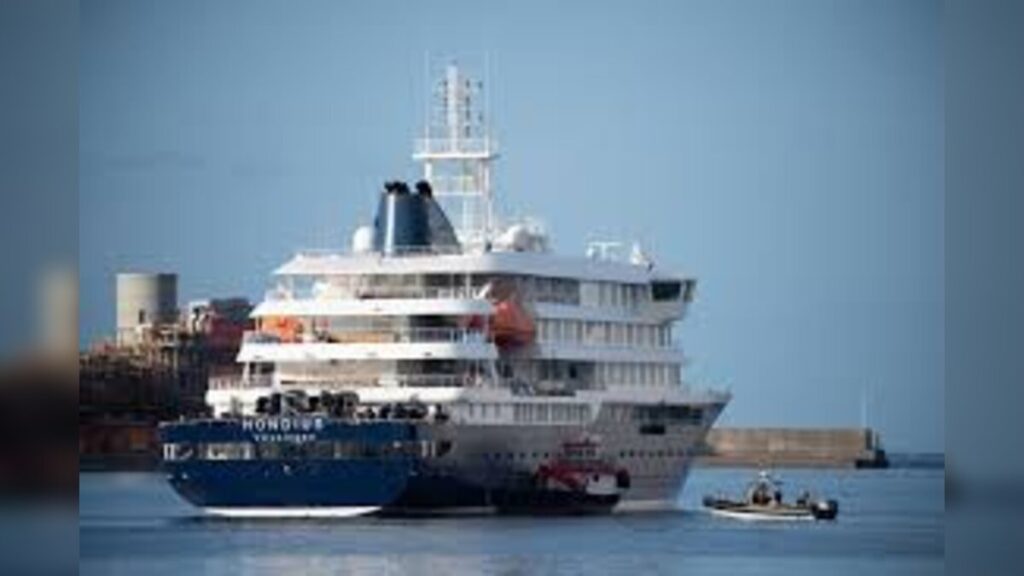
Health authorities across Europe and the United States are scrambling to contain fears surrounding a growing hantavirus outbreak connected to the luxury expedition vessel, the MV Hondius.
Another evacuated passenger has now tested positive, deepening concerns after several deaths and multiple infections were already confirmed among former passengers.
Spain’s health ministry revealed that a Spanish citizen, currently isolating in Madrid after leaving the ship, returned a provisional positive result for the virus despite showing no outward symptoms.
The development has intensified international monitoring efforts as health agencies race to trace contacts and monitor other evacuees.
A Cluster of Cases Across Multiple Countries
The latest Spanish case means at least three repatriated passengers from the cruise have now tested positive after returning home.
Earlier reports confirmed infections involving an American traveler and a French national.
French authorities later disclosed that the infected French woman’s condition deteriorated sharply, leaving her hospitalized in serious condition.
Meanwhile, US health officials confirmed another American passenger from the evacuation flight had begun showing mild symptoms associated with hantavirus.
The two American evacuees had reportedly traveled home inside specialized biocontainment units, a precautionary measure used to reduce the possibility of transmission during transport.
Death Toll Raises Alarm
The outbreak has already been linked to the deaths of three passengers who had traveled aboard the vessel.
Officials identified the victims as a Dutch couple and a German woman.
Two of the fatalities were confirmed hantavirus cases, while investigations continue into the remaining death.
The cruise ship had been docked in Tenerife in Spain’s Canary Islands during the emergency response operation.
Authorities escorted passengers from the vessel wearing full-body protective suits and respiratory masks, underscoring the seriousness of the situation.
Scenes from the port showed medical personnel guiding frightened passengers toward waiting buses and quarantine facilities while emergency protocols unfolded around them.
Final Evacuations and International Response
The final group of passengers removed from the ship included four Australians, one British citizen, and one New Zealander, alongside several crew members.
After the evacuation process was completed, the ship departed Tenerife and headed toward the Netherlands.
More than 90 passengers and crew members were repatriated over the weekend.




Dutch authorities confirmed that two separate flights carrying 28 crew members landed in the Netherlands, where medical examinations and mandatory quarantine measures are now underway.
Hospitals and health agencies in several countries are now coordinating investigations to determine how widespread exposure may have become.
Dutch Hospital Takes Emergency Precautions
The outbreak has also triggered concern inside the Netherlands after a hospital in Nijmegen isolated 12 staff members who may have been exposed while treating a hantavirus patient.
According to hospital officials, blood and urine samples had been handled before stricter updated safety protocols were implemented.
Although the move was described as preventative, the incident highlighted how rapidly procedures had to evolve once the seriousness of the outbreak became clearer.
Hospital administrators said the staff members would remain isolated for six weeks while the situation is assessed.
Understanding Hantavirus and Why Experts Are Worried
Hantavirus infections are rare but potentially deadly diseases usually spread through contact with infected rodents or their droppings.
Most strains are not commonly transmitted between humans.
However, the Andes strain — the version feared in this outbreak — has previously shown evidence of person-to-person spread through close contact.
Symptoms can initially resemble flu-like illnesses, including fever, headaches, muscle aches, and fatigue.
In severe cases, patients can develop breathing complications and organ failure.
Because early symptoms can appear mild or even absent, health authorities are particularly cautious about identifying everyone who may have interacted closely with infected passengers.
Impact and Consequences
The outbreak has already created major disruptions for international cruise travel and public health systems.
Multiple countries are now managing quarantine operations, emergency medical responses, and contact tracing investigations simultaneously.
The cruise industry may also face renewed scrutiny over onboard disease prevention procedures, especially on long-distance expedition voyages where passengers spend extended periods in close quarters.
Hospitals involved in the response are tightening safety rules, while governments are reassessing how quickly infected travelers can be identified and isolated during international emergencies.
There are also concerns that fear surrounding the outbreak could affect tourism bookings, particularly for expedition cruises and international sea travel.
What’s Next?
Health officials are expected to continue testing evacuated passengers and crew members over the coming weeks.
Since hantavirus symptoms can take time to appear, authorities remain cautious about declaring the situation contained.
Investigators are also trying to determine exactly how the virus spread aboard the ship and whether human-to-human transmission played a major role.
Further updates are likely as hospitals monitor infected patients and laboratories confirm additional test results.
Governments may also introduce stricter screening procedures for cruise passengers if more cases emerge.
Summary
The hantavirus outbreak linked to the MV Hondius has evolved into an international health concern after another evacuated passenger tested positive in Spain.
Several countries are now dealing with infections, quarantines, and emergency precautions following the deaths of three travelers connected to the vessel.
Authorities remain especially concerned because the Andes strain of hantavirus can potentially spread through close human contact, unlike many other variants of the disease.
With more passengers still under observation, health agencies worldwide are continuing intensive monitoring efforts.
Bulleted Takeaways
- Another evacuated passenger from the cruise ship tested positive for hantavirus in Spain.
- At least three repatriated passengers have now tested positive across different countries.
- A French patient connected to the outbreak is reportedly in serious condition.
- Three deaths have already been linked to passengers who traveled aboard the ship.
- More than 90 passengers and crew members were evacuated and repatriated.
- Dutch hospital officials quarantined 12 staff members after possible exposure.
- Authorities fear the Andes strain may allow limited human-to-human transmission.
- International investigations and quarantine measures are still ongoing.

