
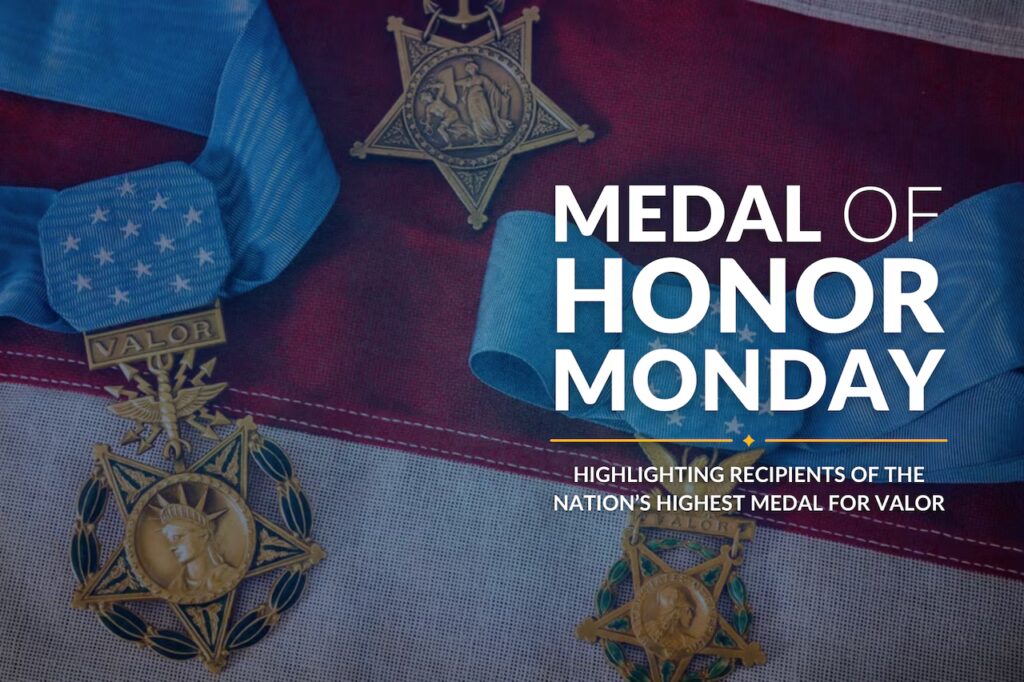

Army 1st Lt. Douglas Bernard Fournet, a Louisiana-born officer who gave his life protecting fellow soldiers in Vietnam, is being honored in a Medal of Honor Monday feature released on May 11, 2026.
Fournet served with Company B, 1st Battalion, 7th Cavalry Regiment, 1st Cavalry Division, during the Vietnam War. His final act in South Vietnam in 1968 would later earn him the nation’s highest military decoration.
From Lake Charles to Military Service
Fournet was born on May 7, 1943, in Lake Charles, Louisiana.
His father, Henry Bernard Fournet, was a former Army staff sergeant who later worked as a shrimp boat operator. His mother, Maria Lena Fournet, was a homemaker.
Tragedy touched the family early. In 1952, Fournet’s father drowned after his shrimp boat overturned in heavy seas. Afterward, Fournet and his siblings helped care for their mother.
A Student, Athlete and Young Family Man
Before joining the Army, Fournet was known in his hometown as a standout student and athlete.
He played quarterback for the Lake Charles High School football team and later graduated from McNeese State University in Lake Charles.
After college, he married Marilyn Miller. When he deployed to Vietnam, she was pregnant with their son, Bill, who would be born after Fournet’s death.
Deployment to South Vietnam
Fournet attended Officer Candidate School at Fort Benning, Georgia, in 1968.
After earning his commission, he deployed to South Vietnam, where he served as a platoon leader in the 1st Cavalry Division.
His unit was later sent into the A Shau Valley during Operation Delaware, which began on April 19, 1968.
Mission in the A Shau Valley
The A Shau Valley was a critical enemy supply corridor linked to the Ho Chi Minh Trail.
American forces moved into the area to disrupt supplies being moved by the People’s Army of Vietnam.
As Fournet’s platoon pushed uphill against fortified enemy positions, the soldiers came under heavy sniper fire from concealed locations.



Final Act of Courage
During the advance, one soldier spotted an enemy claymore mine positioned along the platoon’s route and shouted a warning.
Fournet immediately understood that the enemy could detonate the mine at any moment.
He ordered his men to take cover, then ran toward the mine with a sheath knife, intending to cut its control wire.
Sacrifice That Saved Lives
Fournet placed himself between the mine and his men as he reached for the wire.
Before he could disable it, the enemy detonated the device, killing him instantly.
Five nearby soldiers suffered minor wounds, but Fournet’s decision to shield the blast helped prevent far greater casualties.
Recovery Under Fire
After the explosion, platoon sergeant Army Staff Sgt. Bill Krahl braved enemy fire to retrieve Fournet’s body.
Krahl was later awarded the Bronze Star Medal for his actions.
Medal of Honor Presented After His Death
On April 7, 1970, President Richard Nixon presented the Medal of Honor on Fournet’s behalf during a White House ceremony.
The medal was received by Army Maj. Gen. Charles Spragins, commander of the U.S. Army Training Center at Fort Polk, Louisiana. Fournet’s family members were also present.
Memorials in Louisiana
Fournet’s legacy is preserved in several places across Louisiana.
A monument honoring him stands at American Legion Post 244 in Kinder. He was also inducted into the Louisiana Military Hall of Fame and Museum.
A section of Interstate 210 near Lake Charles is named the Douglas Fournet Expressway.
The First Lieutenant Douglas B. Fournet Memorial is located at Veterans Memorial Park on the grounds of the Lake Charles Civic Center.
Fournet is buried in Kinder Cemetery in Kinder, Louisiana.
Impact and Consequences
Fournet’s actions in Vietnam remain a powerful example of battlefield sacrifice and leadership under extreme danger.
His decision to place himself in front of the mine saved members of his platoon from serious injury or death and left a lasting legacy in both Army history and his home state of Louisiana.
His story also continues to connect later generations to the personal cost of the Vietnam War.
What’s next?
The Medal of Honor Monday feature ensures Fournet’s service and sacrifice remain part of public memory.
His memorials in Louisiana will continue to serve as places of remembrance for veterans, families and community members honoring those who gave their lives in military service.
Summary
Army 1st Lt. Douglas Bernard Fournet, a native of Lake Charles, Louisiana, was posthumously awarded the Medal of Honor for shielding his platoon from an enemy claymore mine in South Vietnam in 1968.
His sacrifice saved fellow soldiers and is honored through monuments, memorials and named landmarks in Louisiana.
Bulleted Takeaways:
- Army 1st Lt. Douglas Bernard Fournet was born in Lake Charles, Louisiana, in 1943.
- He served with Company B, 1st Battalion, 7th Cavalry Regiment, 1st Cavalry Division.
- Fournet deployed to South Vietnam after Officer Candidate School in 1968.
- He was killed during Operation Delaware in the A Shau Valley.
- Fournet ran toward an enemy claymore mine to protect his platoon.
- His actions helped save nearby soldiers from serious injury or death.
- He received the Medal of Honor posthumously in 1970.
- Memorials honoring him stand in Kinder and Lake Charles, Louisiana.
