
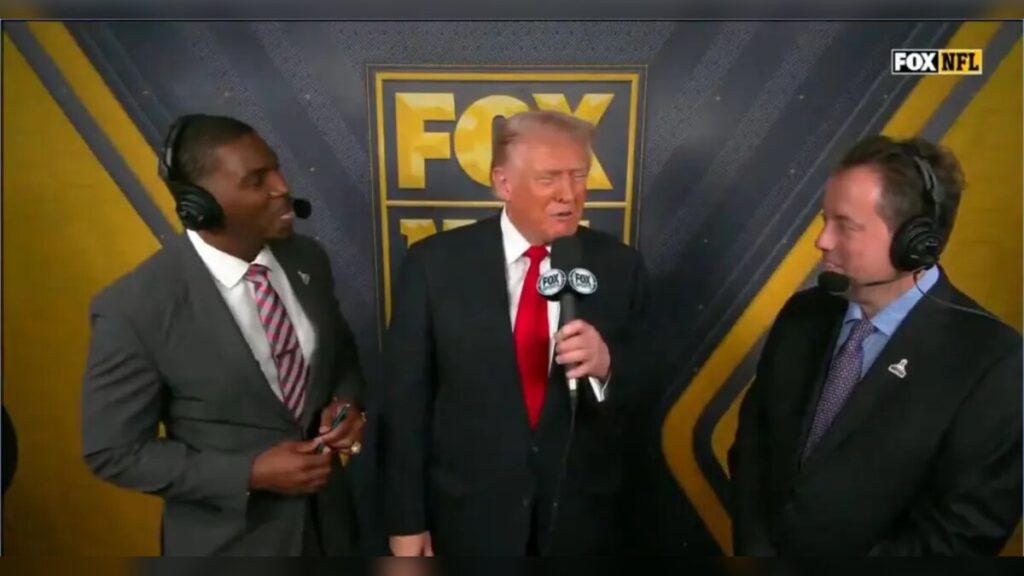
Donald Trump has publicly criticized the NFL’s growing dependence on streaming platforms, accusing the league of pricing out ordinary fans and “killing the golden goose” as federal investigators examine the league’s broadcasting practices.
During an interview on Full Measure with journalist Sharyl Attkisson, Trump argued that the NFL’s increasingly fragmented viewing system is making America’s most popular sport harder and more expensive to follow.
His comments come amid a Justice Department investigation into whether the league’s media arrangements could be harming consumers through anti-competitive practices.
NFL’s Streaming Era Faces Political Heat
For decades, NFL games were largely accessible through traditional broadcast television.
Fans could tune into Sunday football on major networks without juggling multiple subscriptions or apps.
That reality has changed dramatically in recent years.
The NFL now spreads its games across a growing list of platforms, including Netflix, Amazon Prime Video, NBCUniversal’s Peacock, ESPN, YouTube, Paramount+, Fox One, CBS, Fox and NBC.
Trump said many loyal fans simply cannot afford the growing list of subscriptions needed to watch every game.
According to him, football has become deeply tied to American culture, especially Sundays, and limiting access through costly streaming packages risks alienating longtime supporters.
He warned that sports leagues in the past have damaged themselves by over-commercializing access, suggesting the NFL could eventually face similar backlash if it continues pushing viewers toward premium services.
Fans Frustrated by Rising Costs
The debate surrounding NFL broadcasts has intensified because following an entire season now requires access to several paid services.
Some estimates from analysts and lawmakers suggest that fully watching every NFL game last season could cost close to $1,000 annually when combining cable bills, streaming subscriptions and premium sports packages.
Mike Lee recently raised concerns in a letter sent to federal regulators, arguing that the current broadcasting structure may be unfair to consumers who once enjoyed far broader free access.
Many fans have echoed those frustrations online, complaining that games are scattered across too many platforms.
Casual viewers especially have found the system confusing, with some marquee matchups available only through exclusive streaming deals.
The league, however, insists the model still prioritizes accessibility.
NFL Defends Its Business Model
The NFL responded strongly to criticism, maintaining that the overwhelming majority of its games remain available on free broadcast television.
League officials pointed out that local-market games are still widely accessible and emphasized that the NFL continues to dominate television ratings in the United States.
The organization also noted that the 2025 season reportedly became its most-watched campaign since 1989.
Commissioner Roger Goodell and league executives have argued that expanding onto streaming services is necessary to reach younger audiences and adapt to changing viewing habits.
Media companies are also willing to pay enormous sums for exclusive NFL rights because live sports remain one of the few television products capable of attracting massive real-time audiences.




That financial reality has transformed the NFL into one of the most valuable entertainment properties in the world.
Trump Also Criticizes NFL Rule Changes
Beyond television rights, Trump also criticized the league’s controversial “dynamic kickoff” format.
The rule was introduced primarily to reduce high-speed collisions and lower the risk of player injuries.
While safety advocates praised the move, some traditional fans and former players argued it removed one of football’s most exciting and physical moments.
Trump called the updated kickoff “phony” and “unwatchable,” saying it weakens the aggressive nature that historically defined the sport.
The NFL has defended the change by citing player safety data and the long-term health concerns surrounding concussions and serious impacts.
Why the Justice Department Investigation Matters
The Justice Department investigation could become a major moment for the future of sports broadcasting in America.
Federal officials are reportedly examining whether the NFL’s broadcasting structure violates antitrust principles by forcing consumers into expensive and fragmented viewing arrangements.
At the center of the debate is the Sports Broadcasting Act of 1961, which granted professional leagues certain antitrust protections for negotiating television contracts collectively.
Critics now question whether those protections still make sense in an era dominated by streaming subscriptions and exclusive digital deals.
If regulators decide the NFL has abused its market power, the league could face pressure to alter future media contracts or make games more accessible to viewers.
The Business Behind the Broadcast Boom
The NFL’s expansion into streaming did not happen overnight.
Technology companies have aggressively pursued live sports rights because sports content remains one of the strongest drivers of subscriptions and advertising revenue.
Netflix has increasingly entered the live sports space, while Amazon continues building Prime Video into a major sports platform through Thursday Night Football.
Meanwhile, ESPN recently reached a major agreement involving NFL Network, RedZone rights and additional game packages, signaling that competition for football rights is only becoming more intense.
For broadcasters and tech giants, NFL games represent premium content capable of keeping audiences engaged in an increasingly crowded media landscape.
Impact and Consequences
Trump’s comments could further intensify political scrutiny around sports broadcasting costs and digital exclusivity.
The NFL has long avoided major political pressure because of its popularity and financial dominance, but growing frustration among fans may create momentum for regulatory action.
If the Justice Department finds evidence of anti-competitive behavior, streaming exclusivity agreements could face tighter oversight in the future.
The controversy also highlights a larger shift happening across entertainment industries.
Consumers are increasingly frustrated with having to subscribe to numerous services just to follow sports, movies and television shows they once accessed through simpler packages.
For the NFL, balancing profit growth with fan accessibility may become one of its biggest challenges over the next decade.
What’s Next?
Federal investigators are expected to continue reviewing the NFL’s broadcasting arrangements and relationships with streaming platforms.
The outcome of the investigation could influence how future sports media deals are structured, not only for football but for other major leagues as well.
At the same time, streaming companies are unlikely to retreat from sports rights because live events remain one of the most valuable forms of content in modern media.
Fans can also expect the NFL to continue experimenting with digital distribution, international games and new viewing experiences as the league tries to maximize revenue while keeping audiences engaged.
Whether public criticism from Trump and lawmakers leads to actual policy changes remains uncertain, but the conversation around affordability and accessibility is clearly growing louder.
Summary
Donald Trump has sharply criticized the NFL’s move toward subscription-heavy streaming platforms, arguing that the league risks alienating ordinary fans by making games too expensive to watch.
His comments arrive during a Justice Department investigation into possible anti-competitive practices tied to NFL broadcasting rights.
The controversy reflects broader concerns about the future of sports viewing, rising subscription costs and the increasing fragmentation of entertainment across multiple platforms.
While the NFL insists its system remains fan-friendly and highly successful, critics believe the league may be prioritizing profits over accessibility.
Bulleted Takeaways
- Donald Trump accused the NFL of “killing the golden goose” through costly streaming expansion.
- The Justice Department is investigating the NFL’s broadcasting practices for possible anti-competitive behavior.
- NFL games are now spread across multiple services including Netflix, Amazon Prime Video, Peacock and YouTube.
- Critics say fans may spend hundreds of dollars yearly to access all NFL games.
- Trump also attacked the NFL’s “dynamic kickoff” rule, calling it “phony” and less exciting.
- The NFL argues most games still air on free television and points to record viewership numbers.
- The case could shape the future of sports broadcasting and streaming rights in the United States.

