
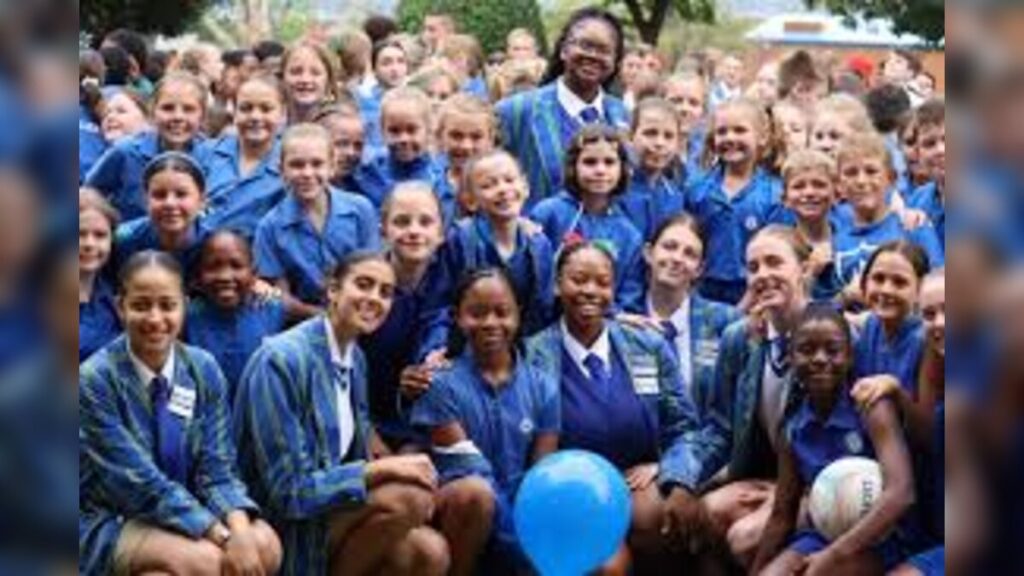
Football is once again stepping outside the pitch and into classrooms and community spaces.
The FIFA Global Citizen Education Fund has just announced its first wave of funding, backing organisations that blend education with sport to support children in underserved communities.
At the heart of it is a simple idea: football can be more than entertainment.
FIFA leadership says it can become a tool for opportunity, especially for children growing up in poverty where school access and learning resources are limited or inconsistent.
How the First Round of Funding Is Being Distributed
The fund has selected 27 grassroots organisations across 10 countries for its debut grants.
Each organisation will receive between $50,000 and $250,000 to expand work that combines education with sport.
These groups collectively reach tens of thousands of children, including communities where school completion rates are extremely low and poverty levels are severe.
Some of the areas involved report secondary school completion rates below 15%, which highlights how urgent the intervention is.
The money is expected to help strengthen programmes that improve learning outcomes while using sport as a bridge to keep children engaged.
What FIFA and Global Citizen Are Trying to Build
The broader ambition is large: the fund aims to raise $100 million by the end of the 2026 FIFA World Cup.
So far, more than $30 million has already been secured from a mix of donors, corporations, philanthropic groups, and event-related revenues.
These include contributions linked to major football events like the upcoming World Cup and the 2025 Club World Cup, along with support from private companies and individual donors.
A significant portion of the money will also support the FIFA Football for Schools programme, which uses football sessions to teach life skills, teamwork, and basic education concepts in communities around the world.
South Africa’s Representation in the Programme
Four South African organisations made the list, each working in very different but equally important spaces:




- The Eland School supports early education for Khomani San children while preserving indigenous language and culture.
- Eduplex integrates deaf and hearing students using specialised teaching methods so both groups learn together.
- Knysna Education Trust focuses on early childhood education, especially training teachers and improving preschool resources in poorer communities.
- Skateistan uses skateboarding as a creative entry point to build confidence and life skills, particularly for girls facing social barriers.
These programmes reflect how education can be adapted to local realities instead of a one-size-fits-all model.
Other African and Global Beneficiaries
Beyond South Africa, several organisations across Africa were also selected:
- Antonio Rüdiger Foundation (Sierra Leone)
- Autisme Rwanda (Rwanda)
- Emmanuel Development Association (Ethiopia)
Internationally, the list includes groups from North and South America, Asia, and Europe such as:
- Beyond Soccer and Hit The Books (United States)
- Canada Scores and Grand River Friendship Society (Canada)
- Fundación El Origen (Colombia)
- SDGs Promise Japan (Japan/Africa)
- Instituto Rede Tenis (Brazil)
Each group uses different methods, but the common thread is combining education with sport, mentorship, or community engagement.
Oversight, Accountability, and Decision Process
The selection process wasn’t casual. Applications went through a multi-stage review involving eligibility checks, compliance screening, and deeper due diligence.
The evaluation system was designed jointly by Global Citizen and Foundation Source to ensure that only credible, impact-driven organisations received funding.
There’s also ongoing monitoring planned throughout the grant period, including spot checks to ensure funds are used effectively and results are measurable.
Leadership and Support Behind the Fund
The initiative is supported by high-profile figures across sport, entertainment, and philanthropy.
The advisory board includes names like Gianni Infantino, Serena Williams, Shakira, Kaká, Hugh Jackman, The Weeknd, and others, alongside executives from major financial institutions.
Founding contributors include MetLife Foundation and Bank of America, with additional support coming from corporate partners and event-linked fundraising.
Impact and Consequences
The immediate impact is clear: more resources flowing directly into communities where education systems are stretched or under-resourced.
Longer term, the fund is aiming at something bigger—breaking cycles of poverty.
By linking learning with sport, especially football which already has global reach, these programmes can keep children in school longer, improve engagement, and offer safer structured environments.
There is also a wider ripple effect. When education improves in a community, it often influences health outcomes, employment opportunities, and even local stability.
However, the challenge will be scale. $100 million sounds large, but spread across global needs, it requires careful targeting and sustained funding beyond 2026.
What’s Next?
The fund is now opening applications for its second round of grants, meaning more organisations can apply for support.
Half of the total funding will continue to flow into the FIFA Football for Schools initiative, which is expected to expand in multiple regions over the next two years.
As the 2026 World Cup approaches, more fundraising events and corporate partnerships are likely to be announced to close the gap toward the $100 million target.
Summary
The FIFA Global Citizen Education Fund has started rolling out funding to organisations that combine education and sport to support children in underserved communities worldwide.
The first batch includes 27 groups across 10 countries, with grants ranging from $50,000 to $250,000.
Backed by FIFA, Global Citizen, and major donors, the initiative is targeting $100 million in total funding by 2026, with a strong focus on long-term educational impact through football-based programmes.
Bulleted Takeaways
- 27 organisations across 10 countries received first-round funding
- Grants range from $50,000 to $250,000
- Total fundraising goal is $100 million by the 2026 World Cup
- More than $30 million has already been raised
- Four South African organisations are included among recipients
- Half of the funding supports FIFA’s Football for Schools programme
- Focus is on combining sport with education to reduce poverty cycles
- Second round of grant applications is now open
- Oversight includes strict evaluation, monitoring, and compliance checks
- Backing comes from global donors, corporations, and high-profile advisors

