
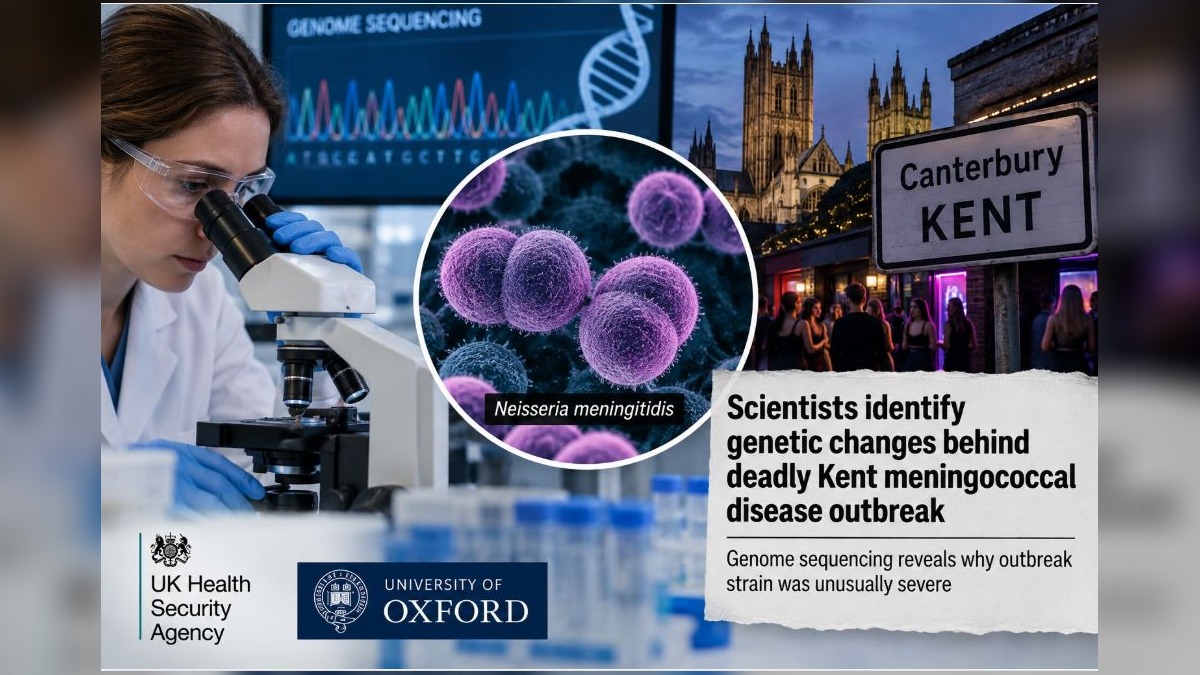
Scientists investigating a deadly meningococcal disease outbreak in Kent have identified genetic changes that could help explain why the bacteria involved caused such unusually severe illness among young people.
Researchers from the UK Health Security Agency (UKHSA), the University of Oxford and other academic institutions used genome sequencing to examine the strain responsible for the March 2026 outbreak, which was linked to a nightclub in Canterbury.
Twenty-one people developed invasive meningococcal disease within a single week. Every patient required hospital treatment, nine were admitted to intensive care and two died.
Scientists Investigate Why Kent Outbreak Was So Severe
The speed and severity of the outbreak immediately raised questions about whether something unusual was happening with the bacteria.
An initial technical assessment concluded that bacterial characteristics were likely to have contributed, alongside population immunity and the social and environmental circumstances surrounding the outbreak.
The latest research provides a clearer picture of what may have made the strain particularly dangerous.
Scientists found evidence that the outbreak bacteria had acquired genetic material from other bacteria that are normally present in the throats of healthy people.
Bacteria Apparently ‘Borrowed’ DNA From Less Harmful Strains
The mechanism involved is known as horizontal gene transfer.
Unlike conventional reproduction, where genetic information passes from parent organisms to offspring, horizontal gene transfer allows bacteria to acquire pieces of DNA directly from other bacteria around them.
The process effectively allows one bacterium to obtain useful genetic characteristics from another.
Researchers found that the meningococcal strain involved in the Kent outbreak had acquired genetic material from bacteria considered less harmful and commonly found naturally in people’s throats.
Genetic Changes May Have Made Strain More Dangerous
The acquired DNA appears to have changed the way the outbreak strain interacted with human cells.
According to the researchers, the alterations may have made the bacteria unusually effective at causing severe disease.
The changes may also have affected how easily the human immune system recognised the strain, potentially giving the bacteria another advantage when infecting people.
Researchers stressed that several factors contributed to the outbreak, rather than genetics being its sole explanation.
Same Changes Could Explain Why Outbreak Stopped Spreading
One of the investigation’s most striking findings concerns what happened after the initial cluster was brought under control.
Scientists believe some of the same genetic characteristics that increased the strain’s ability to cause severe disease could also help explain why it failed to continue spreading widely.
That combination could produce particularly intense but relatively contained outbreaks.
However, researchers could not have predicted in advance that the strain would behave in this way.
Canterbury Nightclub Linked to 21 Cases in One Week
The outbreak was traced to a single nightclub in Canterbury over one weekend in March.
Such an environment provided conditions involving intense social mixing and close contact among large numbers of people.
Within one week, 21 people had been diagnosed with invasive meningococcal disease.
All required hospitalisation, while nine became seriously ill enough to need intensive care.
Two patients died.




Researchers Find Similarities With 1997 Southampton Outbreak
Scientists compared the Kent bacteria with strains involved in previous meningococcal disease outbreaks.
Their investigation identified notable similarities with an outbreak at the University of Southampton in 1997.
Researchers found comparable patterns in how the bacteria evolved.
The finding suggests that similar genetic events could be a recurring feature behind rare but extremely intense meningococcal disease clusters, particularly those associated with environments where large numbers of people mix closely.
Similar Outbreaks Could Happen Again
The research carries an important warning for public-health authorities.
Highly invasive meningococcal strains can apparently emerge suddenly through genetic changes that are extremely difficult to predict.
Scientists therefore believe similar outbreaks are likely to occur again.
Exactly when or where another dangerous strain could emerge cannot currently be forecast.
That unpredictability makes continuous disease surveillance particularly important.
Genome Sequencing Began Within Days of First Case
UKHSA’s Meningococcal Reference Unit began sequencing the bacteria responsible within days of the first reported case.
Scientists subsequently compared the outbreak strains against tens of thousands of meningococcal genomes contained in international databases.
That extensive comparison allowed researchers to examine the strain’s genetic history and identify the unusual material it had acquired.
The findings were released as a pre-print and presented during the UKHSA Conference 2026.
England Has Sequenced Confirmed Cases Since 2010
The speed of the investigation was possible because whole-genome sequencing is already integrated into England’s meningococcal surveillance system.
Every culture-confirmed case of invasive meningococcal disease in England is routinely subjected to whole-genome sequencing through UKHSA’s national surveillance programme.
The programme has operated continuously since 2010.
Consequently, scientists were able to identify the outbreak strain quickly, investigate its genetic background and assess potentially important characteristics while the public-health response was still underway.
Contact Tracing, Antibiotics and Vaccination Used to Stop Outbreak
Genomic surveillance was only one part of the response.
Public-health teams launched contact tracing and provided preventative antibiotics to people considered at risk.
Targeted vaccination was also introduced.
Those measures were operating within days of confirmation of the first case and helped bring the outbreak under control before it could spread more widely.
The response demonstrates how genomic information can be combined with traditional disease-control measures during a rapidly developing outbreak.
UKHSA Scientist Says Bacteria Can Change Dramatically
Dr Charlene Rodrigues, Consultant in Pathogen Genomics at UKHSA, said the investigation demonstrated how quickly meningococcal bacteria can acquire characteristics that alter their behaviour.
She explained that bacteria can obtain new traits from otherwise harmless organisms circulating nearby, potentially increasing their ability to cause disease.
Rodrigues said the Canterbury social environment was also significant because large numbers of young people were mixing closely.
She stressed that sequencing every cultured invasive meningococcal disease case allows health authorities to identify unusual developments and understand emerging strains in real time.
Genetic Discovery Reinforces Importance of Surveillance
For researchers, one of the most significant lessons is that dangerous genetic combinations can appear without warning.
The Kent strain’s apparent inability to sustain wider transmission ultimately helped limit the outbreak, but scientists could not have relied on that outcome when the first cases emerged.
Future strains acquiring different combinations of genetic material could behave differently.
UKHSA therefore argues that continued genomic surveillance and the ability to mobilise public-health teams rapidly remain essential.
Vaccination and public awareness are also considered critical elements of the country’s protection against invasive meningococcal disease.
Public Urged to Recognise Meningitis and Sepsis Symptoms
Although meningococcal disease is rare, it can become life-threatening rapidly.
UKHSA is therefore urging people to seek immediate medical assistance when symptoms associated with meningitis or sepsis develop.
Warning signs can include fever, severe headache, a stiff neck, sensitivity to light, difficulty breathing and muscle pain.
A rash that does not disappear when pressure is applied is another important warning sign.
The Kent investigation ultimately provides scientists with new insight into how a normally unpredictable bacterial process can contribute to an exceptionally severe outbreak.
For public-health authorities, it also reinforces a broader lesson: because dangerous meningococcal strains can emerge suddenly, identifying them quickly through genomic surveillance may be crucial to preventing a small cluster of cases from becoming a much larger public-health emergency.
