
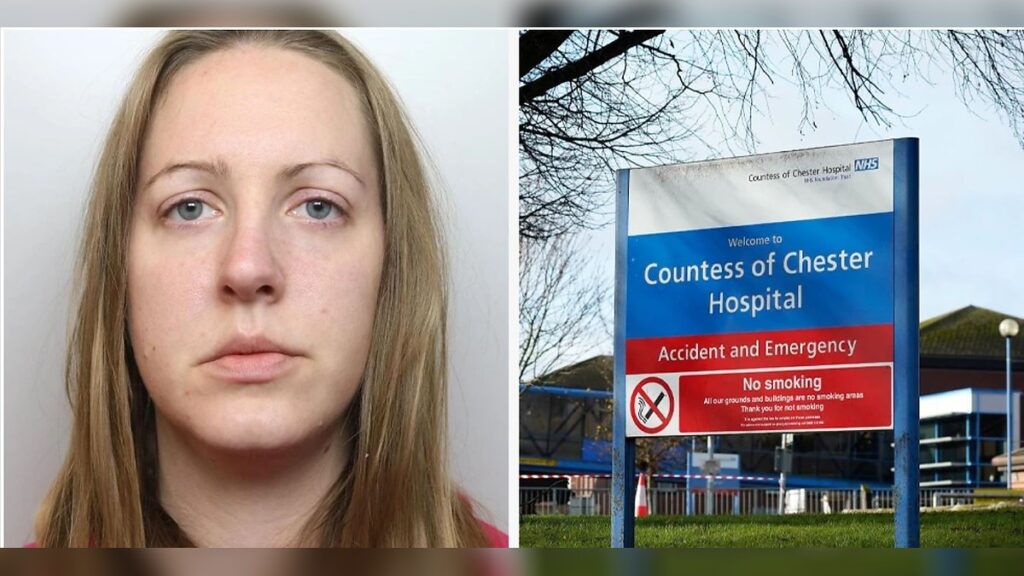
A senior paediatrician who helped raise concerns about Lucy Letby has acknowledged that doctors at the Countess of Chester Hospital should have contacted police sooner, after a major public inquiry concluded there had been a profound breakdown in the systems designed to protect vulnerable babies.
Dr John Gibbs, a retired consultant paediatrician who worked at the hospital during the period covered by the case, described the final Thirlwall Inquiry report as deeply troubling and accepted that consultants collectively shared responsibility for missed opportunities.
The inquiry’s final report was published on September 15 following an extensive investigation into events at the hospital and the wider safeguards governing neonatal care. Lady Justice Kathryn Thirlwall concluded there had been a “complete failure to protect babies” on the neonatal unit.
Gibbs Says Doctors Should Have Approached Police Earlier
Gibbs told the BBC that consultants should have acted more decisively when their suspicions intensified.
He acknowledged that while hospital executives were heavily criticised for their response to warnings, doctors themselves had opportunities to escalate the situation independently.
Gibbs said he wished the consultants had been brave enough to take their concerns directly to police sooner. He included himself in that criticism, saying responsibility could not simply be placed on colleagues or management.
Reflecting on his evidence to the inquiry, Gibbs apologised to the families and said he believed the medical team had failed the babies.
Inquiry Finds Managers Failed to Act on Repeated Warnings
The inquiry placed substantial responsibility on senior management and governance structures at the Countess of Chester Hospital.
Lady Justice Thirlwall found that senior nurses did not accept that consultants’ concerns about Letby could be justified and that senior managers waited too long before contacting police. The report also criticised internal and external reviews commissioned after concerns emerged because they failed to properly address the possibility of deliberate harm.
The inquiry found a significant divide between clinicians and hospital leadership, alongside failures to understand basic safeguarding requirements when a member of staff was suspected of intentionally harming patients.
According to the report, safeguarding action did not require hospital staff to establish Letby’s guilt before escalating their concerns.
Tensions Intensified After Letby Was Removed From Neonatal Unit
Letby was moved away from clinical duties on the neonatal unit in July 2016 following concerns raised by consultants.
However, Cheshire Police were not contacted until May 2017, leaving an extended period during which doctors and hospital executives remained at odds over how the concerns had been handled.
Gibbs described the atmosphere during that period as tense and stressful, saying managers were determined that consultants should accept that Letby had been wrongly suspected of harming babies.




The inquiry found that clinicians who raised concerns were themselves investigated through Letby’s grievance process. Three consultants were instructed to apologise to her, while plans were developed — but ultimately abandoned — to return her to the neonatal unit.
Missed Insulin Evidence Highlights Wider Clinical Failures
Gibbs also acknowledged shortcomings within the medical team itself, including the handling of unusual blood test results following one baby’s deterioration.
He referred to results suggesting that a baby had been poisoned with insulin in August 2015. Although the significance of the laboratory findings was initially missed by one doctor, Gibbs argued that responsibility extended beyond that individual.
Other consultants subsequently had opportunities to examine the baby’s records, he said, making the failure to recognise the importance of the results a broader clinical failing.
The final inquiry report devotes specific attention to insulin controls as part of its examination of how neonatal safeguards should be strengthened.
Inquiry Says Some Harm Could Have Been Prevented
Among the inquiry’s most consequential conclusions was that some collapses and deaths could have been avoided if appropriate safeguarding procedures had been followed.
Thirlwall identified multiple opportunities for intervention, including after three babies died within a short period in June 2015.
The inquiry ultimately examined events stretching from 2015 until 2018, when Letby was arrested, and considered not only the actions of individual hospital employees but also management, governance, professional regulation and wider NHS structures.
Parents Were Kept Unaware of Suspicions for Years
The report was also highly critical of how families were treated.
Parents were not told for years that doctors had raised concerns that their babies might have been deliberately harmed. Some were not informed about reviews involving their children’s cases, while medical records were shared with outside experts and organisations without parental consent, according to the inquiry.
It was not until 2018 that families learned the collapses and deaths could have resulted from the actions of a nurse whom they had trusted.
Thirlwall described the consideration shown to the parents during the period as “reprehensible” and said some families believed hospital leaders had prioritised protecting the institution’s reputation over keeping them informed.
Letby’s Convictions Remain Under Independent Review
Letby was convicted in 2023 of murdering seven babies and attempting to murder six others. A subsequent retrial resulted in another attempted-murder conviction, bringing the total to seven murder and seven attempted-murder convictions. She is serving 15 whole-life orders. Applications for permission to appeal the convictions have previously been rejected.
Letby maintains that she is innocent, and her case has been submitted to the Criminal Cases Review Commission, which examines potential miscarriages of justice and can refer convictions back to the Court of Appeal.
Questions about the medical and statistical evidence in the case have continued to be raised by some academics, doctors and other specialists.
Gibbs said he continues to believe Letby was responsible for the crimes but acknowledged that, given the standing of some experts questioning aspects of the evidence, independent examination of the convictions is important.
The Thirlwall Inquiry itself did not reassess Letby’s guilt. Lady Justice Thirlwall explicitly stated that the inquiry proceeded on the legal basis of her existing convictions and that examining alternative theories was outside its terms of reference.
Inquiry Demands Major Changes to Neonatal Safeguards
Beyond examining what went wrong at the Countess of Chester Hospital, the report recommends substantial changes intended to prevent similar failures elsewhere.
Its recommendations address CCTV and monitoring, insulin security, interpretation of safety data, NHS management, safeguarding, regulation, duty of candour and mechanisms for staff to raise concerns.
The inquiry has also called for hospital trusts to establish effective systems for board-level monitoring of all deaths involving babies and children by March 31, 2027, including clear procedures for escalating concerning trends or patterns.
The conclusions extend the significance of the Letby case beyond one neonatal unit, presenting it as a warning about how failures in communication, management, safeguarding and institutional accountability can allow serious concerns about patient safety to remain unresolved.
