
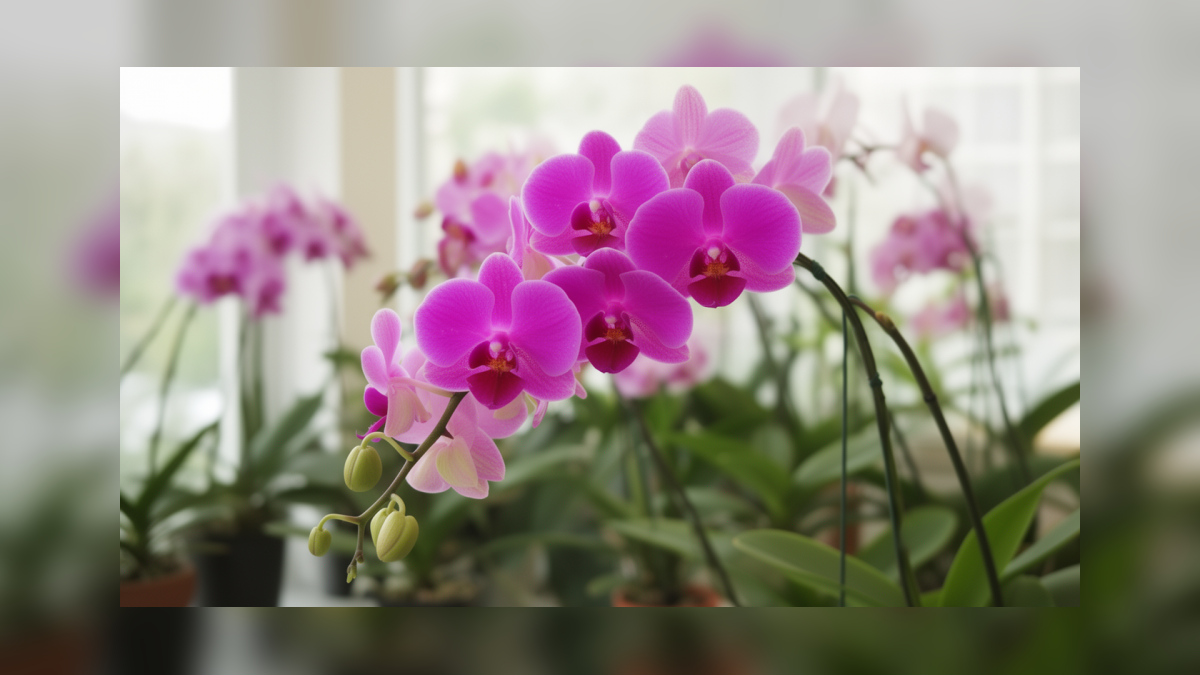
Orchids can produce glossy leaves and healthy roots without developing new flower spikes. According to the gardening guidance, this may happen when indoor conditions fail to provide the environmental signals the plant needs to move from vegetative growth to flowering.
Rather than focusing solely on fertiliser, growers can assess root moisture, water quality, nighttime temperatures, the condition of old flower spikes and the amount of light reaching the leaves.
Check Root Colour Before Watering
The colour of an orchid’s roots can help determine whether the plant needs water. Roots visible through a transparent pot generally appear silvery or grey when moisture levels are low, while bright green roots and condensation on the container indicate that the growing medium remains wet.
Watering while the substrate is still saturated can increase the risk of root rot, potentially damaging the plant’s ability to grow and flower.
After watering, growers should allow excess water to drain from the pot. Any liquid remaining in the outer container should be emptied after 10 to 15 minutes to prevent the lower roots from sitting in stagnant water.
Hard Water Can Leave Mineral Deposits Around the Roots
Water quality is another factor that can affect orchid health. Tap water containing high concentrations of dissolved minerals may leave white deposits on the potting bark or container as the minerals accumulate.
Over time, this buildup can place stress on the roots and interfere with nutrient absorption.
The guidance suggests using 500 millilitres of room-temperature, settled water mixed with three drops of freshly squeezed lemon juice for watering. The mixture should be diluted before use, as applying undiluted citrus juice directly to the roots can damage them.




Cooler Nights May Help Trigger a New Flower Spike
Changes in temperature can influence flowering in many orchid species. In natural environments, cooler nights and shorter days can signal a transition from active growth to reproduction.
Indoor conditions that remain relatively constant may not provide the same seasonal cues.
To introduce a modest temperature difference, growers can move an orchid to a location where nighttime temperatures are a few degrees cooler than during the day. The plant should not be exposed to frost, strong drafts or direct contact with cold window glass, which can damage its tissues.
Decide Whether to Keep or Remove the Old Flower Spike
The condition of an orchid’s previous flower spike determines whether it should be retained or removed after flowering.
A green, firm spike may still contain dormant buds capable of producing another cluster of flowers. Growers can leave it intact or trim it just above one of its nodes, potentially encouraging a secondary bloom.
A spike that has turned brown and papery is dead and should be cut off at the base with sterilised scissors.
Removing dead tissue helps prevent the plant from directing resources towards a structure that will no longer flower and reduces the risk of fungal infection. It also allows the orchid to concentrate on producing new growth.
Clean Leaves to Improve Access to Light
Dust accumulating on orchid leaves can reduce the amount of light reaching the cells responsible for photosynthesis. This can be particularly significant during autumn and winter, when natural light levels are lower.
Reduced photosynthesis may leave the plant with less energy available for flowering.
A weekly wipe with a soft, damp cloth can remove dust from the leaf surfaces. The guidance advises against using milk, oils or commercial leaf-shine products because they can block stomata, the pores through which plants exchange gases.
Keeping the leaves clean helps maintain the plant’s ability to absorb light and produce the energy needed for continued growth and flowering.

