
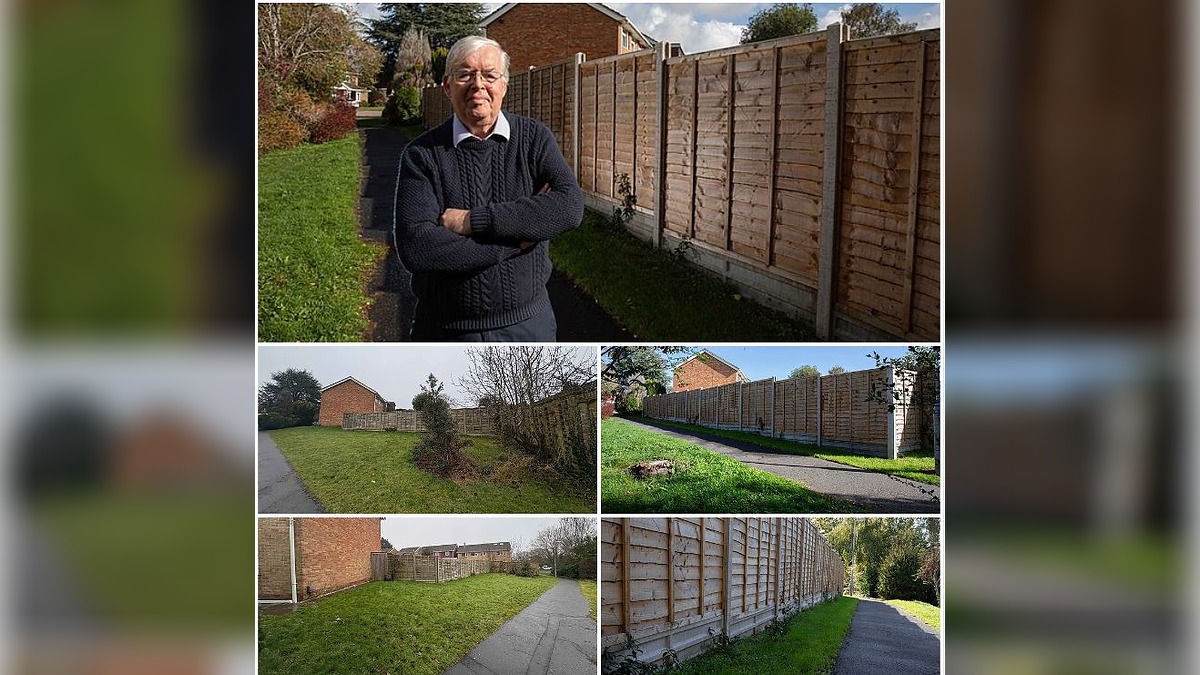
A homeowner has been ordered to remove a 26ft fence installed around his £635,000 property after planning officials ruled that it was too imposing for pedestrians using a nearby public footpath.
Giles Savage, 36, moved the boundary fence at his home on the East Broyle estate in Chichester, West Sussex, in August 2025. He believed the work would be straightforward because the land belonged to him and the existing fence was in a poor state of repair.
However, objections were raised after the new wooden structure was installed closer to the footpath. Chichester District Council subsequently rejected his application for retrospective planning permission, and the government’s Planning Inspectorate later dismissed his appeal.
Fence Was Moved Eight Metres Forward
Mr Savage moved the fence approximately eight metres from its previous position, allowing him to extend the garden around his four-bedroom property.
He said the additional space had been a significant factor in his decision to purchase the house, which he shares with his wife and young children.
The homeowner, who works with offshore yachts, said he had checked the relevant property documents and covenants before carrying out the work. He also said his solicitors had advised him that planning permission was not required.
According to Mr Savage, the original fence was deteriorating and had numerous holes. He and his wife intended to improve the appearance of the boundary by planting climbing flowers and other greenery along it.
Neighbours’ Comments Raised Concerns
Mr Savage said he began to suspect there might be a problem only after neighbours described him as brave for installing the new fence.
Several months later, a representative of Chichester District Council informed him that planning restrictions dating back to the estate’s construction in the 1960s could apply.
In March, Mr Savage submitted an application seeking retrospective permission for the changes. The council rejected it two months later.
The homeowner subsequently challenged the decision through the Planning Inspectorate, but his appeal was also refused.
Planning Inspector Says Fence Is Too Imposing
In the ruling, the planning inspector said the fence was inconsistent with the approach to boundaries adopted across the estate.
“Having seen the fencing in situ, it runs counter to the general ethos adopted across the estate in terms of means of enclosure and where they are positioned,” the inspector said.




The ruling added that the structure reduced the feeling of openness and was “a somewhat overbearing feature for pedestrians”.
The inspector concluded that the proposal conflicted with the development plan and upheld the council’s decision to refuse permission for the change of land use and the resulting enclosure.
Homeowner Says He Will Comply With the Rules
Mr Savage said he was disappointed by the outcome, claiming that his neighbours had consistently supported the new fence.
He explained that his wife had planted climbing wisteria along the boundary to create an attractive border and that the couple wanted to keep the property tidy for people using the footpath.
“We like to maintain our land and keep it as neat and tidy for anybody walking up and down,” he said.
Mr Savage added that he would comply with the planning requirements if he had to move the fence back.
“If we have to move the fence back, we’ll have to move the fence back – we’ll have to do something to comply with the rules and regulations,” he said.
Long-Standing Residents Say Estate Rules Were Breached
Richard Plowman, 77, who lives next door and has been on the estate for 40 years, said the new fence breached restrictions established when the houses were originally built.
Mr Plowman said he believed the homeowner could have avoided some of the difficulties if he had spoken to long-standing residents before moving the boundary.
“Mr Savage never came and spoke to us – if he’d came and spoke to us, we could have alerted him to the problems with the amenity land and things, because it’s been an issue for some time,” he said.
Although he described the workmanship as good, Mr Plowman said the fence was inconsistent with the planning permission originally granted for the estate.
He also described the restrictions as a “very strange set of rules”.
Residents’ Association Warns of Possible Precedent
The East Broyle Residents Association argued that allowing the fence to remain could damage the character of the estate.
The association said approval could set a precedent for other homeowners seeking to enclose similar areas of land.
Another resident warned that permitting the change could lead to numerous similar applications, potentially affecting the character and atmosphere enjoyed by people living in the area.
The association is considering meeting with the local councillor to seek clarification about the estate’s restrictions, with residents saying the rules can be confusing for newcomers.
Council Says Land Was Intended to Remain Open
A Chichester District Council officer said the dispute was not simply about the installation of a fence but also involved changing the use of land from open amenity space to a private garden.
The officer explained that the area had remained open for many years and contributed to the sense of space valued by residents.
The council said the Planning Inspectorate had upheld its decision for the same reasons, agreeing that the enclosure was inconsistent with the estate’s original design.
Mr Savage must therefore address the planning requirements following the rejection of his appeal.
